







Regentag. Schneetag. Tag, an dem es zu heiß ist, um rauszugehen. Tag, an dem man sich total langweilt. Was auch immer dich hierher geführt hat, ich habe die Lösung. Hier sind 25 Spiele für drinnen, die wirklich funktionieren – getestet mit echten Kindern, die richtig Energie haben und sich gut konzentrieren können. Manche brauchen gar kein Material. Manche nur einen Luftballon und eine Socke. Keiner braucht einen Bildschirm.
Ich habe sie nach Energielevel gruppiert, damit Sie das Passende für den jeweiligen Moment auswählen können – egal ob Sie Energie abbauen oder vor dem Schlafengehen zur Ruhe kommen möchten.
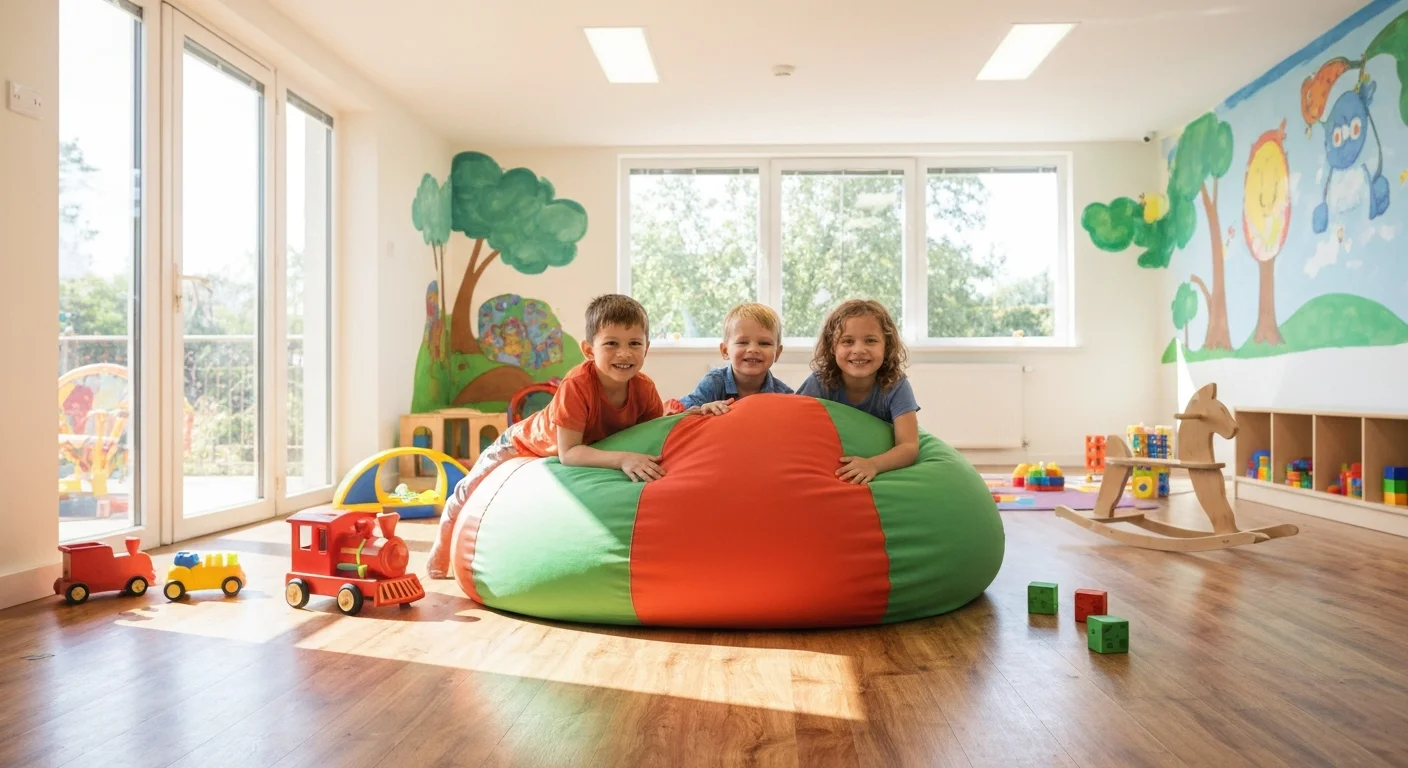
Hochenergetische Spiele (Verbrenne es)
Wenn die Kinder vor Energie nur so strotzen, lassen Sie sie gewähren. Diese Spiele kanalisieren das Chaos in Spaß. Räumen Sie vorher zerbrechliche Gegenstände weg.
1. Den Ballon oben halten
Puste ein paar Luftballons auf und stell eine Regel auf: Sie dürfen nicht den Boden berühren. Hände, Köpfe, Ellbogen, Knie – alles ist erlaubt. Fang mit einem Ballon an und füge weitere hinzu, bis das Chaos ausbricht. Es ist das einfachste Spiel auf dieser Liste und eines der effektivsten, um schnell Energie abzubauen.
2. Ballon-Tennis
Klebt einen Pappteller an ein Lineal oder einen Holzlöffel – fertig ist der Tennisschläger. Pustet einen Luftballon auf und spielt ihn über ein “Netz” (eine zwischen zwei Stühlen gespannte Schnur) hin und her. Ihr könnt Einzel, Doppel oder im Turniermodus spielen. Der Ballon bewegt sich langsam genug, dass selbst kleine Kinder mitspielen können.
3. Indoor-Hindernisparcours
Baut mit Kissen, Stühlen, Decken und Polstern einen Parcours durchs Wohnzimmer. Kriecht unter einem Tisch durch, hüpft über Kissen, balanciert auf einem Klebeband und werft einen Sockenball in den Wäschekorb. Stoppt die Zeit für jedes Kind und lasst sie versuchen, ihren eigenen Rekord zu brechen. Gestaltet den Parcours jedes Mal neu, wenn ihn jemand meistert.
4. Klebebandlabyrinth
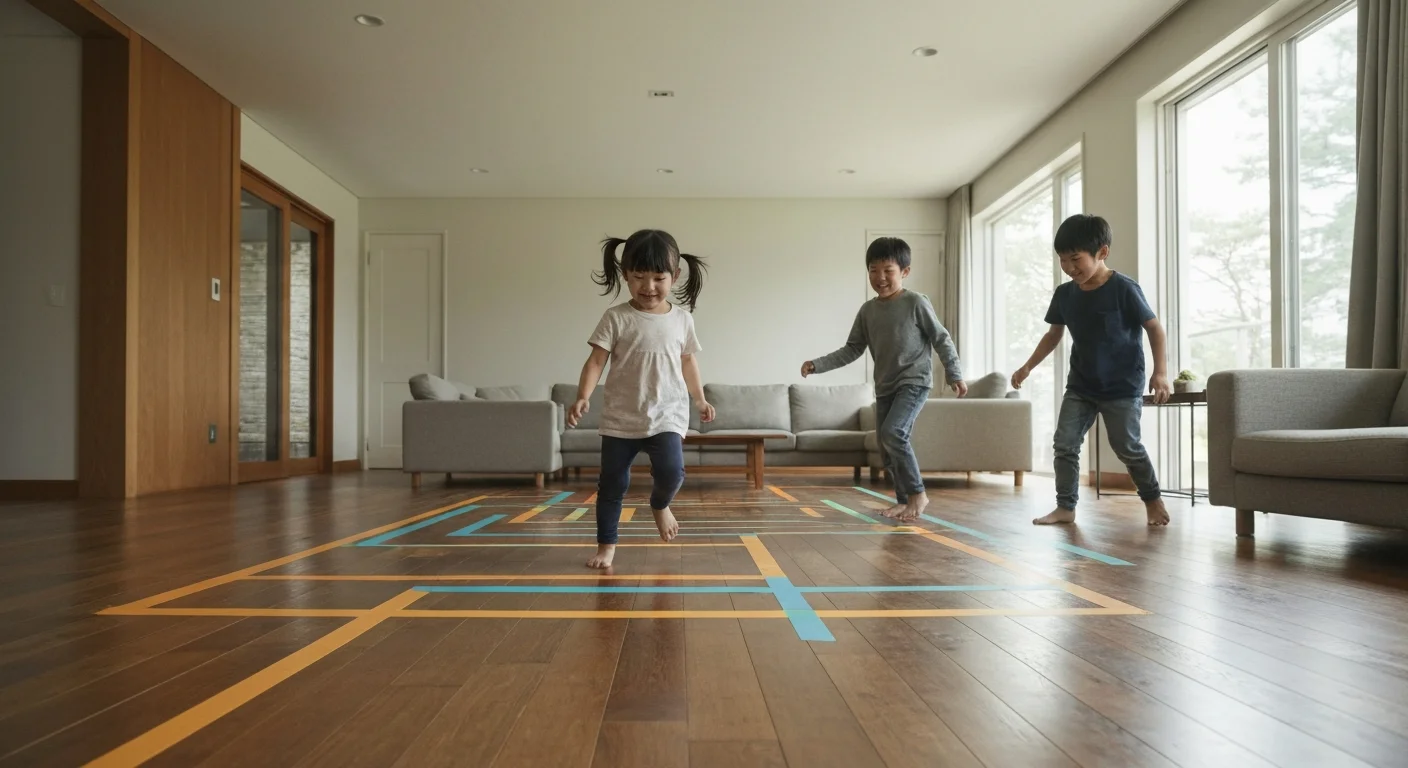
Räumen Sie einen Teil des Bodens frei und kleben Sie mit Malerkrepp ein Labyrinth darauf (lässt sich rückstandslos entfernen). Die Kinder können das Labyrinth erkunden, ohne auf das Klebeband zu treten. Für ältere Kinder können Sie Sackgassen einbauen, für jüngere Kinder, die das Zählen lernen, Zahlen entlang des Weges. Der Aufbau dauert nur 10 Minuten und bietet über 30 Minuten konzentriertes Spielen.
5. Stopptanz
Musik an, alle tanzen. Musik stoppt, alle erstarren. Wer sich noch bewegt, scheidet aus (oder muss eine lustige Strafe ablegen). Der letzte Tänzer, der noch steht, gewinnt. Das ist wie Stuhltanz, nur ohne Stühle – weniger wettbewerbsorientiert, offener und die Kinder lieben es, zwischen den Runden ihre Tanzkünste zu zeigen.
6. Himmel und Hölle
Kleben Sie mit Malerkrepp ein Hüpfspielfeld auf den Boden. Klassische Regeln: Werfen Sie einen kleinen Gegenstand auf ein nummeriertes Feld, hüpfen Sie durch das Feld und überspringen Sie dieses Feld. Heben Sie den Gegenstand auf dem Rückweg wieder auf. Funktioniert in jedem Flur oder auf jeder freien Fläche. Variationen: Hüpfen Sie nur auf einem Bein, hüpfen Sie rückwärts oder nutzen Sie nummerierte Felder zum Üben von Mathematik.
7. Krabbenlauf-Rennen
Setzt euch auf den Boden, stützt euch auf Hände und Füße (Bauch zeigt zur Decke) und rennt quer durch den Raum. Es ist urkomisch anzusehen und überraschend anstrengend für Kinder. Ihr könnt nebeneinander, in Teams im Staffellauf oder mit zusätzlichen Herausforderungen wie dem Balancieren eines Sitzsacks auf dem Bauch im Krabbengang spielen.
8. Socken-Basketball
Socken zu Kugeln rollen, einen Wäschekorb schnappen und aus einer bestimmten Entfernung werfen. Wer trifft, bleibt stehen, wer daneben schießt, muss zurücktreten. Spielt “HORSE”, bei dem jeder den vorherigen Wurf wiederholen muss – hinter dem Rücken, mit geschlossenen Augen und im Sitzen. Echt spannend und ganz ohne Möbelschäden.
Denkspiele und Rätsel
Wenn Sie etwas brauchen, das den Geist mehr anspricht als den Körper. Diese Spiele eignen sich für den Esstisch, das Sofa oder den Boden.
9. Druckbarer Escape Room
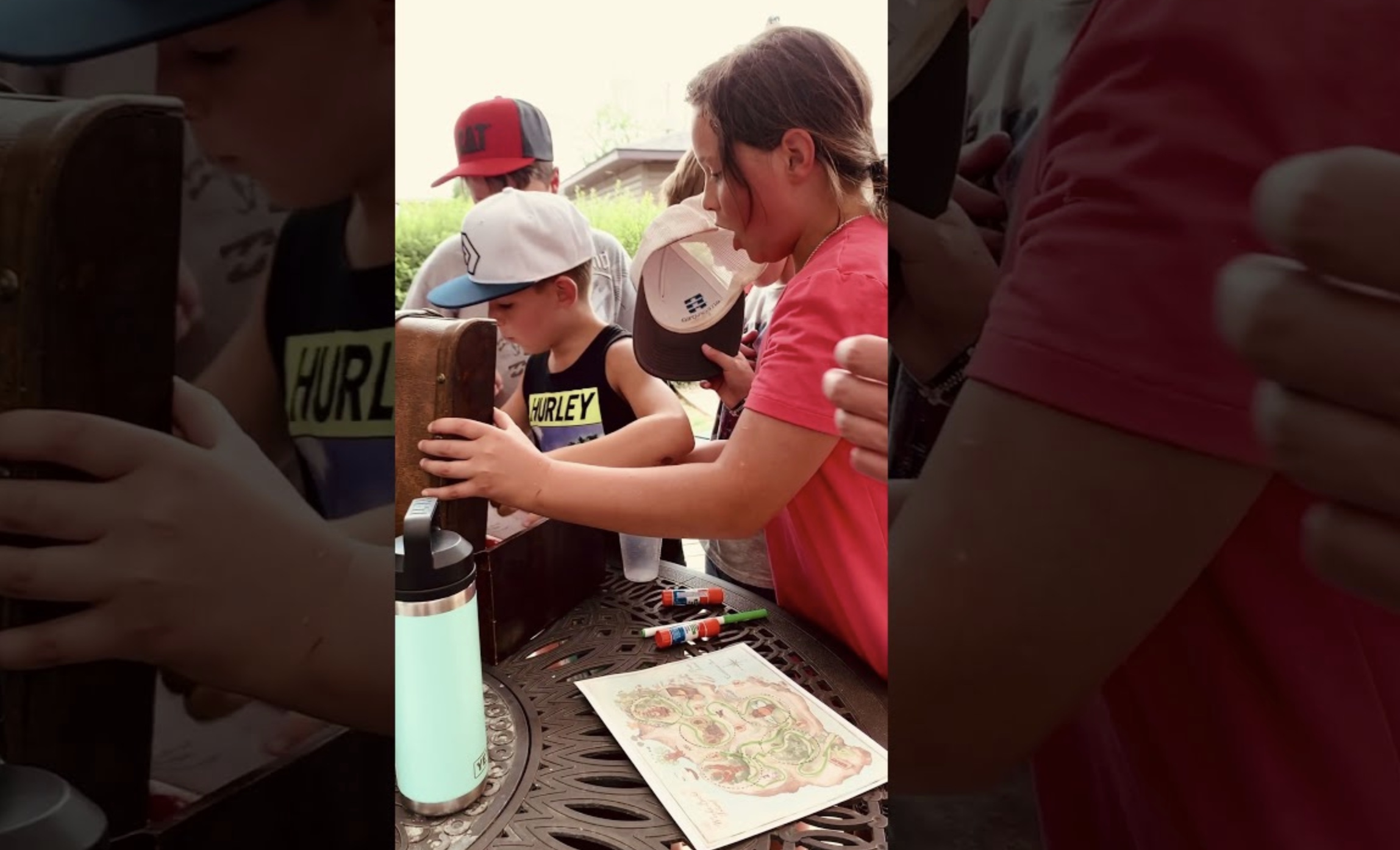
Wenn Sie eine Stunde ungestörte Beschäftigung ohne Bildschirmzeit wünschen, ausdruckbares Escape-Room-Set Das ist kaum zu übertreffen. Herunterladen, ausdrucken, die Hinweise im Haus verstecken und zusehen, wie Ihre Kinder Codes knacken, Rätsel lösen und gemeinsam ein echtes Abenteuer erleben. Wir haben Spiele für jedes Alter. 5-8, 9-13, Und 16+. Schauen Sie sich unsere an 30 DIY-Puzzleideen Wenn Sie Ihr eigenes bauen möchten.
10. Ich sehe was, was du nicht siehst
“Ich sehe was, was du nicht siehst … etwas Rotes.” Simpel, zeitlos und unendlich vielseitig. Man kann nach Farbe, Form, Anfangsbuchstaben, Material oder Funktion spielen. Jüngere Kinder schulen ihre Beobachtungsgabe. Ältere Kinder werden mit kniffligeren Beschreibungen wie “Ich sehe was, was du nicht siehst, das wurde in Japan erfunden” herausgefordert. Funktioniert überall – im Wohnzimmer, in der Küche, im Auto.
11. 20 Fragen
Eine Person denkt sich einen Gegenstand aus. Alle anderen bekommen 20 Ja/Nein-Fragen, um ihn zu identifizieren. Der Trick besteht darin, kluge Fragen zu stellen, die die Hälfte der Möglichkeiten ausschließen: “Lebt es?” ist immer besser als “Ist es eine Banane?”. Kinder lernen so ganz nebenbei logisches Denken.
12. Spiele mit Stift und Papier
Tic-Tac-Toe, Galgenmännchen, Punkte und Kästchen und Schiffe versenken – alles, was man braucht, sind Stift und Papier. Diese Klassiker sind aus gutem Grund immer noch beliebt. Für ältere Kinder eignen sich Wortleitern (bei denen man jeweils einen Buchstaben ändert, um ein Wort zu formen) oder Sprouts (ein Mathe-Strategiespiel mit überraschend viel Tiefgang).
13. Schatzsuche
Schreibe Hinweise auf Zettel und verstecke sie im Haus – jeder Hinweis führt zum nächsten Ort, und der letzte führt zu einer Belohnung (einem Snack, einem kleinen Spielzeug, einer lustigen Urkunde). Eine fortgeschrittenere Version findest du hier: DIY-Escape-Room-Anleitung um Hinweise zu einem vollständigen narrativen Abenteuer zu verknüpfen.
14. Fühlboxen
Schneide ein handgroßes Loch in einen Schuhkarton. Lege etwas hinein – einen Tannenzapfen, einen Schwamm, gekochte Spaghetti, eine Quietscheente. Die Kinder greifen hinein und ertasten den Gegenstand. Ihre Reaktionen sind unbezahlbar, besonders bei unerwarteten Oberflächen. Es ist sensorisches Spielen im Gewand eines Spiels.
15. Kartenspiele
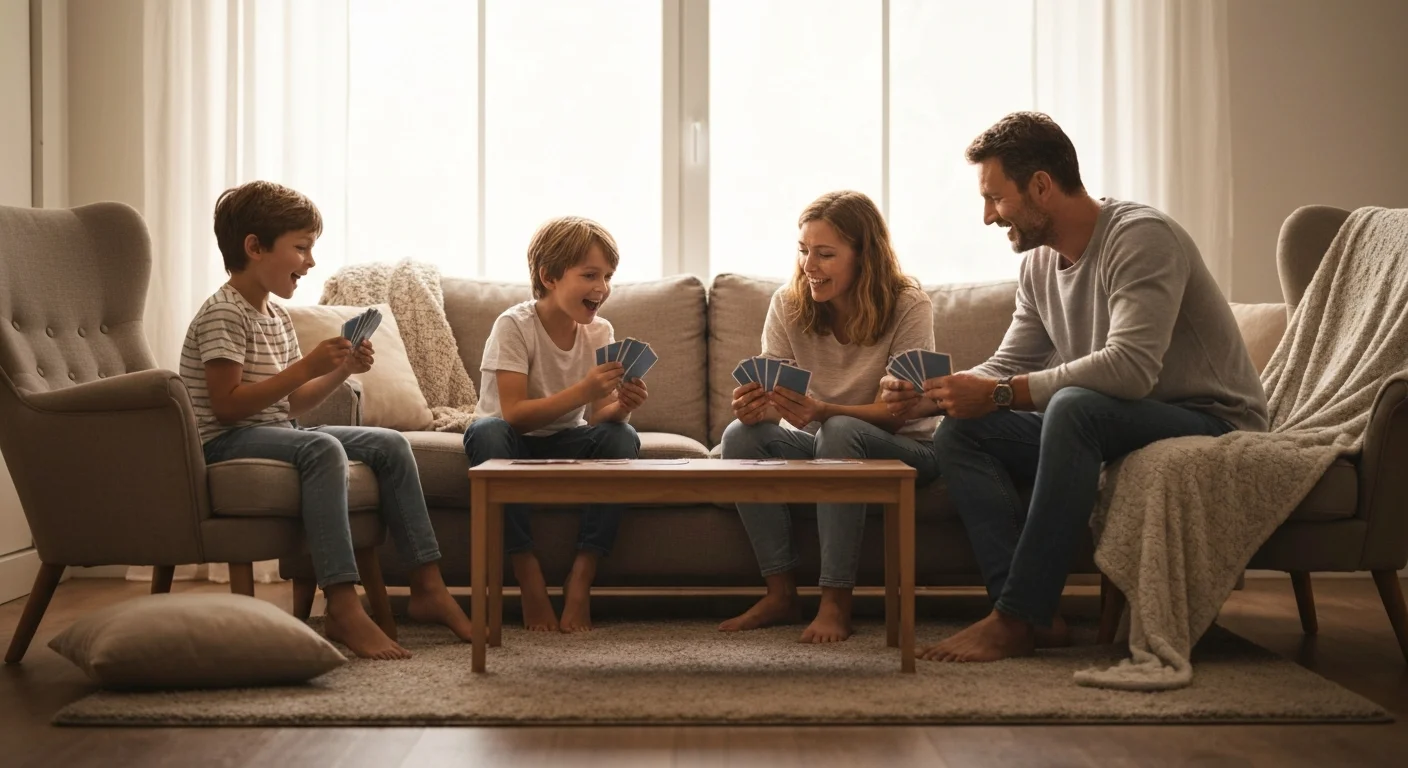
Ein Kartenspiel eröffnet unzählige Spielmöglichkeiten. Go Fish, Snap, Krieg, Crazy Eights, Memory (Kartenpaare verdeckt aufdecken und passende Kartenpaare finden). Für ältere Kinder: Rommé, Spucken oder Ägyptisches Rattenspiel. Kartenspiele lehren das Warten auf die Reihe, Strategie und den fairen Umgang mit Niederlagen – allesamt wichtige Lebenskompetenzen.
16. Puzzles
Wählen Sie ein Puzzle, das zur Altersgruppe passt – 24 Teile für die Kleinsten, 100–300 für ältere Kinder, 500+ Teile für die ganze Familie. Breiten Sie es auf dem Esstisch aus und puzzeln Sie gemeinsam, ohne Zeitdruck, über einen Tag oder eine Woche verteilt. Puzzles sind ideal für ruhige Nachmittage, da sie ein entspanntes, gemeinschaftliches Erlebnis bieten.
Kreative und fantasievolle Spiele
Spiele, bei denen man Dinge bastelt, baut oder sich etwas ausdenkt. Diese eignen sich hervorragend für ruhigere Kinder, die aber trotzdem aktiv mitarbeiten.

17. Herausforderungen beim Bauen
LEGO, Bausteine, Pappkartons, Eisstiele und Kleber – alles, was ihr da habt. Stellt eine Herausforderung: “Baut den höchsten Turm”, “Baut eine Brücke, die ein Buch trägt” oder “Baut ein Haus für diesen Spielzeugdinosaurier”. Die Einschränkung fördert die Kreativität. Stoppt die Zeit für zusätzlichen Wettbewerb.
18. Indoor-Bowling
Stelle zehn leere Plastikflaschen oder Toilettenpapierrollen nebeneinander. Benutze einen weichen Ball (oder zusammengerollte Socken), um sie umzuwerfen. Markiere eine Bowlinglinie mit Klebeband. Notiere die Punkte auf einem Blatt Papier. Für eine schwierigere Variante fülle die Flaschen mit etwas Wasser, damit sie nicht so leicht umkippen. Es ist überraschend spannend!.
19. Magischer Papa (oder Mama)
Lerne 3-4 einfache Zaubertricks von YouTube und führe sie deinen Kindern vor. Kartentricks, das Verschwindenlassen von Münzen, das Spiel “Welche Hand?” mit einer kleinen Abwandlung. Bringe die Tricks dann deinen Kindern bei und lass sie sie sich gegenseitig vorführen. Das Lernen und Vorführen selbst ist der Spaß – und Kinder lieben es, eingeweiht zu sein.
20. Scharade
Stellt ein Wort oder einen Satz pantomimisch dar, ohne zu sprechen. Alle raten. Tiere für die Kleinen, Filmtitel für die Älteren. Bildet Teams für einen Wettkampf oder spielt einfach jeder für sich. Das Beste an Pantomime mit Kindern ist ihre völlige Unbefangenheit – sie stellen “Elefant” mit voller Überzeugung dar.
21. Farbsortierung
Verteile bunte Spielsachen, Bauklötze oder Haushaltsgegenstände im Zimmer. Gib den Kindern farblich beschriftete Behälter und lass sie alles in die richtige Box sortieren. Es ist eine Mischung aus Schnitzeljagd und Ordnungsspiel und überraschend befriedigend für Kinder, die gerne Ordnung halten. Ideal für Kinder von 2 bis 5 Jahren.
Klassische Gruppenspiele
Diejenigen, die immer funktionieren, mit jeder Anzahl von Kindern, ganz ohne Ausrüstung.
22. Verstecken spielen
Man ist nie zu alt für Verstecken. Wie wäre es zum Beispiel mit “Sardinen”? Eine Person versteckt sich, alle anderen suchen. Wer den Versteckten gefunden hat, quetscht sich leise an dessen Stelle. Wer zuletzt gesucht hat, versteckt sich als Nächstes. Je mehr Leute sich in einen Schrank quetschen, desto verrückter wird es.
23. Simon sagt
Eine Person gibt Anweisungen: “Simon sagt, berühre deine Zehen.” Befolge die Anweisung nur, wenn vorher “Simon sagt” gesagt wurde. Anweisungen ohne diese Vorwarnung sind Fallen. Je schneller du wirst, desto größer wird das Chaos. Kinder lieben es, Simon zu sein, wenn sie an der Reihe sind – die Macht steigt ihnen sofort zu Kopf.
24. Heiße Kartoffel
Ein Softball wird im Kreis herumgespielt, während Musik läuft. Sobald die Musik stoppt, scheidet derjenige aus, der den Ball gerade in der Hand hält. Wer die Musik kontrolliert, hat die volle Kontrolle. Dramatische Pausen, vorgetäuschte Stopps und perfekt getimte Abbrüche machen das Spiel viel spannender, als es sich anhört.
25. Stuhltanz
Stellt einen Stuhl weniger auf als ihr Spieler habt. Spielt Musik, alle laufen um die Stühle herum, die Musik stoppt, und alle schnappen sich einen Platz. Wer als Letzter stehen bleibt, scheidet aus. Nehmt einen Stuhl weg und wiederholt das Ganze. Keine Stühle? Dann nehmt Papierquadrate, Kissen oder Markierungen auf dem Boden. Das finale Duell der beiden Spieler ist immer spannend.
Weiterführende Literatur
- 25 Ideen für einen Spieleabend mit der Familie
- 20 Campingspiele für Kinder
- 20 Geburtstagsspiele für Kinder
Unsere spielfertigen Spiele-Sets
Ein Spiel auswählen, ausdrucken und spielen - so einfach ist das!
-
Professor Swons Labor
Ursprünglicher Preis war: $24.90$19.90Aktueller Preis ist: $19.90.Alter: 9-1345-60 Min.2-5 Kinder -



Tipps für Hallenspieltage
- Alternative Energieniveaus. Nach einem energiegeladenen Spiel (Ballon-Tennis) folgt ein ruhigeres (Ich sehe was, was du nicht siehst). Der Rhythmus sorgt dafür, dass die Kinder bei der Sache bleiben, ohne sich zu überanstrengen oder die Nerven zu verlieren.
- Richten Sie alles ein, bevor Sie die Ankündigung machen. Bereiten Sie den Hindernisparcours oder das Labyrinth aus Klebeband vor, bevor Sie den Kindern davon erzählen. Der Moment der Enthüllung, wenn sie den Aufbau sehen, macht die Hälfte des Vergnügens aus.
- Zerbrechliche Gegenstände beiseite räumen. Im Ernst. Bevor ihr mit Luftballons, Bällen oder beim Laufen spielt, räumt alle zerbrechlichen Gegenstände weg. Fünf Minuten Vorsorge ersparen euch stundenlanges Ärgern.
- Akzeptiere das Chaos. Spiele in Innenräumen sind chaotischer als Bildschirmzeit. Das macht sie aber auch so viel besser. Aufräumen kann auch ein Spiel sein – “Wer kann in 60 Sekunden die meisten Gegenstände aufsammeln?”
- Dazu kommen. Kinder spielen mit mehr Eifer, wenn Erwachsene mitmachen. Man muss nicht jede Runde spielen, aber ein paar Runden Scharade oder Ballon-Tennis mit einem Elternteil sind besser als eine Stunde alleine spielen.
Die schönsten Tage drinnen sind nicht die mit den aufwendigsten Aktivitäten – sondern die, an denen alle lachen und niemand auf die Uhr schaut. Sucht euch 3-4 Spiele aus dieser Liste aus, schnappt euch ein paar Snacks und verwandelt das Wohnzimmer für einen Tag in einen Spielplatz.


Schreibe einen Kommentar