







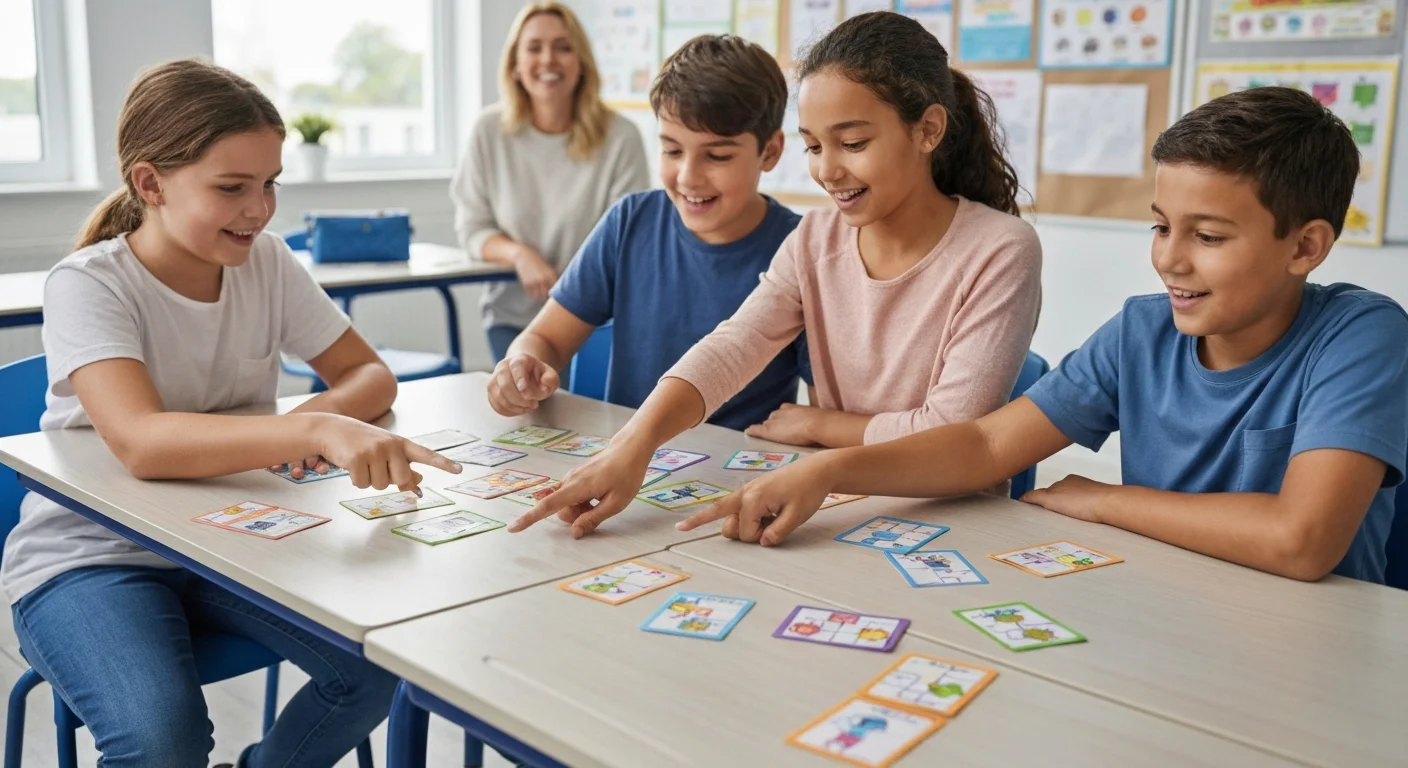
Jag har designat escape room-spel som spelats av över 21 000 personer på sex kontinenter. Och här är vad som fortfarande förvånar mig – en del av den bästa feedbacken jag får kommer inte från födelsedagskalas eller lagkvällar. Den kommer från lärare.
Lärare som driver en skolutrymningsrum i deras klassrum, och se det tysta barnet plötsligt bli lagledare eftersom hon upptäckte det dolda budskapet som ingen annan såg. Det är inte något man kan planera in i en lektionsbok. Men du burk sätt upp det på cirka 15 minuter.
Den här guiden täcker allt du behöver för att köra utskrivbara escape room-spel i din skola – från att välja rätt spel för din årskurs till att ge eleverna en genomgång efter det sista pusslet. Jag har inkluderat exakt samma metod som hundratals lärare redan använder med våra kit, plus tips som jag har fått från deras feedback under de senaste fyra åren.
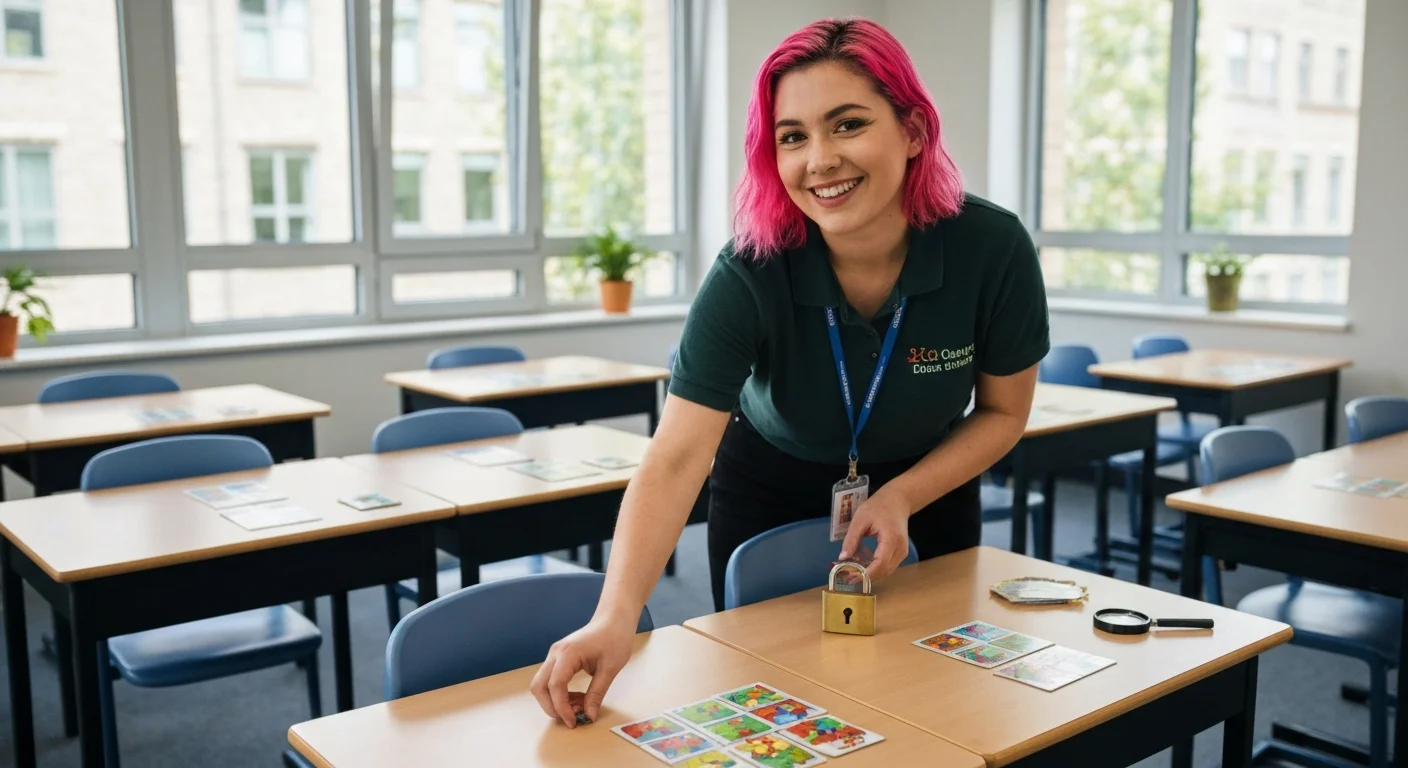
Letar du efter en skolomfattande escape room-lösning?
Vår LEGACY-PAKETET inkluderar 13 spel som täcker alla årskurser (5–16+), obegränsade tryckrättigheter och alla framtida spel är gratis. Skolor använder det för STEM-dagar, aktiviteter i slutet av året och fritidsaktiviteter.
Varför ett skolrum faktiskt fungerar
Det är så här med klassrumsaktiviteter – de flesta har problem med deltagandet. Några få elever bär gruppen. Resten kollar. Du har sett det. Jag har sett det. Det är inte ett undervisningsmisslyckande, det är ett formatproblem.
Escape rooms fixar detta eftersom pusslen kräver olik Färdigheter som arbetar tillsammans. Den starka läsaren fångar den gömda ledtråden i ett brev. Mattebarnet knäcker sifferchiffern. Den kreativa gör det sidledssprånget som kopplar samman pussel A med pussel B. Ingen kan lösa allt ensam. Det är designen – och den fungerar.
Lärare som har använt våra kit i sina klassrum rapporterar samma sak om och om igen:
“"Barn som normalt inte deltar ledde gruppen."”
Det är ingen slump. När jag designar de här spelen kräver varje pussel avsiktligt ett annat slags tänkande. Så barnet som aldrig räcker upp handen? Hon är plötsligt den som knäcker koden medan alla tittar på.
De pedagogiska fördelarna (med stöd av vad lärarna berättar för oss)
- Kritiskt tänkande: Eleverna måste utvärdera ledtrådar, eliminera avvikelser och resonera genom flerstegspussel
- Samarbete och kommunikation: Ingen solospel. Lag på 3–5 personer måste dela med sig av sina resultat och koordinera.
- Läsförståelse: Halva pusslet är att förstå historien, instruktionerna och de dolda budskapen
- Tidshantering: En nedräkningstimer tvingar fram prioriteringar – vilken ledtråd ska vi ta itu med först?
- Tvärvetenskapligt lärande: Matematiska chiffer, vetenskapliga teman, historiska berättelser, litterär analys – allt inbyggt i pusslen
- Social-emotionella färdigheter: Frustrationshantering, aktivt lyssnande, att fira andras bidrag
Carla Jean använde Den förgyllda Carcanet med sina historieelever: “"Vi delade in oss i grupper om fyra personer och använde alla resurser som fanns tillgängliga."” Katie ledde våra spel för sitt fritidshem för årskurs K-4: “"Ingen av dem hade upplevt ett escape room förut, men de fattade snabbt vad de menade."”
Hur man driver ett escape room i klassrummet
Börja med ett utskrivbart escape room-kit istället för att bygga från grunden. Lita på mig – jag har gjort båda, och kiten sparar dig timmar av förberedelser samtidigt som du får pussel som redan är testade på tusentals spelare. Så här gör du:
1. Välj ett spelset för din årskurs
Matcha spelet efter dina elevers ålder och förmåga:
| Betygsnivå | Åldrar | Rekommenderade spel | Pusselstil |
|---|---|---|---|
| Elementär (F–3) | 5–8 | Wooka Booka Ön, Wizard's Workshop, Project Dino, Jigsaw Island | Visuella pussel, praktiskt pyssel, lärarledda |
| Mellanstadiet (4–7) | 9–13 | Houdinis hemliga rum, Professor Svöns laboratorium, Cirkus Medrano, Aria och ljusets hemlighet | Chifferpussel, logikkedjor, självständigt lagspel |
| Gymnasiet (8+) | 16+ | Projekt Frankenstein, Den förgyllda Carcanet-trilogin, Silver Screen Sleuths | Komplex deduktion, flerstegs, ritningsombyggnad |
Är du osäker på vilken som passar? 30-sekunders frågesport matchar dig med ett spel baserat på ålder och gruppstorlek.
2. Skriv ut och förbered (totalt 15–30 minuter)
Skriv ut ett komplett exemplar av byggsatsen per lag. Om ni har 25 elever i grupper om 5, blir det 5 exemplar. Klipp ut de bitar som är markerade för klippning – de flesta byggsatser markerar dessa tydligt med streckade linjer.
Total förberedelse: 15–20 minuter för utskrift och klippning, plus 5–10 minuter för att placera ut ledtrådar i rummet. Gör detta innan eleverna anländer eller under en rast. Det är allt. Ingen komplicerad uppställning, inga extra förnödenheter utöver papper, sax och skrivare.
3. Dela upp eleverna i team
Det optimala intervallet är 3–5 elever per lag. Färre än 3 och det finns inte tillräckligt med perspektiv. Fler än 5 och någon checkar ut.
Lagsammansättningen spelar roll. Blanda färdighetsnivåer och sociala grupper medvetet. Sätt den starka läsaren med den starka matteeleven. Separera bästa vänner så att de skapar nya samarbeten. Escape room blir en naturlig social blandning som bryter ner klassrumsklickar. Jag hör detta från lärare hela tiden.
4. Ställ in scenen
Du behöver inte förvandla rummet till en grottan – men små förändringar signalerar att "detta är annorlunda". Dämpa belysningen något. Spela bakgrundsmusik med tema (våra kit innehåller Spotify-spellistor). Skriv ut spelaffischerna och sätt upp dem. Bara att arrangera om skrivbord i lagkluster förändrar känslan.
För yngre elever (F–3), spela Game Master-karaktären från byggsatsens manus. I Wooka Booka Island är du Lau Kamau – en vänlig jättelik väktare. I Wizard's Workshop är du Marshmallow, den talande katten. Barn under 8 år engagerar sig sätt djupare när en vuxen är i karaktären. Lita på mig i det här fallet.
5. Informera eleverna (max 5 minuter)
Håll det tätt:
- Läs berättelsens inledning – detta sätter berättelsens sammanhang
- Förklara reglerna: stanna inom ditt område, tvinga inte fram något, be om ledtrådar när du sitter fast
- Ställ in timern: “"Du har 45 minuter. Gå!"”
Projicera nedräkningen på smartboarden om du har en. Den visuella timern ger brådska och drama. Barnen reagerar omedelbart.
6. Underlätta — lösa inte
Ditt jobb under spelets gång: cirkulera, observera, ge tips när lagen har fastnat i 3–4 minuter. Varje kit innehåller tipskort utformade för just detta.
Nyckeln är att omdirigera utan att ge svar: “"Har du tittat på baksidan av det där kortet?"” fabrik. “"Svaret är 7"” dödar ögonblicket. Du vill ha "Ahaaaaa!" – det är där lärandet sker.
Var också uppmärksam på teamdynamiken. Om en elev är på väg att manipulera, omdirigera försiktigt: “Sofia fick en intressant idé tidigare – Sofia, vad tänkte du på?” Detta gör att deltagandet distribueras.
7. Genomgång och belöning (10 minuter)
Det är här ett skolrum går från "rolig aktivitet" till "verkligt lärande". Oavsett om de rymde eller inte, ta 10 minuter efter:
- “"Vilket pussel var svårast? Vad knäckte det slutligen?"”
- “"Fick allas idéer höras? Fanns det ett ögonblick då någon hade svaret men inte kunde få uppmärksamhet?"”
- “"Vad skulle ert lag göra annorlunda nästa gång?"”
Belöna deltagande, inte bara slutförande. Klistermärken, extra rast, godkända läxor – varje lag får något, med ett särskilt erkännande för snabbaste målgång eller bästa lagarbete.
Koppla ditt skolrum till läroplanen
Det är här det blir intressant för mig som speldesigner. Escape rooms kan förstärka det man faktiskt lär ut.
Matematik: Skapa pussel där lösningen av ekvationer avslöjar låskoder. Våra periodiska systemets chiffer Fungerar utmärkt även för kemilektioner.
Historia: Temalägg escape room kring en historisk period. Professor Svöns laboratorium lär ut om verkliga historiska innovatörer – barn inser inte ens att de lär sig historia eftersom de är för upptagna med att lösa Swens pussel.
Vetenskap: Project Dino täcker paleontologi. Projekt Frankenstein inkluderar organidentifiering och vetenskaplig metod. Användning färgblandningspussel för kemi.
Språkkonst: Steganografi-pussel för läsförståelse, korsordschiffrar för ordförråd, och bokchiffer för litterär analys.
Social-emotionellt lärande: Varje escape room är en intensivkurs i lagarbete, kommunikation, frustrationshantering och att fira andras styrkor. Det är i linje med SEL-standarder, och det bästa är att barnen inte känner att de är i en "lektion".’
Praktiska tips från lärare som har gjort detta
Efter fyra år av feedback från lärare som driver våra spel, är det här tipsen som dyker upp om och om igen:
Gör en testkörning själv. Spela igenom spelet före lektionen. Du kommer att förstå svårighetsgraden, upptäcka potentiella förvirringspunkter och bli en mycket bättre handledare. Tar ungefär 45 minuter – värt varenda sekund.
Skriv ut extramaterial. Skriv ut ett eller två extra exemplar av ledtrådskorten. Något blir alltid sönderrivet, borttappat eller "av misstag" kastat bort. Du kommer att tacka mig senare.
Tajma det rätt. 45 minuter för spelet + 10 för genomgång = en lektion. Dela inte upp ett escape room på två lektioner – momentumet försvinner helt. Om du bara har 30-minutersblock, välj våra kit för yngre åldrar som är 30–45 minuter långa.
Strategisk schemaläggning. Slutrepetition, firande före lovet, STEM-dag eller intjänad klassbelöning. Skolrum fungerar bäst när de känns särskild, inte rutin. En gång i kvartalet är det optimala tillfället.
Ta foton. Escape room-aktiviteter fotograferas vackert. Föräldrar älskar att se engagerat lärande, och rektorer älskar att ha bra innehåll till skolans nyhetsbrev.
Laminat för återanvändning. Om du kör samma spel för flera klasser, laminera ledtrådskorten efter att du har klippt dem. En laminerad uppsättning kan hålla i åratal – använd bara whiteboardpennor där eleverna behöver skriva på pussel.
Idéer för skolutrymningsrum efter årskurs
Här är vad som fungerar bäst på varje nivå, baserat på vad lärarna säger till oss och vad jag har sett i mina egna speltester:
Grundskola (åldrar 5–8)
I den här åldern behöver läraren vara aktivt involverad som spelledare. Våra spel för barn i K–3-årsåldern kommer med ett manus för dig, så du spelar en karaktär i berättelsen. Pusslen är starkt visuella (matcha mönster, hitta gömda föremål, enkla koder) och berättelsen driver allt.
Bästa valen: Wooka Booka Ön (äventyrstema, öutforskning) och Wizard's Workshop (fantasi, pussel om att tillverka trolldrycker). Båda innehåller allt från musikspellistor till karaktärskostymer.
Mellanstadiet (åldrar 9–13)
Det här är den perfekta platsen för skolutrymningsrum. Barn är gamla nog att arbeta självständigt i team men unga nog att bli exalterade av upplevelsen. Pussel kan vara mer komplexa – chiffer, flerstegslogik, dolda kopplingar mellan ledtrådar.
Bästa valen: Houdinis hemliga rum (mysterietema, chiffertung) och Professor Svöns laboratorium (vetenskap/historia, uppfinningstema). Båda är 45–60 minuter långa – perfekt för en enda lektion.
Gymnasiet (16+ år)
Äldre elever behöver spel som faktiskt utmanar dem. Inget förstör engagemanget snabbare än pussel som känns "för enkla" för en 16-åring. Våra spel för tonåringar/vuxna använder pussel i flera steg, rekonstruktion av ritningar och deduktion som kräver genuint resonemang.
Bästa valen: Projekt Frankenstein (vetenskapstema, komplex) och Den förgyllda Carcanet-trilogin (tre sammankopplade spel — perfekt för ett terminsprojekt eller tre separata sessioner).
När man ska använda ett escape room i skolan
Lärare använder våra spel till mycket mer än jag ursprungligen förväntade mig. Här är vad som fungerar:
- Aktiviteter vid årets slut — användningsfallet för #1. Engagerande, minnesvärd, inget nytt läroplaninnehåll behövs
- STEM-dagar — Escape Rooms är rena STEM i förklädnad
- Fritidsaktiviteter — fyller en hel session utan förberedelseångest
- Teambuilding — första skolveckan, nya klassbildningar, gruppbyggande
- Biblioteks program — bibliotekarier älskar dessa för läsincitamentsevenemang
- Semesterfiranden — Halloween, terminsslut, andliga veckor
- Begåvad och berikande — utmanar avancerade elever utan extra betygsättning
- ESL och specialundervisning — visuella pussel och lagarbete överbryggar språk-/förmågasklyftor
Behöver du spel till hela skolan?
Legacy-paketet täcker åldrarna 5–16+ med 13 spel, obegränsad utskrift och alla nya spel som läggs till gratis. Använd koden. LEGACY20 för 20% avstängd.
Färdiga escape room-kit för skolor
Varje kit innehåller pusselblad, ledtrådskort, instruktioner för Game Master, spellistor för bakgrundsmusik och utskrivbara dekorationer. Ladda ner, skriv ut, spela. Det är allt.

Ålder 9–13 · 45–60 min · $24.90

Ålder 9–13 · 45–60 min · $19.90

Ålder 5–8 · 45–60 min · $24.90

Ålder 5–8 · 30–45 min · $24.90
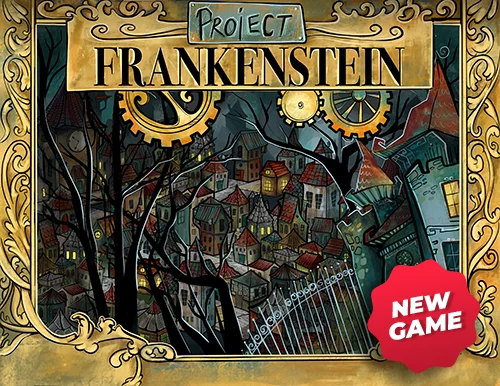
16+ år · 60–90 min · $24.90
Vanliga frågor om skolutrymningsrum
Hur mycket förberedelsetid krävs för ett escape room i skolan?
Totalt 15–30 minuter. Skriv ut byggsatsen (5–10 min), klipp ut de markerade bitarna (5–10 min), placera ut ledtrådar runt om i rummet (5–10 min). De flesta lärare gör det under en ledig stund före lektionen.
Kan jag använda samma spel för flera klasser?
Ja. Skriv ut en ny uppsättning för varje klass (pussel är engångsbruk eftersom eleverna skriver på dem), eller laminera en uppsättning med whiteboardpennor för obegränsad återanvändning. Vår digitala nedladdning har inga utskriftsbegränsningar.
Vilka material behöver jag förutom det tryckta kitet?
En skrivare, papper, sax och pennor/pennor. Det är allt. Vissa spel använder valfritt kuvert för att dölja ledtrådar, men det är inte obligatoriskt. Inga lås, inga lådor, ingen specialutrustning.
Hur lång tid tar ett escape room i skolan?
30–45 minuter för åldrarna 5–8, 45–60 minuter för åldrarna 9–13 och 60–90 minuter för åldrarna 16+. Lägg till 10 minuter för genomgång. De flesta spelen får plats inom en och samma lektion.
Kan jag genomföra detta som ett skolomfattande evenemang?
Absolut. Med LEGACY-PAKETET, olika lärare kör olika spel för olika årskurser samma dag. Grundskolan spelar Wooka Booka Island, mellanstadiet spelar Houdini, gymnasiet spelar Frankenstein. Ett köp täcker allt.
Kan spelen återanvändas över olika skolår?
Ja. Du äger de digitala filerna för alltid. Skriv ut dem igen nästa år för en ny kurs. Pusslen går inte ut, och elever från föregående år kommer inte att förstöra det – upplevelsen ligger i lösningen, inte i svaren.
Kan jag justera svårighetsgraden?
Varje kit innehåller ledtrådskort som du kan använda efter behov. För enklare spel, ge lagen fler ledtrådar i förväg eller förläng timern. För svårare spel, ta bort några ledtrådskort och förkorta timern. Du kan också blanda åldersgrupper – ett 5–8-spel fungerar bra för ESL- eller specialpedagogiska elever i äldre årskurser.
Erbjuder ni fakturering eller inköpsordrar för skolor?
Ja. Om er skola behöver en inköpsorder eller faktura, maila oss på hello@escaperoomgeeks.com så hanterar vi det. Vi erbjuder även en skolrabatt på 20% med koden LEGACY20.
Prova det en gång
Ett escape room i skolan kommer inte att ersätta dina lektionsplaner. Men den timme dina elever spenderar med att lösa pussel tillsammans kommer att finnas kvar längre än de flesta arbetsblad. Jag har fått lärare som mejlat mig månader senare och sagt att deras klass fortfarande pratar om "den där escape room-dagen".“
Efter att ha designat dessa spel i åratal och hört från hundratals lärare kan jag säga dig: i samma ögonblick som du ser dina elever lösa det sista pusslet, ge varandra high-fives med genuin spänning – kommer du att förstå. Det är magin i ett väldesignat escape room i en skola. Ren magi.
Se hela skolpaketet → · Bläddra bland enskilda spel → · Gör 30-sekundersquizet →



Lämna ett svar