








Jag har designat escape room-spel i åratal, och ett mönster jag fortsätter att se överraska mig: det är inte barn som driver merparten av vår försäljning – det är företag. HR-chefer, teamledare, kontorschefer – människor som letar efter något som deras team faktiskt kommer att tycka om, inte bara tolerera. Och jag förstår det. De flesta teambuilding-aktiviteter känns påtvingade. "Förtroendet faller" och "två sanningar och en lögn" har inte varit spännande sedan 2005.
Escape rooms är annorlunda. De skapar verklig press, verkligt samarbete och verkliga triumfögonblick – allt utan att någon behöver låtsas att de har roligt. Våra utskrivbara kit har använts för teambuilding-evenemang av skolor, scoutgrupper, företagslag och vängrupper på sex kontinenter. Så här får du det att fungera för ditt team.
Varför Escape Rooms är den bästa teambuilding-aktiviteten
Escape rooms uppfyller alla krav som HR-experter bryr sig om – och de gör det medan folk verkligen har roligt. Här är varför de fungerar bättre än de flesta alternativ:
Kommunikation under press. När en timer räknar ner och ledtrådar behöver delas med hela gruppen kan folk inte vara tysta. Även de introverta i ditt team kommer att säga ifrån när de upptäcker något som de andra missat. Detta är naturlig kommunikationsövning, inte en påtvingad övning.
Ledarskap uppstår organiskt. Ingen utser en ledare i ett escape room – en bara dyker upp. Ibland är det den person man förväntar sig. Ofta är det någon som vanligtvis är tyst på möten men som visar sig vara lysande på att koppla ihop ledtrådar. Att se vem som träder fram och hur är genuint insiktsfullt för chefer.
Alla bidrar på olika sätt. Escape rooms kräver mångsidigt tänkande – mönsterigenkänning, spatialt resonemang, ordlek, lateralt tänkande, uppmärksamhet på detaljer. Ingen enskild person kan lösa allt. Den detaljorienterade teammedlemmen fångar något som den övergripande tänkaren missade, och vice versa. Det är ett verkligt bevis på att olika perspektiv gör ett team starkare.
Den är inkluderande till sin natur. Till skillnad från repbanor eller sportaktiviteter kräver inte escape rooms fysisk förmåga, specifik kunskap eller tävlingsinstinkter. Alla kan delta på sin egen nivå. Enligt min erfarenhet har de mest mångsidiga teamen – blandade åldrar, avdelningar, senioritetsnivåer – roligast.
Det finns ett mätbart resultat. Flydde du? Hur snabbt? Hur många ledtrådar behövde du? Det inbyggda framgångsmåttet ger teamen något konkret att fira (eller skratta åt) efteråt.
3 sätt att driva ett Escape Room för ditt team
Alternativ 1: Utskrivbara Escape Room-kit (Bäst pris för de flesta lag)
Det här är vad vi specialiserar oss på, och det är det alternativ som är mest lämpligt för de flesta team. Ni laddar ner ett PDF-kit, skriver ut pusslen och ställer upp dem på ert kontor, i mötesrummet eller i någon annan tillgänglig yta. Total uppställningstid: 30–45 minuter.
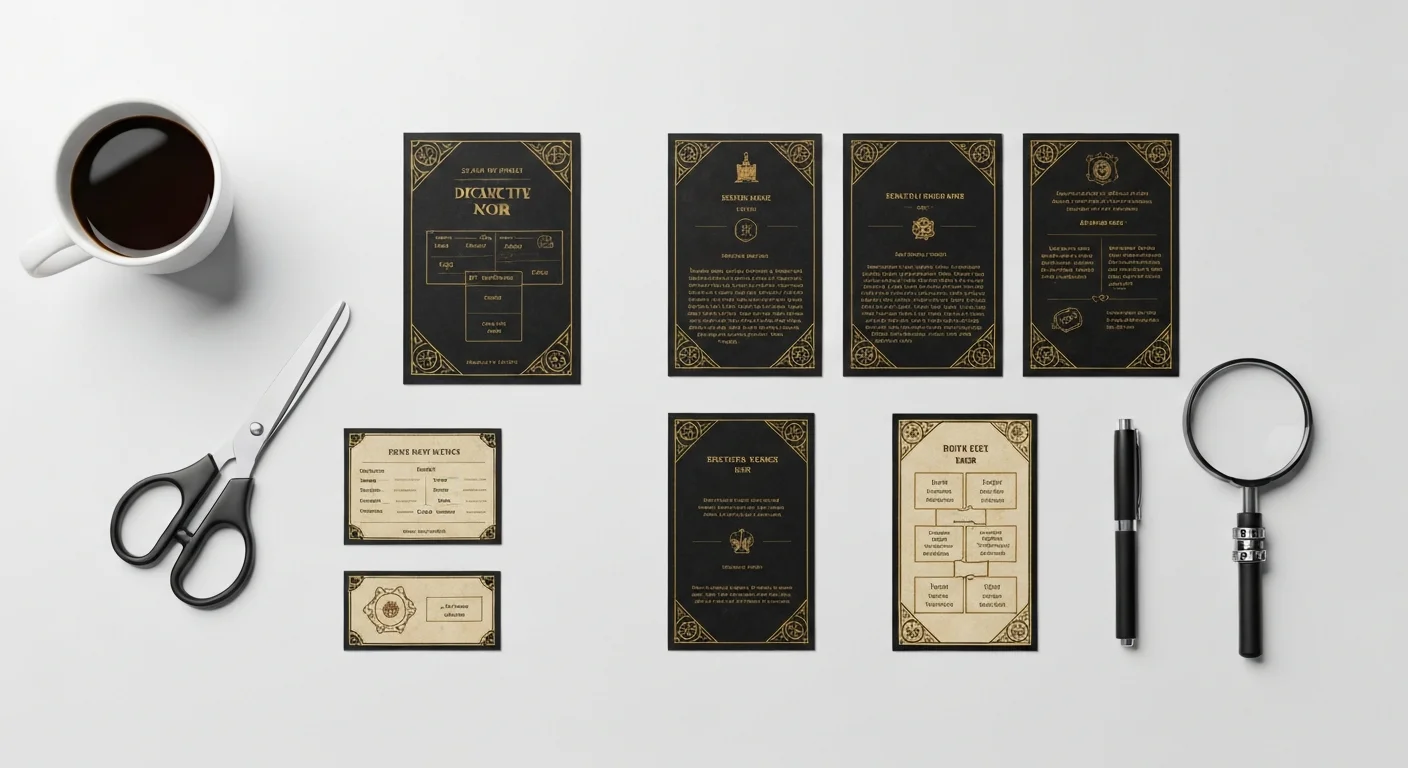
Här är varför den här metoden är bäst för teambuilding:
- Kosta: Ett kit ($24.90) fungerar för hela laget — inte per person. Ett lag på 20 som spelar vårt Silver Screen Sleuths Kit kostar totalt $24,90. Samma grupp på en kommersiell plats? $600-800.
- Skalbarhet: Skriv ut flera exemplar och kör tävlande lag samtidigt. Vi har haft grupper på 50+ som spelar samtidigt med fem lag som tävlar mot varandra.
- Ingen logistik: Inga bokningar, inga resor, inga problem med tillgänglighet av lokaler. Arrangera i ditt eget konferensrum enligt ditt eget schema.
- Fjärrvänlig: Skicka ut paket till distansteammedlemmar eller skicka PDF-filerna via e-post i förväg. Alla skriver ut, deltar i ett videosamtal och spelar samtidigt hemifrån.
- Omspelningsbar: Med 11 olika spel i vår katalog kan du köra ett nytt escape room varje kvartal utan att behöva göra om det.
Christie använde vårt kit till en personalfest: “Jag har köpt den här och gjort den till en personalfest. Det var barn där också och de var bättre på det än de vuxna!” — och Carla Jean delade in sin grupp i fyra lag med hjälp av Den förgyllda Carcanet: “"Vi delade in oss i grupper om fyra personer och använde alla resurser som fanns tillgängliga."”
Alternativ 2: Besök ett kommersiellt Escape Room
Kommersiella escape rooms erbjuder den mest uppslukande upplevelsen – professionell rekvisita, specialanpassad belysning, ljudeffekter och ett specialbyggt utrymme. Om din budget tillåter och ditt team är 6–8 personer kan detta vara ett bra alternativ.
Nackdelarna: kostnad ($30-40 per person), begränsad tillgänglighet (populära rum bokas veckor i förväg) och kapacitetsbegränsningar (de flesta rum rymmer 6-8 spelare, vilket innebär att ett lag på 20 spelare behöver 3-4 separata rum, förskjutna tidsluckor och en lokal som kan rymma det). Det kräver också resor, schemaläggning kring allas tillgänglighet och att man hoppas att ingen sjukanmäler sig samma dag.
Alternativ 3: Bygg ditt eget gör-det-själv-escape room
Om ert team tycker om själva den kreativa processen kan det vara en teambuilding-aktivitet att designa ett escape room tillsammans. En avdelning bygger rummet, en annan avdelning spelar det. Sedan byter ni.
Detta tar betydligt mer tid (3–5 timmar att designa och installera) men skapar en helt annan typ av bindning. Kolla in vår DIY-handledning för escape room för en fullständig genomgång och vår 30 pusselidéer för inspiration.
Hur man arrangerar ett teambuilding-event för Escape Room på kontoret
Här är steg-för-steg-instruktionerna för att driva ett escape room med ett utskrivbart kit på din arbetsplats:
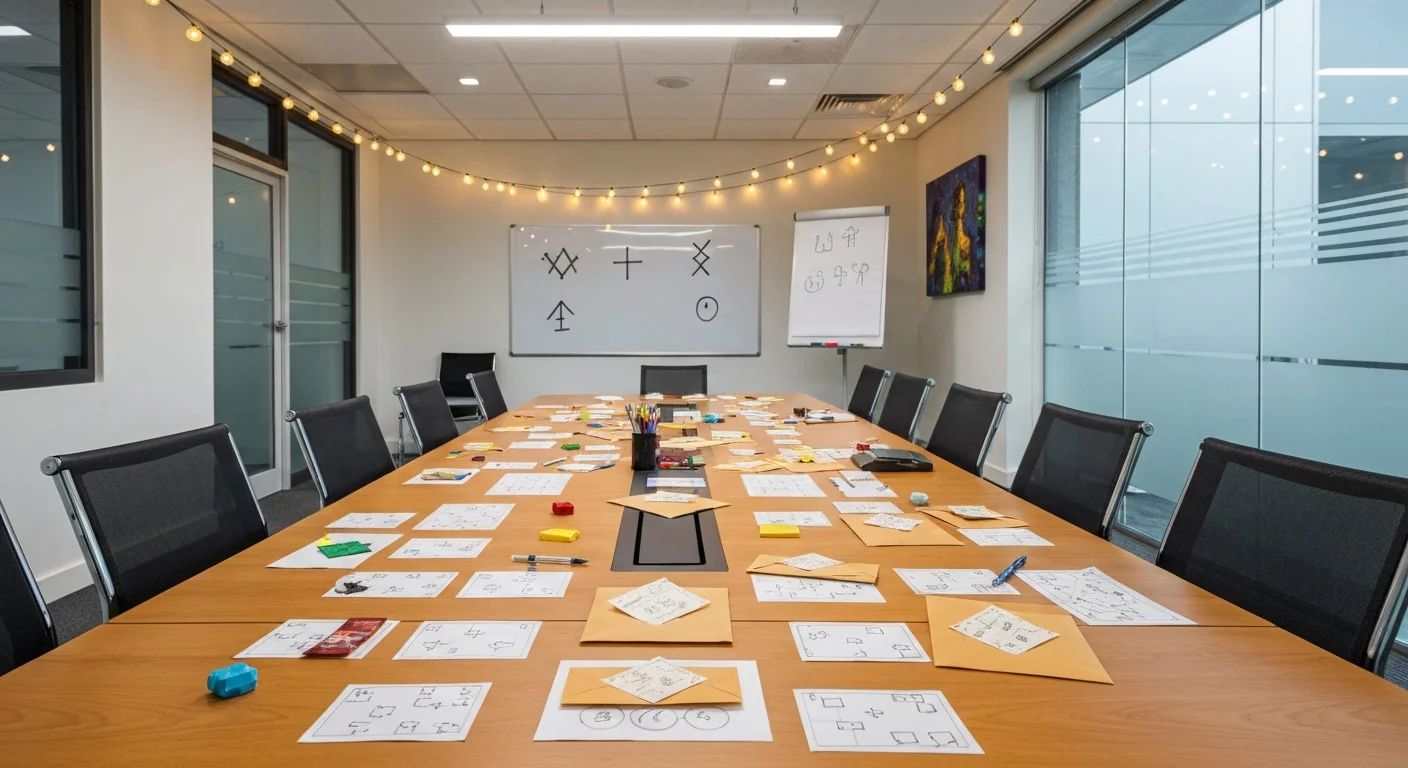
1. Välj ditt spel
Matcha spelet med ditt lags personlighet. Ett konkurrenskraftigt säljteam? Silver Screen Sleuths — vårt svåraste spel (5/5 svårighetsgrad), en noir-deckare med 10 kapitel som tar 2–3 timmar. Ett lag som föredrar äventyr framför tävling? Den förgyllda Carcanet-trilogin — en arkeologisk skattjakt som kan spelas över tre separata sessioner, vilket gör det till ett återkommande kvartalsvis teambuilding-program.
2. Planera dina lag
Den ideala storleken på ett escape room-team är 3–5 personer. För större grupper, dela upp dem i tävlande team – varje team får ett eget utskrivet exemplar av kitet och tävlar om att komma först. En avdelning på 20 personer blir fyra team med fem personer. Ett sällskap på 40 personer blir åtta team.
Blanda avdelningar och senioritetsnivåer. Den bästa teambuildingen sker när människor arbetar med kollegor de normalt inte interagerar med. Löser praktikanten ett pussel före vice VD:n? Det är det ögonblicket som förändrar teamdynamiken.

3. Ställ in utrymmet
Ett konferensrum fungerar perfekt. Sprid ut pusselmaterialet på bordet, göm några ledtrådar runt om i rummet (under stolar, inuti en låda, tejpade under bordet). Dämpa belysningen något, sätt på en tematisk spellista (våra kit innehåller spellistor), och konferensrummet känns helt annorlunda.
För tävlande lag, sätt upp separata bord i samma rum eller använd angränsande rum. Att ha lag i samma utrymme ger en rolig tävlingsenergi – att höra ett annat lag heja när de löser något motiverar ditt lag att öka tempot.
4. Genomför evenemanget
Här är en testad tidslinje som fungerar:
0:00 – 0:10 | Genomgång. Förklara spelkonceptet, läs inledningen till berättelsen, sätt upp reglerna. Bygg upp förväntan: “Du har 60 minuter. Börja… nu.”
0:10 – 1:10 | Spelupplägg. Låt teamen arbeta. Din roll är facilitator – ge tips när ett team har kört fast i mer än 4–5 minuter, håll energin uppe och se till att alla deltar. Lös inte pussel åt dem.
1:10 – 1:30 | Avrapportering. Detta är den viktigaste delen för att bygga ROI på ditt team. Mer om detta nedan.
Sammanfattning: Där glädje blir utveckling
Själva escape room-upplevelsen är rolig. Det är under debriefingen som den blir genuint värdefull för ert lag. Tillbringa 15–20 minuter efter matchen med att diskutera vad som hände – inte svaren på gåtorna, utan teamdynamiken.

Frågor som väcker nyttiga samtal:
- “"Vem framstod som ledare? Var det den du förväntade dig?"” — visar informellt ledarskap och hur teamet självorganiserar sig
- “"När var du mest fast? Vad fick dig loss?"” — lyfter fram problemlösningsmönster och hur teamet hanterar frustration
- “"Blev allas röster hörda? Fanns det en punkt där någon hade svaret men inte kunde få uppmärksamhet?"” — avslöjar kommunikationsavbrott som sannolikt också inträffar i verkliga arbeten
- “"Vad skulle du göra annorlunda om du spelade igen?"” — bygger upp ett tankesätt för kontinuerlig förbättring
- “"Vad förvånade dig med hur någon i teamet hanterade ett problem?"” — uppmuntrar till uppskattning av olika arbetsstilar
Dessa är inte påtvingade. Efter en timmes intensivt samarbete har folk genuina observationer att dela med sig av. Escape room ger dem en gemensam upplevelse att referera till – och dessa referenser överförs till det verkliga arbetet. “Kommer ni ihåg när vi satt fast med den där chiffern? Samma sak händer med det här projektet.” Det är det bestående värdet.
Bästa Escape Room-spelen för teambuilding
För företagsteam och vuxna (16+)
Silver Screen Sleuths — $24.90
Vårt mest utmanande spel (5/5 svårighetsgrad). En noir-deckare från 1940-talet i 10 kapitel. Tar 2–3 timmar, vilket gör det perfekt för en halvdags teambuilding-session. Serietidningsstilen och de komplexa pusslen är speciellt utformade för vuxna. David, en speltestare, kallade det “"ett av de mest engagerande detektivspel jag har stött på."”
Bäst för: Tävlingsinriktade team, avdelningar som älskar utmaningar, team som vill skryta
Den förgyllda karkanetten — Trilogin — $45
Tre sammanhängande spel med en enda äventyrsbåge – en arkeologisk skattjakt över Egeiska havet. Varje kapitel tar 90–120 minuter. Spela alla tre under en dag utanför skolan, eller sprid ut dem över tre teambuilding-sessioner varje kvartal för ett återkommande program. “Att hoppa från Gilded Carcanet till uppföljaren med mina vänner var episkt!” — Nina
Bäst för: Återkommande teambuildingprogram, retreats utanför kontoret, team som vill ha ett långsiktigt äventyr
För blandade åldersgrupper och tillfälliga lag
Projekt Frankenstein — $24.90 (åldrar 12-16)
Ett vetenskapstema-mysterium i ett slott. 90 minuter. Passar bra för företagsevenemang där anställda tar med sig äldre barn, eller för yngre team som praktikanter och juniorer.
Cirkus Medrano — $24.90 (åldrar 10-13)
En detektivhistoria med obligatorisk appintegration som guidar spelarna genom berättelsen. Bra för teknikkunniga lag. Allie tyckte att den var perfekt för konkurrerande lag: “"Vi hade två team som arbetade samtidigt och det var perfekt!"”
För distans- och hybridteam
Alla våra utskrivbara kit fungerar för distansteam med en enkel anpassning:
- Mejla PDF-filen till alla deltagare dagen innan
- Alla trycker sitt eget exemplar
- Delta i ett videosamtal (Zoom, Teams, Google Meet)
- Uppdelat i grupper om grupper – varje rum är ett team
- Teamen löser samtidigt, handledaren kollar in varje rum
- Omgruppera inför avrapporteringen
Den delade skärmen gör att det fungerar – en person håller upp ett ledtrådskort, andra hjälper till att lösa det. Det är förvånansvärt engagerande för en virtuell aktivitet eftersom pusslen kräver aktivt deltagande från alla i samtalet.

Escape Room kontra andra teambuilding-aktiviteter
Hur står sig ett escape room jämfört med de andra vanliga misstänkta?
Escape Room kontra Triviakväll: Trivia belönar befintlig kunskap – den som vet mest vinner, varje gång. Escape rooms belönar mångsidigt tänkande. Den som lägger märke till ett mönster, den som upptäcker en detalj och den som kopplar ihop två ledtrådar är lika värdefulla. Mer inkluderande, mer samarbetsinriktade.
Escape Room kontra matlagningskurs: Matlagningskurser är bra men dyra (1 person, 4 personer, 50–100 pund/person) och kräver specialiserade lokaler. Escape rooms fungerar i era befintliga kontorslokaler för en bråkdel av kostnaden.
Escape Room kontra repbana / utomhusaktiviteter: Fysiska aktiviteter exkluderar gruppmedlemmar med rörlighetsbegränsningar, hälsoproblem eller enkla preferenser. Escape rooms är fullt tillgängliga – ni sitter runt ett bord och löser pussel. De är även väderbeständiga.
Escape Room kontra Happy Hour: Happy hour är bra för att umgås men skapar ingen gemensam utmaning, inget samarbete och inga minnen utöver "vi tog drinkar". Ett escape room ger ditt team en historia som de kommer att återberätta: "Kommer ni ihåg när Sarah knäckte chiffern under de sista 30 sekunderna?"“
Tips från en speldesigner som har sett tusentals lag spela
Efter att ha sett hur team interagerar med våra spel under över 21 000 spelsessioner, har jag lärt mig följande om att driva escape rooms för teambuilding:
- Överförklara inte reglerna. “Lös pusslen, hitta ledtrådarna, knäck den slutgiltiga koden. Ni har 60 minuter på er. Kör.” Det var allt. Halva nöjet är att lista ut hur saker och ting fungerar.
- Blanda avdelningar med flit. Marknadsföraren och ingenjören kommer att närma sig samma pussel helt olika. Den mångfalden är hela poängen.
- Ge tips generöst. Det här är inte ett test – det är teambuilding. Om ett lag har kört fast i 4–5 minuter, knuffa dem. Frustration dödar det roliga, och död tid lär sig ingenting.
- Den tysta personen tittar på. I varje grupp finns det någon som håller sig tillbaka. Ofta är det de som ser helhetsbilden. Skapa utrymme för dem: “Har någon lagt märke till något vi inte har provat än?”
- Hoppa över priserna för vinnande lag. Tävlingen är tillräckligt motiverande. Priser flyttar fokus från samarbete till vinst, vilket undergräver målet med teambuilding.
- Ta foton under spelets gång. Uppriktiga bilder på människor mitt i ett pussel, som pekar på ledtrådar och firar genombrott – dessa blir utmärkt innehåll för ditt teams Slack-kanal och får människor att känna sig värdefulla.
- Gör alltid avrapporteringen. Utan det hade du en rolig eftermiddag. Med det hade du en teamutvecklingssession som folk faktiskt uppskattade. Det är skillnaden mellan en utgift och en investering.
Snabbstartschecklista
Allt du behöver för att genomföra ett teambuilding-event i Escape Room:
- A utskrivbart escape room-kit ($24.90-$45)
- Skrivare, sax, penna (en uppsättning per lag)
- Ett konferensrum eller en stor möteslokal
- Valfritt: kombinationshänglås, tematisk spellista, dämpad belysning
- En timer (telefon eller projicerad på skärmen för drama)
- 30 minuter för installation
- 60–90 minuters speltid
- 15–20 minuter för avrapportering
- En handledare (det är du)
Totalkostnad för ett lag på 20 personer: $24.90 (ett kit, tryckt fem gånger). Jämför det med $600-800 på en kommersiell escape room-plats, eller $1 000+ för en matlagningskurs, repkurs eller ett externt evenemang. Matematiken är svår att argumentera emot.
Den bästa teambuildingen känns inte som teambuilding. Det känns som en grupp människor som råkar arbeta tillsammans, löser ett mysterium, tävlar mot klockan och har kvartalets bästa tisdagseftermiddag. Det är vad ett escape room levererar – och det kostar mindre än ditt teams månatliga kaffebudget.
Bläddra bland alla våra escape room-kit och välj den som passar ditt lag.
Relaterad läsning
- Hur man anordnar ett Escape Room-födelsedagsfest hemma
- Hur man driver ett Escape Room i klassrummet
- 25 kreativa gör-det-själv-teman för Escape Rooms
Våra färdiga spelsatser
Välj ett spel, skriv ut och spela - så enkelt är det!
-
Professor Svöns laboratorium
Det ursprungliga priset var: $24.90.$19.90Det nuvarande priset är: $19.90.Ålder: 9-1345-60 minuter2-5 barn -



Lämna ett svar