







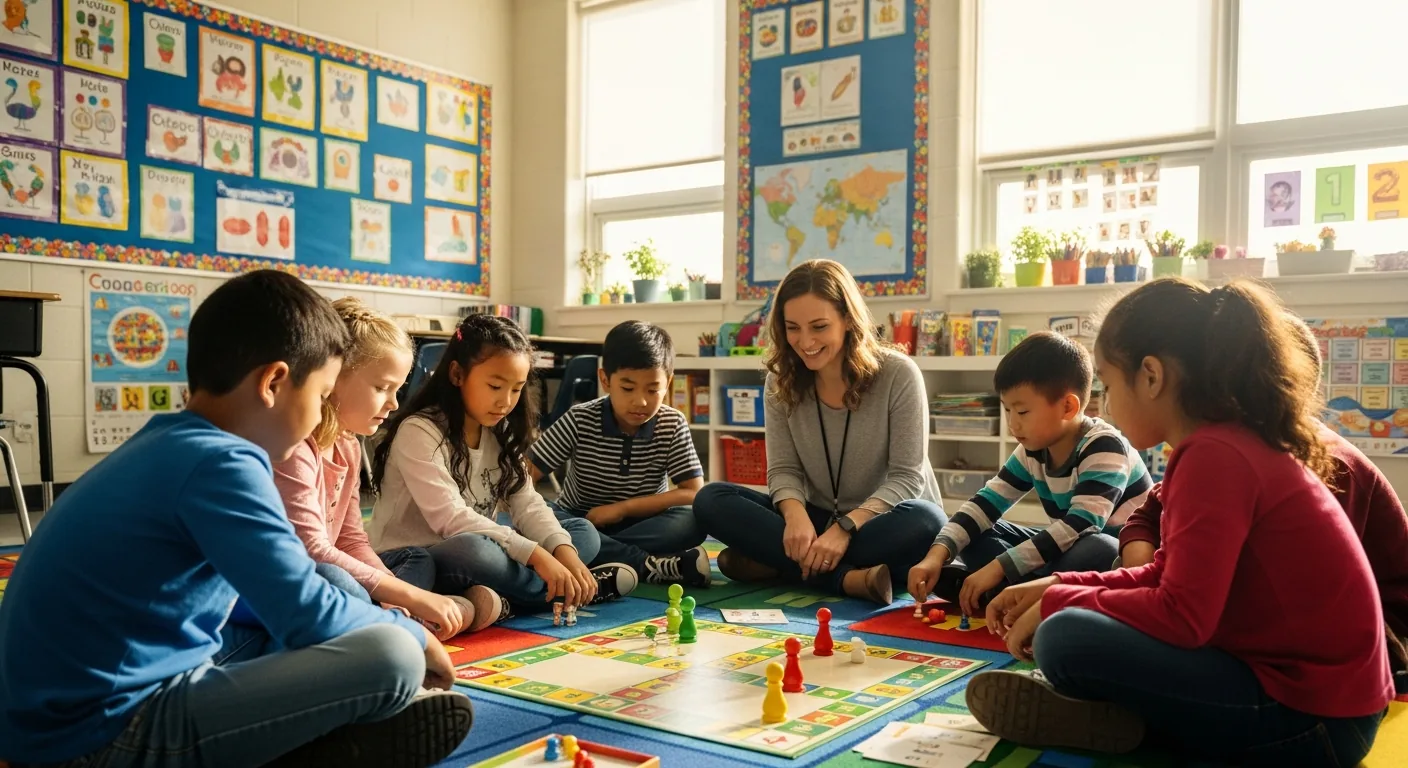
Every teacher knows the moment — you’re mid-lesson and half the class has glazed over. The material matters, but the delivery isn’t landing. That’s where a well-chosen classroom game changes everything.
After years of testing these across K-8 classrooms, the ones that actually work share a few things in common. They’re not just time-fillers. The best fun classroom games get every student involved, reinforce what you’re already teaching, and give kids a reason to pay attention beyond “this will be on the test.”
Before we get into the list, here’s what I look for when picking classroom activities:
- Every student plays. If half the class is watching, it’s not a game — it’s a performance.
- It ties back to the lesson. Fun activities for students in the classroom should strengthen vocabulary, reinforce concepts, or build skills you’re already working on.
- It works for different group sizes. Some kids shut down in large groups. A good game scales from pairs to the whole class.
- The teacher gets involved too. Students engage more when you’re playing too — not just refereeing from the front.
I’ve grouped these into active games, review games, and team-builders so you can jump to what fits your next lesson. Here are 30 indoor classroom games that work across grade levels.
Want an activity that fills an entire class period?
These quick games are great for 10-minute bursts. But when you need a full 45-60 minute activity where every kid is solving puzzles, working in teams, and too engaged to check the clock — printable escape room kits do exactly that. One bundle covers K through 12, unlimited prints.
Review & Knowledge Games
These are the classroom games I reach for when there’s actual content to review. They work because students forget they’re studying. A kid who won’t raise their hand during a lecture will shout answers across the room when points are on the line. That’s the whole idea.
1. Pictionary
Best for: Grades 2-8 | Category: Review

Pictionary is one of those fun classroom games that sounds simple until you watch a fifth grader try to draw “photosynthesis” with a dry-erase marker. That’s exactly why it works. When students have to translate a concept into a picture, they’re processing it differently than they would by writing a definition or filling in a blank. I’ve used this during a life science unit where students had to draw vocabulary words like “cell membrane” and “mitosis.” The conversations that happened while teammates were guessing told me more about what they understood than any worksheet would have.
It also levels the playing field. Your quiet artist who never participates in class discussion? Suddenly they’re the MVP. That matters more than most teachers realize.
How to play:
- Split the class into two or three teams.
- Prepare a stack of cards with vocabulary words, concepts, or review terms related to your current unit.
- One player from the first team comes to the board and draws a card. They have 60 seconds to draw the word. No letters, no numbers, no talking.
- Their teammates shout guesses. If someone gets it right within the time limit, the team earns a point.
- If time runs out, the other teams can steal with one guess each.
- Rotate through teams until you run out of cards or class time.
2. 20 Questions
Best for: Grades 3-12 | Category: Review

This is one of the best games to play in class when you want students to think backwards. Instead of memorizing a fact and repeating it, they have to figure out the answer by asking the right questions. It builds logical thinking in a way that flashcards never will. I ran this during a WWII unit where the secret answer was “D-Day.” Watching students narrow it down from “Is it a person?” to “Is it an event?” to “Did it happen in Europe?” was genuinely exciting. They were making connections across the whole unit without being told to.
It’s also dead simple. No prep, no materials, five minutes or a full period. You decide.
How to play:
- Choose a word, concept, historical figure, or vocabulary term from the current unit. Write it down but don’t reveal it.
- Students take turns asking yes-or-no questions. “Is it alive?” “Is it bigger than a car?” “Did we learn about it this week?”
- You can only answer “yes,” “no,” or “sort of.” Keep a tally of questions asked on the board.
- The class gets 20 questions total. If someone thinks they know the answer, that guess counts as one of the 20.
- If they guess correctly, the class wins. If they burn through all 20 questions, you win (and you reveal the answer for a quick review moment).
- Let the student who guessed correctly pick the next word, or rotate to a new “host.”
3. Hangman
Best for: Grades 1-8 | Category: Review
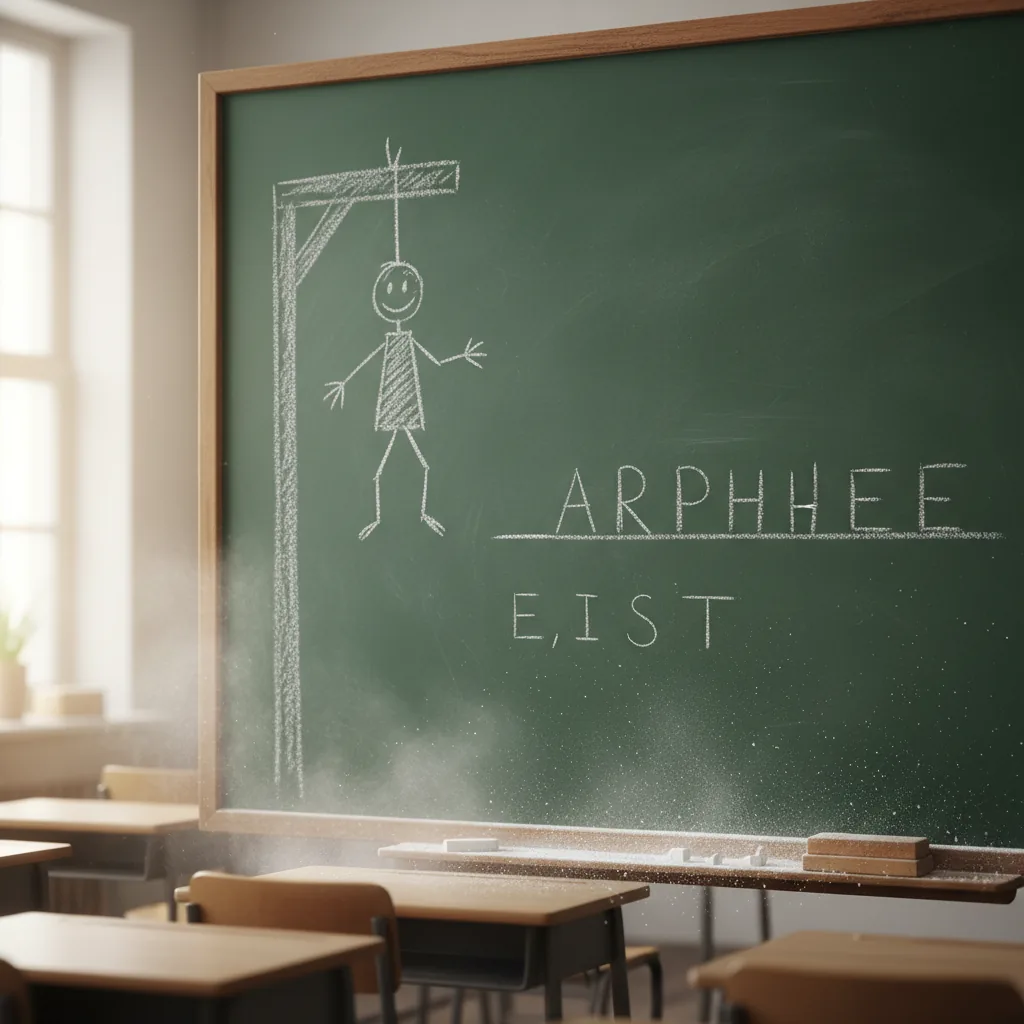
Yes, Hangman. It’s been around forever because it works. For younger students, it’s a sneaky way to practice spelling and letter recognition without anyone complaining. For older kids, swap in vocabulary words from your current unit and suddenly it’s a review game disguised as a five-minute brain break. I keep a running list of words from whatever we’re studying and pull from it whenever I need a quick filler. Last week it was “metamorphosis” for my third graders. They were so focused on saving the stick figure that they didn’t notice they were spelling a word they’d been struggling with all week.
If the original name bothers you (and I get it), call it “Snowman” and draw melting snowball parts instead. Same game, less baggage.
How to play:
- Think of a word or phrase related to your lesson. Draw a blank line on the board for each letter.
- Students raise their hands (or you go around the room) and guess one letter at a time.
- If the letter is in the word, write it on the correct blank(s). If not, draw one part of the stick figure (head, body, left arm, right arm, left leg, right leg — six wrong guesses allowed).
- Students can guess the full word at any time, but a wrong word guess counts as a wrong letter.
- The class wins if they complete the word before the drawing is finished. You win if the figure is complete first.
- Whoever guesses correctly gets to pick the next word (or you keep choosing from your list to stay on-topic).
4. Hot Seat
Best for: Grades 3-12 | Category: Review
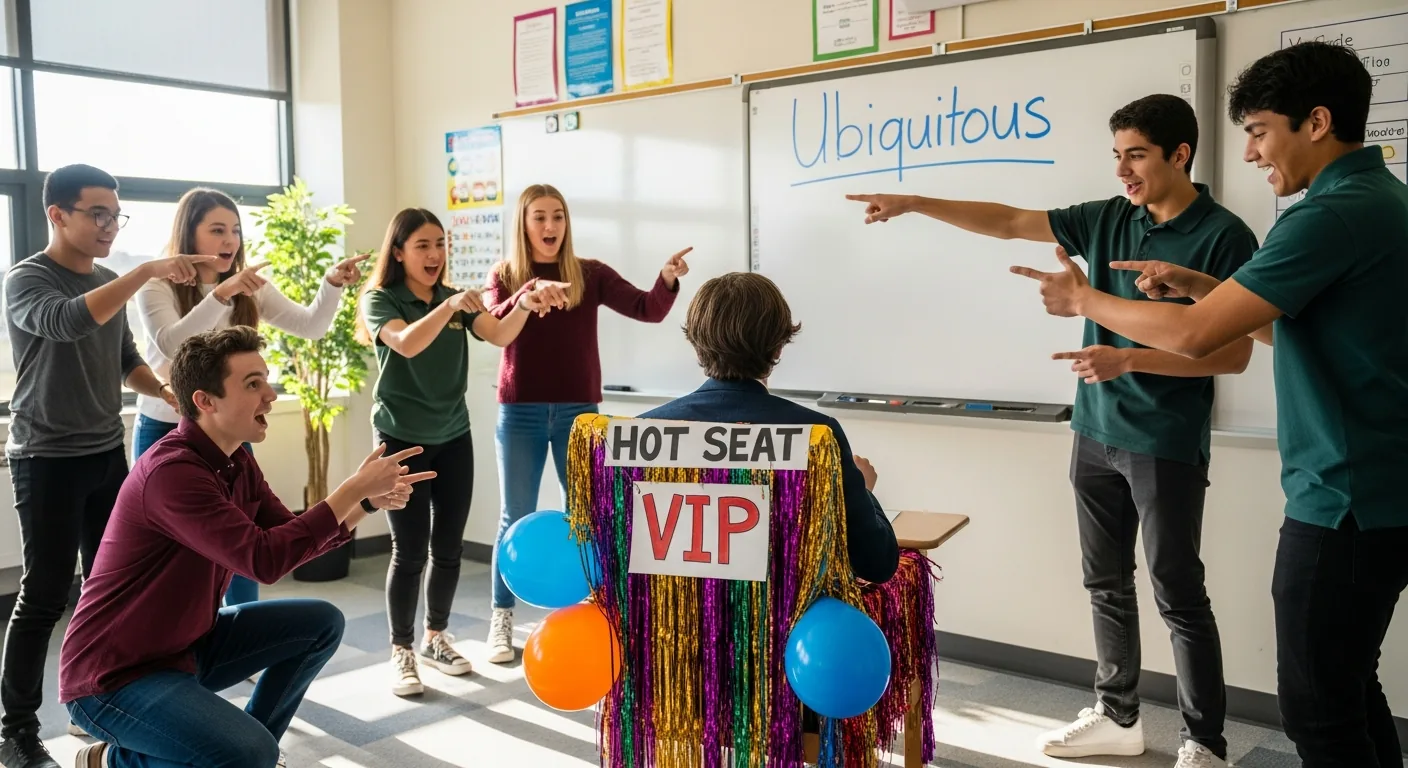
Hot Seat is like the TV show Password meets a pop quiz, and it’s one of my all-time favorite classroom activities for review days. One student sits in a chair at the front of the room, facing the class with their back to the board. You write a vocabulary word or concept behind them, and their classmates have to describe it without saying the word itself. The student in the hot seat has to guess what’s written on the board using only their teammates’ clues.
What I love about this game is that everyone is engaged. The guesser is thinking hard. The rest of the class is scrambling to find clear, accurate ways to explain a concept, which is honestly a higher-order skill than most review activities ask for. When a student has to explain “democracy” without using the word, they actually have to understand it.
How to play:
- Place a chair at the front of the room, facing the class and away from the whiteboard.
- One student sits in the “hot seat.” They cannot look at the board behind them.
- Write a vocabulary word, historical figure, or concept on the board where the rest of the class can see it.
- Classmates give verbal clues to help the guesser figure out the word. They cannot say the word itself, spell it out, or use rhyming clues.
- Set a timer for 60-90 seconds. If the student guesses correctly, their team gets a point.
- Rotate students through the hot seat so everyone gets a turn. You can play in teams or as a whole class.
5. Scattergories
Best for: Grades 4-12 | Category: Review
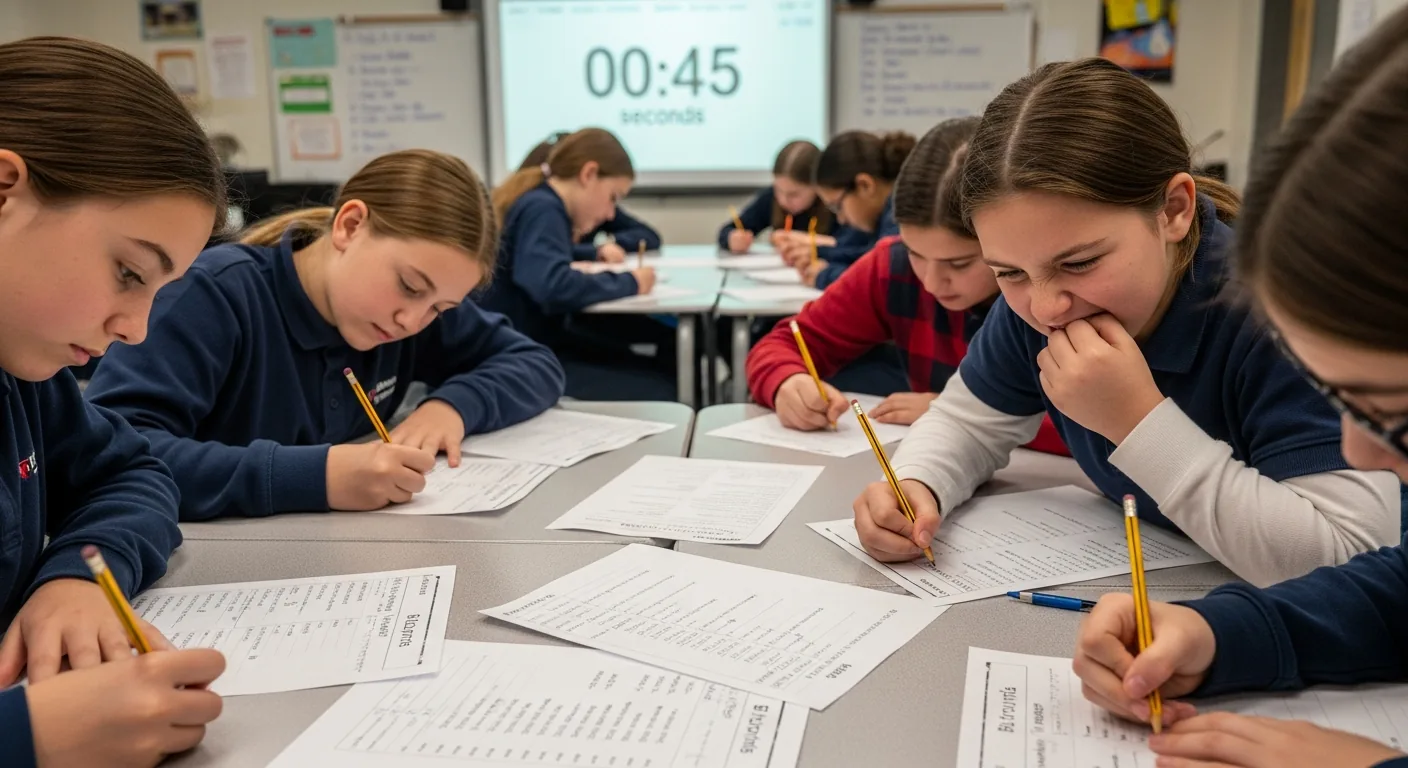
Scattergories pushes students to think fast and think differently, which is why it keeps showing up in my rotation of fun classroom games. The basic idea: give students a list of categories and a random letter, then they have to come up with an answer for each category that starts with that letter. The catch? You only get points for unique answers. If two students write the same thing, neither scores. So it’s not enough to know the material. You have to think creatively about it.
I adapted this for an ELA class where the categories were “type of figurative language,” “character from a book we’ve read,” “grammar term,” and “word with a prefix.” Rolled the letter M. The range of answers was wild, and the debates about whether something counted were some of the best class discussions we had all semester.
How to play:
- Create a list of 6-10 categories related to your current subject. Write them on the board or hand out printed sheets.
- Pick a random letter (roll a die with letters, draw from a bag, or use a random letter generator).
- Set a timer for 2-3 minutes. Students write one answer per category that starts with the chosen letter.
- When time’s up, go through each category. Students read their answers aloud.
- If your answer is unique (no one else wrote it), you get a point. Duplicate answers score zero for everyone who wrote them.
- Play 3-5 rounds with different letters. Highest total score wins.
6. A-to-Z Game
Best for: Grades 2-8 | Category: Review
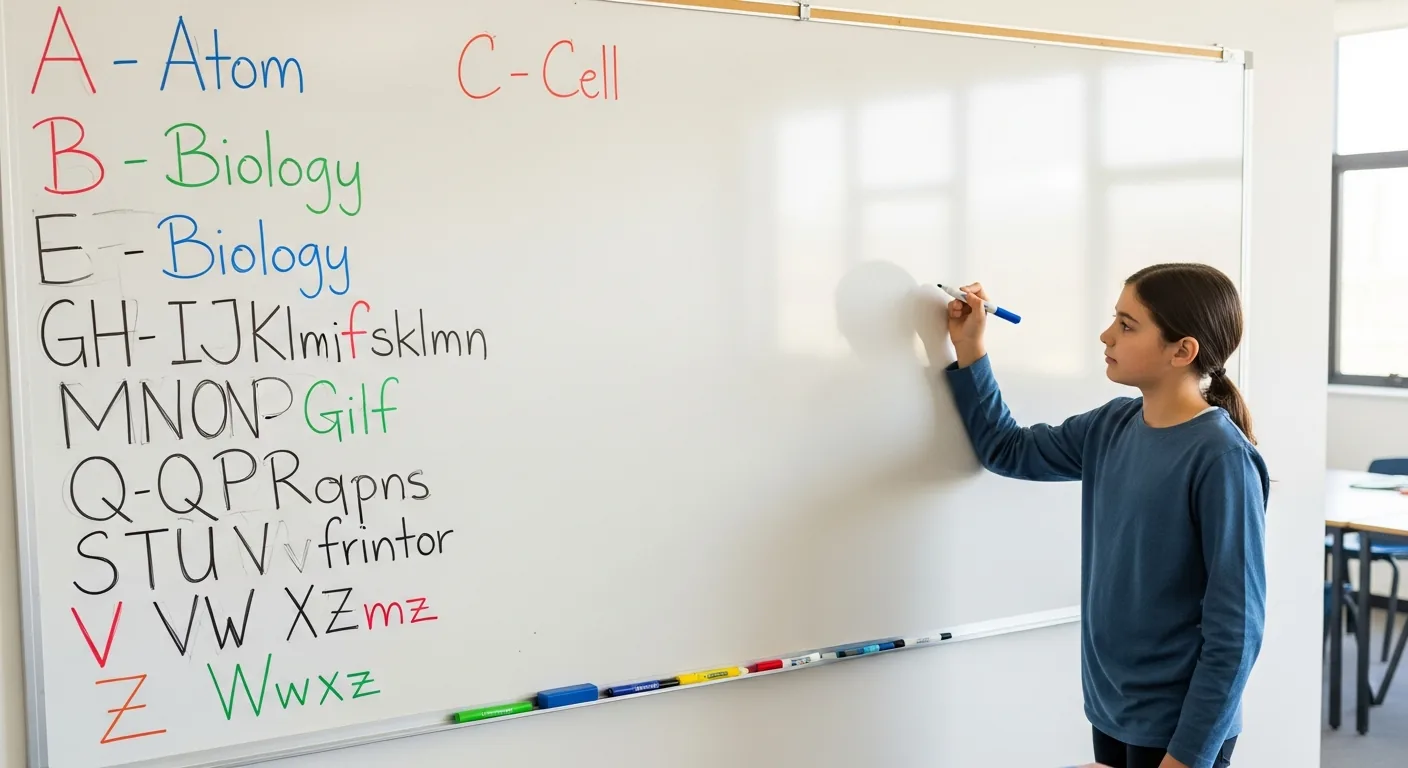
This might be the lowest-prep classroom game in existence, and I mean that as a compliment. You pick a topic. Students try to come up with a related word for every letter of the alphabet. That’s it. No cards to print, no technology needed, no rules to explain twice. I’ve used it as a warm-up for science (“Name an animal for every letter”), a review for social studies (“A word related to ancient Egypt for each letter”), and a wind-down after testing. It fills five minutes or twenty, depending on how competitive your class gets.
The letters X and Q always cause arguments. I let them. That’s where the learning happens.
How to play:
- Pick a topic connected to whatever you’re teaching. Write it on the board.
- Students work individually, in pairs, or in small teams. Each group needs a piece of paper with the letters A through Z listed down the side.
- Set a timer for 5-10 minutes. Students write one word related to the topic for each letter.
- When time is up, go through the alphabet together. Teams share their answers for each letter.
- Award one point per valid answer. If a team has an answer no one else has, give a bonus point.
- Discuss any creative or questionable answers as a class. The “does that count?” debates are often the most educational part.
7. Bingo
Best for: Grades K-12 | Category: Review
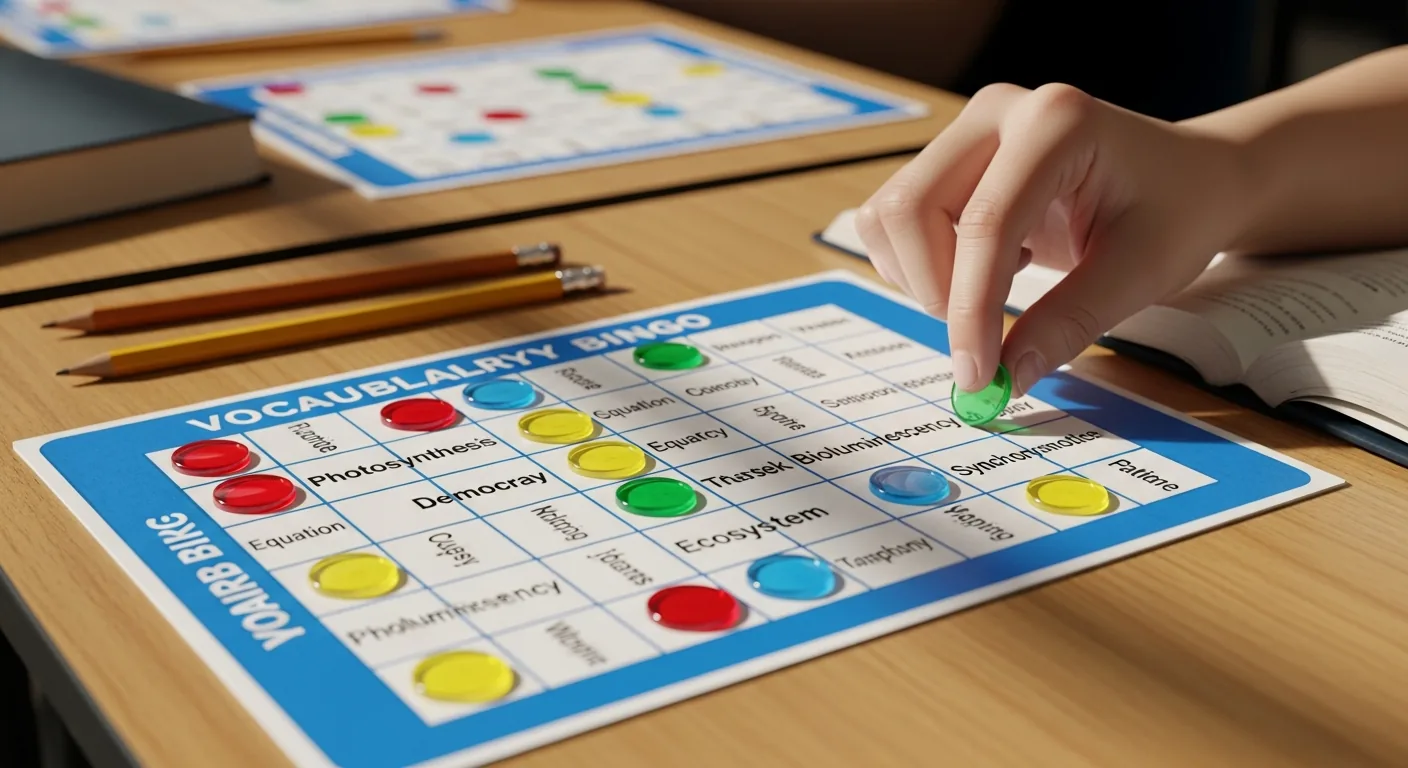
Bingo has no age limit. I’ve played it with kindergartners learning sight words and with eighth graders reviewing for a state test. The secret is in the cards. Instead of numbers, fill the squares with vocabulary definitions, math answers, historical dates, or Spanish translations. You call out the clue; students have to find the matching term on their card. It flips the usual review dynamic. Students aren’t just hearing information. They’re scanning, recognizing, and matching it in real time.
Making the cards takes some time upfront, but you’ll reuse them for years. I have a set of fraction bingo cards that’s survived three school years and still gets my fourth graders loud enough for the class next door to complain. That’s how you know it’s working.
How to play:
- Create bingo cards with a 5×5 grid. Fill each square with answers, vocabulary words, or terms from your unit. Each card should have the same words but in a different arrangement.
- Hand out cards and give each student a set of markers (small pieces of paper, beans, or erasers work fine).
- Read a clue, definition, or question aloud. Students find the matching answer on their card and cover it.
- First student to cover five in a row (horizontal, vertical, or diagonal) calls out “Bingo!”
- Check their answers by having them read back the covered squares while you confirm against your clue list.
- For longer games, play for full card (blackout) or special patterns like an X or four corners.
8. Jeopardy
Best for: Grades 4-12 | Category: Review
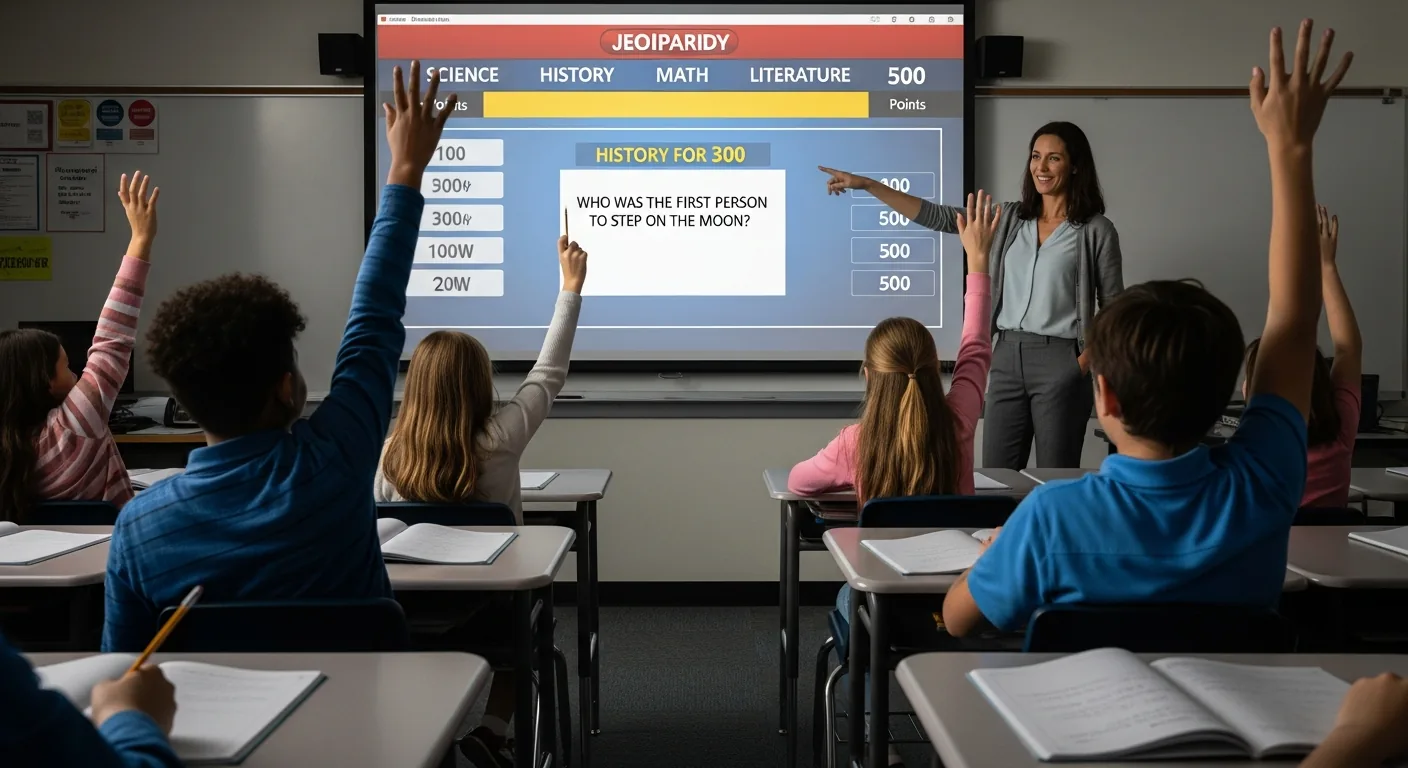
If you’ve never run a Jeopardy review day, you’re missing out on one of the most effective games to play in class before a test. The format is familiar to most students already, which means almost zero time explaining rules. Five categories, five questions each, increasing difficulty. Students pick a category and point value, you read the clue, and they answer in the form of a question (or don’t — I stopped enforcing that after the fifteenth argument).
You don’t need to build a board from scratch. Sites like JeopardyLabs let you create a free game in about twenty minutes, and there are thousands of pre-made games other teachers have shared. I tweak an existing one the night before and it’s ready. My students remember Jeopardy review days better than actual test days, which tells you something about how our brains hold onto information tied to competition.
How to play:
- Create a game board with 5 categories and 5 clues per category, worth 100 to 500 points. Use a projector with JeopardyLabs or draw a grid on the board.
- Split the class into 3-5 teams. Give each team a whiteboard or scrap paper for writing answers.
- The first team picks a category and point value. Read the clue aloud.
- All teams write their answers simultaneously. After a 15-30 second timer, teams reveal answers. Every team with the correct answer earns the points.
- The team that chose the question picks again (or rotate the choosing to keep it fair).
- For the last round, do a “Final Jeopardy” where teams wager points on one big question.
9. Kahoot! & Digital Quiz Games
Best for: Grades 3-12 | Category: Review

I’ll be honest: the first time I used Kahoot in class, I thought it was just hype. Then I watched my most checked-out students lean forward, grab their Chromebooks, and argue about answer streaks for thirty straight minutes. Fine. I was wrong. Digital quiz games have earned their place in my list of go-to fun activities for students in the classroom, and not just Kahoot. Blooket lets students use points to play a secondary game (my class is obsessed with the tower defense mode). Gimkit has a shop where students buy power-ups with in-game currency. Quizlet Live forces random teams to collaborate instead of compete solo.
The trick is not relying on these every day. They lose their magic fast. Once a week, maybe twice, for review sessions or Friday wind-downs. That keeps the excitement real.
How to play:
- Choose a platform (Kahoot, Blooket, Gimkit, or Quizlet Live) and create a quiz with 10-25 questions from your current unit. Most platforms have a free tier.
- Project the game code on the board. Students join using their devices (Chromebooks, tablets, or phones if your school allows them).
- Each question appears on the projector with a timer. Students select their answers on their own screens.
- Points are awarded for correct answers, with bonus points for speed (on most platforms).
- A live leaderboard updates after each question, keeping the competitive energy high.
- After the game, most platforms give you a downloadable report showing which questions students missed most, so you know exactly what to reteach.
Active & Energy Games
Sometimes students just need to move. Their brains are full, their legs are restless, and no amount of “eyes up here” is going to fix it. These indoor classroom games get kids out of their seats without losing the thread of your lesson. I use them as brain breaks between heavy content blocks, or as a reward when the class has earned some fun. The best ones still sneak in a little learning.
10. Simon Says
Best for: Grades K-5 | Category: Active

Simon Says gets a bad rap as a “little kids” game, but I’ve gotten more out of it than people expect. The standard version is fine for a brain break. Students listen for “Simon says touch your toes” and try not to get tricked. But the real power comes when you make the commands academic. “Simon says point to something that’s a rectangle.” “Simon says hold up the number of sides a pentagon has.” “Simon says spell the word ‘because’ with your arms.” Now it’s a review game that burns energy at the same time.
I’ve also used it for ESL students learning body parts and prepositions. “Simon says put your hand behind your head.” That kind of physical association sticks better than a worksheet ever will.
How to play:
- Stand at the front of the room. Students stand at their desks or in an open area.
- Give commands starting with “Simon says…” followed by an action. Mix in educational prompts: “Simon says jump three times” alongside “Simon says show me a right angle with your arms.”
- Occasionally give a command without saying “Simon says” first. Any student who does the action sits down.
- Keep the pace fast to make it tricky. The last student standing wins.
- Let the winner become the next “Simon” to keep the game going (and give you a breather).
11. Musical Chairs
Best for: Grades K-5 | Category: Active
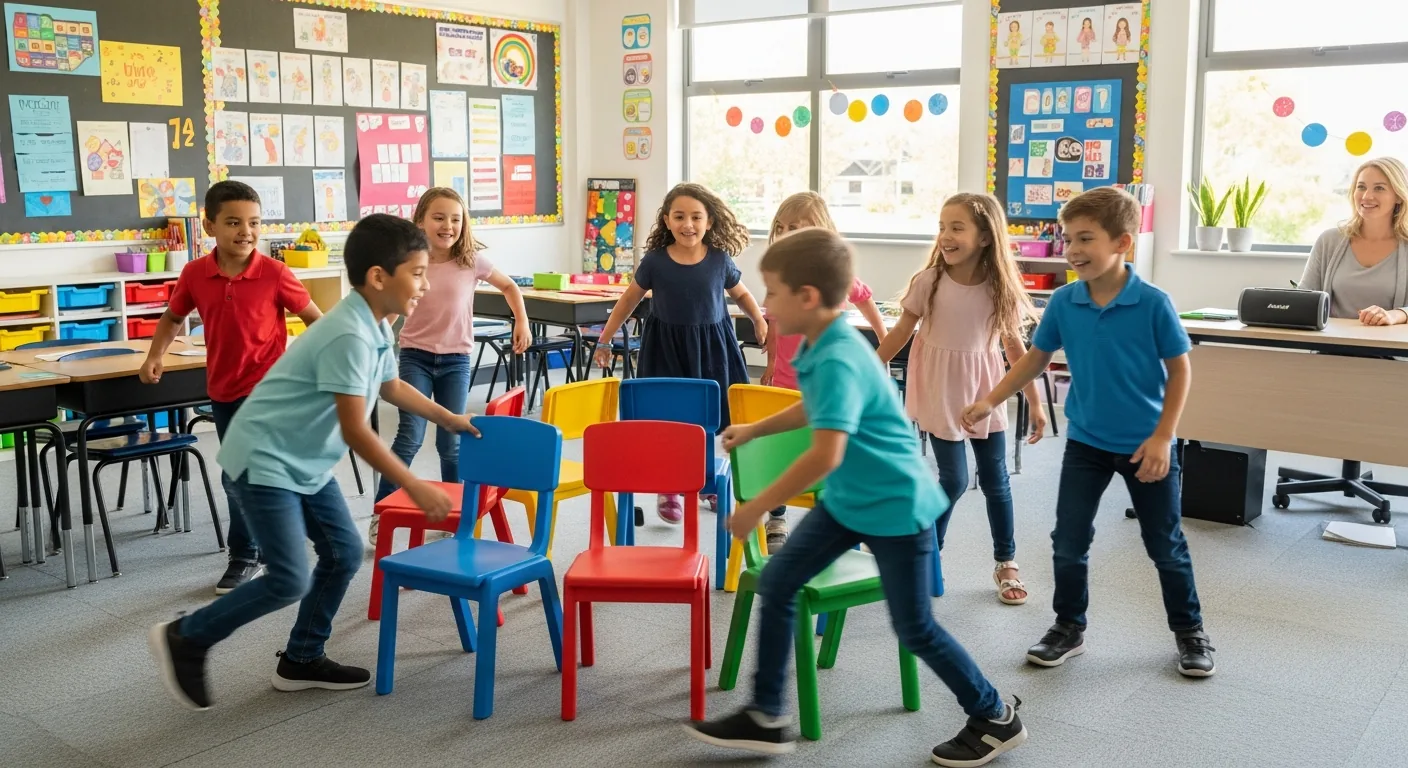
Musical Chairs is a perfect brain break between heavy lessons. Kids move, they laugh, and they burn off the wiggles that were going to turn into behavior problems in twenty minutes anyway. But here’s the twist that makes it an actual classroom game instead of just recess indoors: when the music stops and someone doesn’t get a seat, they have to answer a review question before they’re out. Get it right and they stay in. Get it wrong and they sit down but become a judge for the next round.
This keeps eliminated students from checking out. Nobody’s just sitting there watching. Even the “out” kids are paying attention because they’re judging whether answers are correct.
How to play:
- Arrange chairs in a circle (or a line, back-to-back) with one fewer chair than the number of players.
- Play music. Students walk around the chairs. When the music stops, everyone scrambles for a seat.
- The student left standing gets a review question. If they answer correctly, they stay in and one chair is still removed. If they get it wrong, they’re out and become a “judge.”
- Remove one chair each round and keep playing.
- The final two students face off. When the music stops, whoever doesn’t get the seat answers a bonus question for the win.
12. Freeze Dance
Best for: Grades K-5 | Category: Active
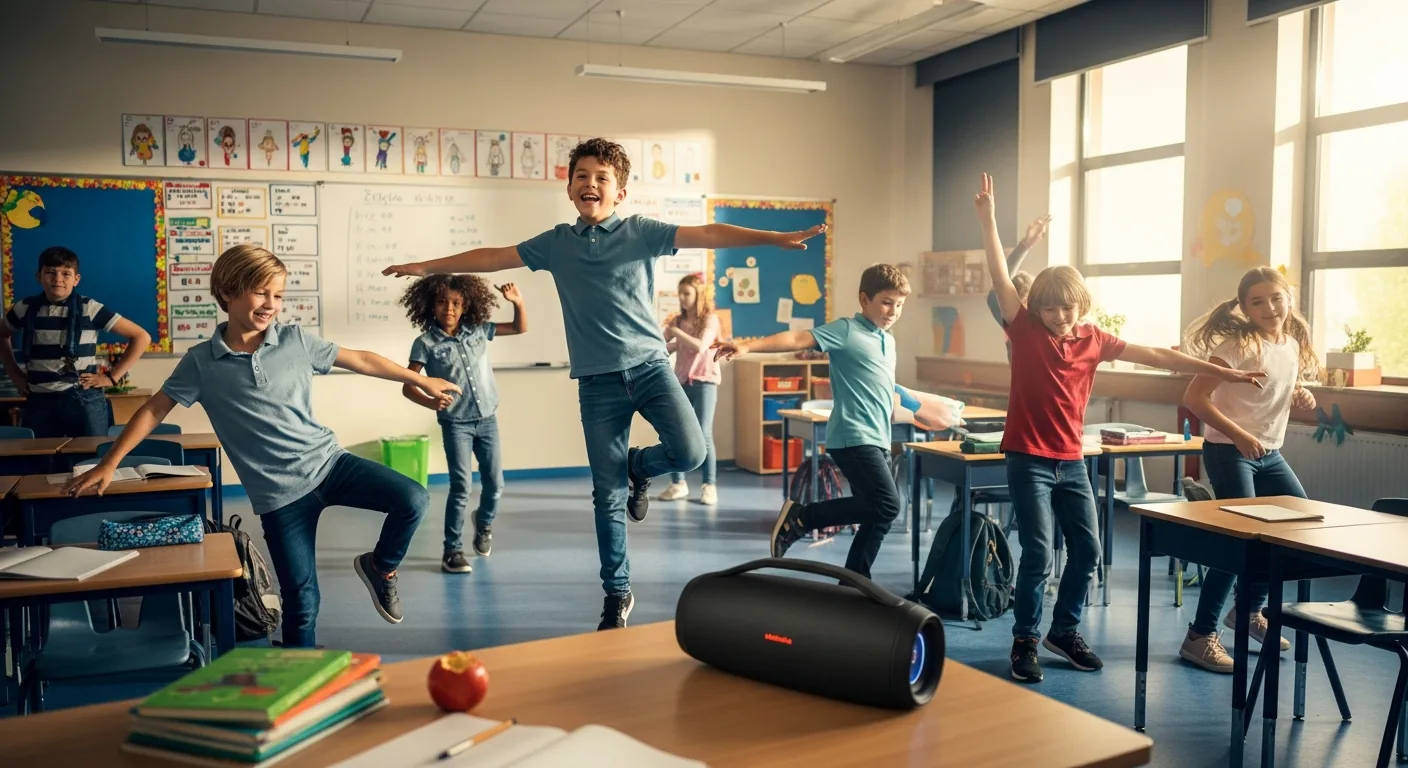
Freeze Dance is Musical Chairs’ less competitive cousin, and honestly, some classes need that. Not every group thrives on elimination-style games. With Freeze Dance, the music plays, students dance (or just move around — some kids will only sway, and that’s fine), and when the music stops, everyone freezes. Anyone still moving sits down. But here’s where I make it a real classroom activity: during each freeze, I ask a quick review question. The whole class answers, either by shouting it out, holding up fingers, or writing on mini whiteboards.
No one gets eliminated for a wrong answer. The movement resets their focus, and the freeze moment captures it. My first graders ask for this one by name.
How to play:
- Clear some space in the classroom. Students stand wherever they have room to move.
- Play a song (anything age-appropriate — GoNoodle playlists work well for younger students). Students dance or move freely.
- Pause the music randomly. Students must freeze immediately. Anyone still moving after a 2-second grace period sits down for one round.
- While everyone is frozen, ask a review question. Students answer together (verbally, on whiteboards, or with hand signals).
- Start the music again and repeat. Seated students rejoin on the next round.
- Play 8-10 rounds, or until the energy in the room feels reset.
13. Four Corners
Best for: Grades 2-12 | Category: Active
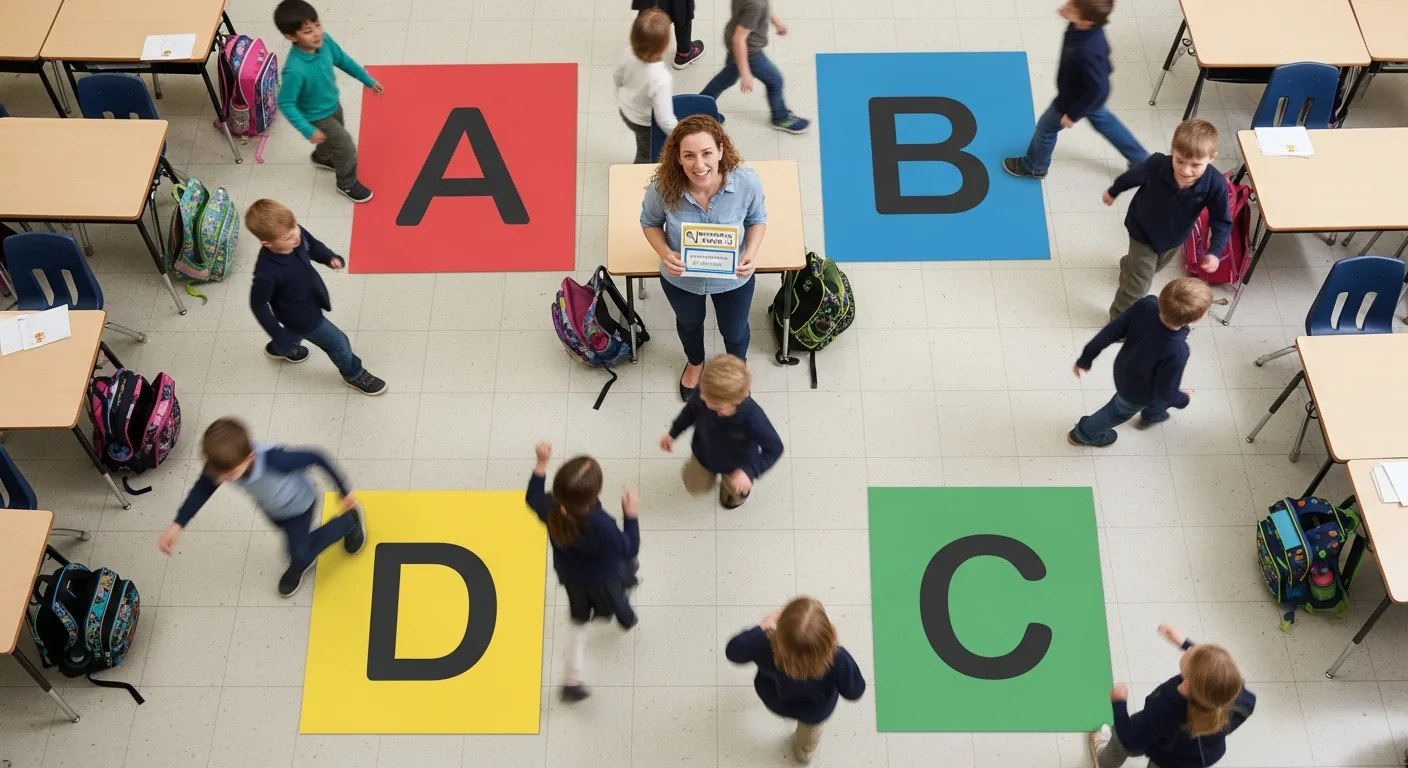
Four Corners is one of those games to play in class that works at almost every grade level because you control the difficulty. Label the four corners of your room A, B, C, and D. Read a multiple-choice question. Students walk to the corner that matches their answer. It’s simple, it gets them moving, and here’s the part I didn’t expect when I first tried it: it makes thinking visible. You can literally see who’s confident (walks straight to a corner), who’s unsure (follows the crowd), and who’s guessing (stands in the middle until the last second).
I use it for test review more than anything else. It’s faster than going through a study guide and way more honest about what students actually know. They can’t hide behind a blank stare when they have to physically commit to an answer.
How to play:
- Post signs labeled A, B, C, and D in the four corners of your classroom.
- Read a multiple-choice question aloud (or display it on the projector). Give four answer options.
- Students walk to the corner that matches their answer. Give them 10-15 seconds to commit.
- Once everyone is in a corner, reveal the correct answer. Students in the wrong corners sit down (or lose a point if you’re tracking scores).
- Before moving to the next question, briefly explain why the correct answer is right. This is where the real review happens.
- Play 10-15 rounds. The last students standing (or the team with the most points) win.
14. Draw Swords
Best for: Grades 3-8 | Category: Active

Draw Swords is a fast, competitive game that my students lose their minds over, and it takes maybe 30 seconds to set up. Two students face each other. You hold up a flashcard or call out a prompt. The first one to grab their marker and draw the correct answer on their whiteboard wins the round. That’s the whole thing. It works for math facts, vocabulary drawings, spelling, even geography (draw the shape of a state or country). The speed element changes the energy completely. There’s something about a head-to-head showdown that makes a class go wild.
I pair students of similar ability so it stays competitive. Nobody learns anything from getting destroyed every round.
How to play:
- Two students stand facing each other at the front of the room. Each gets a small whiteboard and marker (the “sword”) placed face-down on the table.
- Read a question or show a prompt (a math problem, a vocabulary word to illustrate, a spelling word).
- On your signal, both students grab their markers and write or draw the answer as fast as they can.
- The first student to hold up a correct answer wins the round and earns a point for their team.
- The winner stays. The loser tags in a teammate. (Or rotate both out to give everyone turns.)
- Play to a set number of points or until every student has competed at least once.
15. Trashketball
Best for: Grades 3-12 | Category: Active

Trashketball combines review questions with the thing students already do when they’re bored: throw crumpled paper at the trash can. Lean into it. Split the class into teams. Ask a review question. If a team answers correctly, one member gets to shoot a paper ball at a trash can or recycling bin from a set distance. Make it, earn bonus points. That’s the whole game, and I have never — in over a decade of teaching — seen it fail to get a class engaged. Older students love it just as much as younger ones. Something about the physical act of shooting makes the academic content stick.
I set up two shooting lines: a closer one worth one bonus point and a farther one worth three. Watching a student pick the risky long shot on a tie game is better than most things on TV.
How to play:
- Place a trash can or recycling bin at the front of the room. Mark two shooting lines on the floor with tape: a close line (1 bonus point) and a far line (3 bonus points).
- Split the class into 2-4 teams. Give each team scrap paper to crumple into balls.
- Ask a review question. Teams write their answer on a whiteboard or discuss quietly. Set a 20-30 second timer.
- Teams that answer correctly earn 1 point and send one player to shoot. They choose the close line or the far line.
- If they make the shot, the team earns the bonus points on top of their question point.
- Rotate shooters so everyone gets a chance. Play 15-20 rounds. The team with the most total points wins.
16. Four-Way Tug of War
Best for: Grades 3-8 | Category: Active
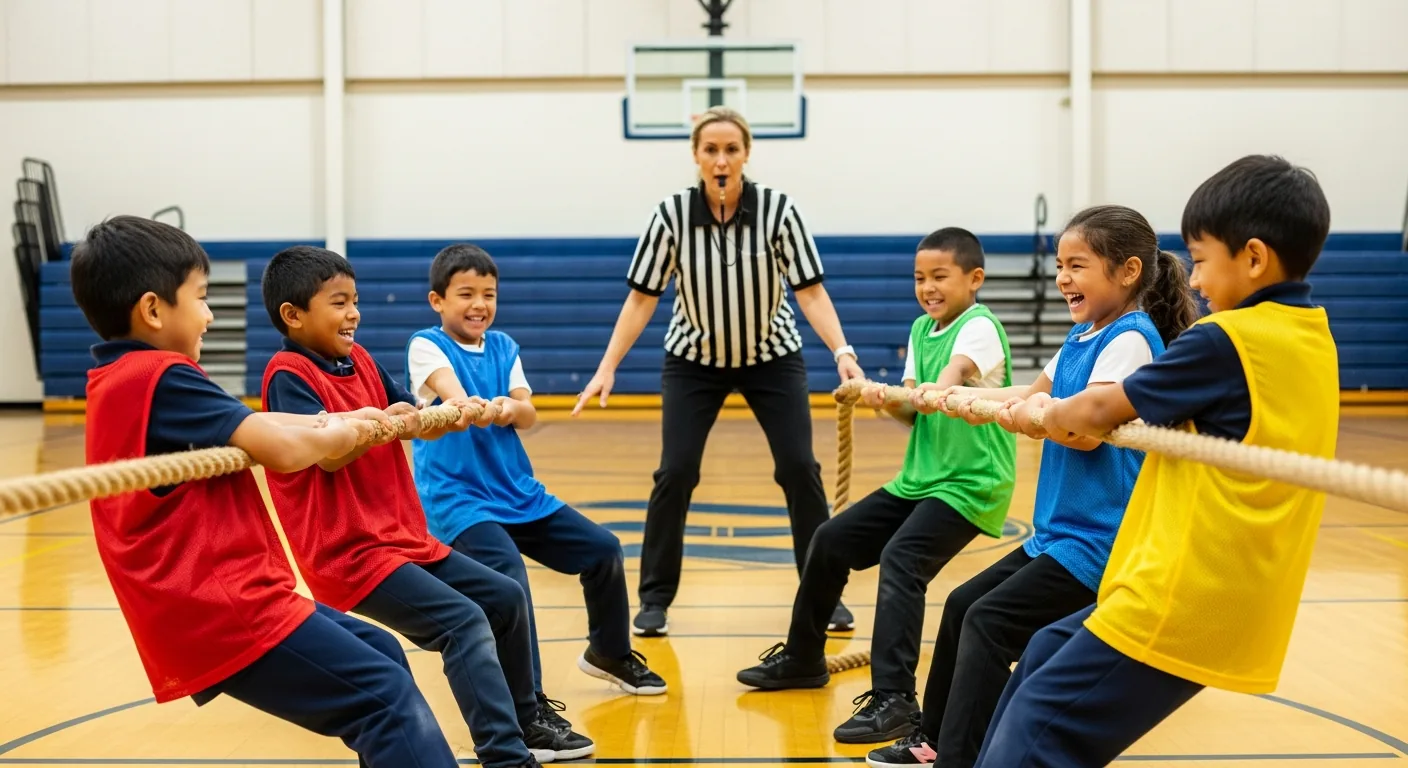
Not every game needs to teach something. Sometimes students just need to pull on a rope and yell. Four-Way Tug of War is my go-to when the class has been grinding through content for days and I can feel the tension building. Four teams, four directions, one rope tied in the center. It’s loud, it’s physical, and afterward everyone comes back to their desks calmer. I run this in the gym or outdoor space when I can, but I’ve also cleared desks and done it in the classroom with a shorter rope and socks over shoes so nobody slides.
Think of it as a reset button. The five minutes you “lose” to this game buy you thirty minutes of better focus.
How to play:
- Tie two ropes together at the center to form an X shape (or use one long rope folded).
- Mark a square on the floor with tape. Place the rope center over the middle of the square.
- Divide the class into four teams. Each team grabs one rope end.
- On your signal, all four teams pull toward their corner simultaneously.
- The first team to pull the center knot past their side of the square wins the round.
- Play best of three. Shuffle teams between rounds to keep it fair.
17. Silent Ball
Best for: Grades K-8 | Category: Active

Silent Ball is the exact opposite of every other active game on this list, and that’s why it earns its spot. Students sit on their desks (yes, on top) and toss a soft ball to each other. The rules: no talking, no bad throws, no drops. Break any rule and you’re out. The room goes dead quiet. Kids who are usually bouncing off the walls become laser-focused because the social pressure of silence is weirdly powerful. I use it at the end of the day when everyone is fried, or right after a high-energy game when I need to dial things back.
It takes zero materials beyond a foam ball. Zero prep. And it works from kindergarten through eighth grade without changing a single rule.
How to play:
- Students sit on top of their desks (or stand in a circle if desks aren’t an option).
- Hand one student a soft foam ball. The room must be completely silent from this point on.
- Students toss the ball to each other. Throws must be catchable — no fastballs, no lobs to the ceiling.
- If you talk, drop the ball, or make a bad throw, you’re out. Sit in your chair.
- The teacher is the judge. Your call is final (this saves time on arguments).
- Last two or three students standing win. Play multiple rounds — it goes fast.
Team-Building & Social Games
These classroom games work on the stuff that doesn’t show up on a test but matters just as much: communication, cooperation, and actually knowing the people you sit next to. I lean on these at the start of the school year, after breaks, or anytime I notice cliques forming and students isolating. A twenty-minute team game can shift the social dynamics of a classroom faster than any lecture on “being kind.”
18. Printable Escape Room Kits
Best for: Grades 3-8 | Category: Team-building
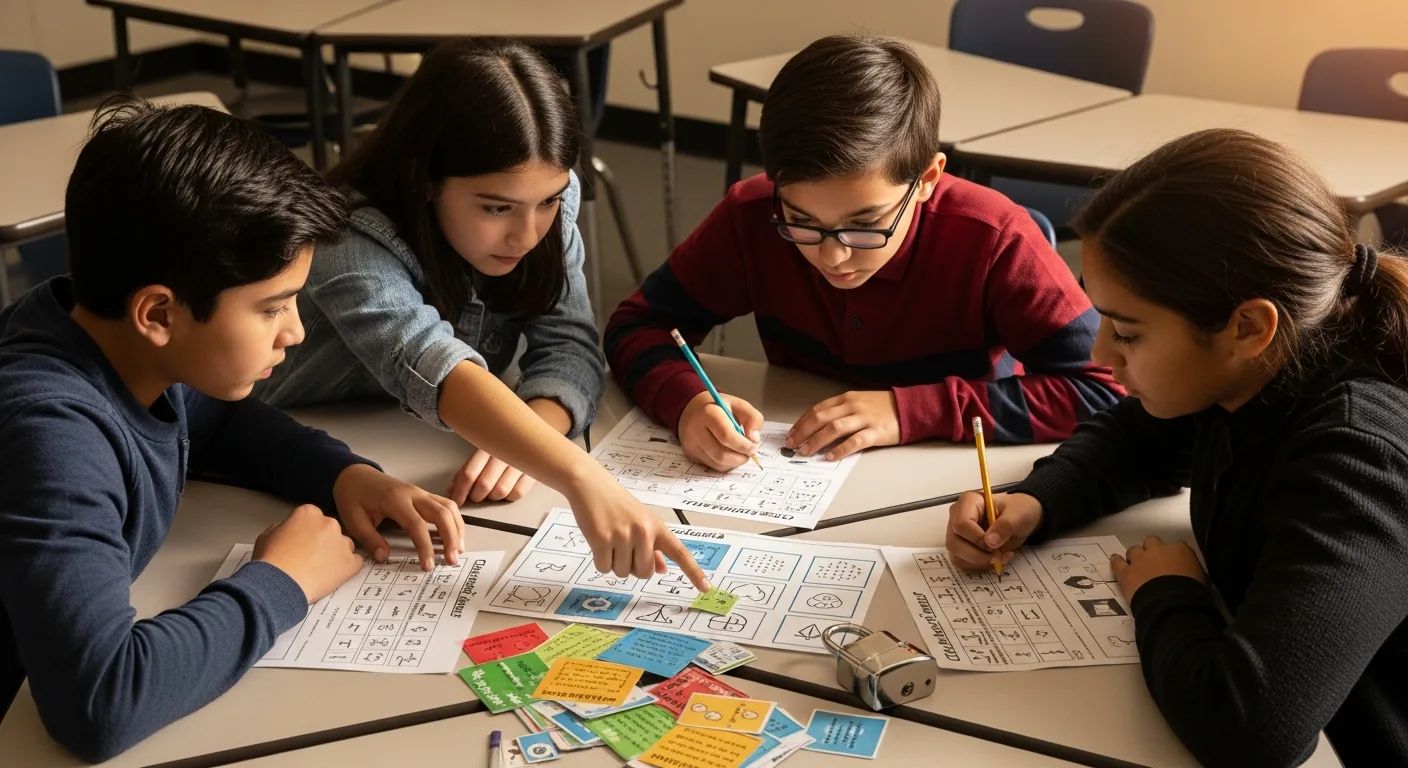
If you’ve never run a printable escape room in your classroom, you’re missing one of the best team-building classroom activities I’ve found. The concept is straightforward: students work in small groups to solve a series of connected puzzles within a time limit. Each puzzle leads to the next clue, and the final answer “unlocks” the escape. Nobody can solve it alone. The quiet kid notices the pattern. The social kid keeps the team organized. The competitive kid keeps the energy up. Everybody contributes.
What I like about kits like Houdini’s Secret Room is that the puzzles are already designed and balanced. You print, cut, and set up in about fifteen minutes. No lesson planning required. I’ve used escape rooms as end-of-unit celebrations and as classroom activities during spirit weeks. My students still talk about the one we did three months ago. That kind of staying power is rare for a single class period.
How to play:
- Choose a printable escape room kit that fits your age group. Print out all the puzzle sheets, clue cards, and answer keys.
- Divide the class into groups of 3-5 students. Give each group a set of materials and a starting clue.
- Set a timer for 45-60 minutes. Teams work through the puzzles in order, each solved puzzle revealing the next clue.
- Students must collaborate and communicate to connect the clues and solve the puzzles.
- The first team to solve all puzzles and “escape” wins. Or set it up so every team that finishes within the time limit succeeds.
- Debrief afterward: ask teams what strategies worked and what they’d do differently. This reflection is where the real team-building happens.
19. Word Chain
Best for: Grades 2-8 | Category: Team-building
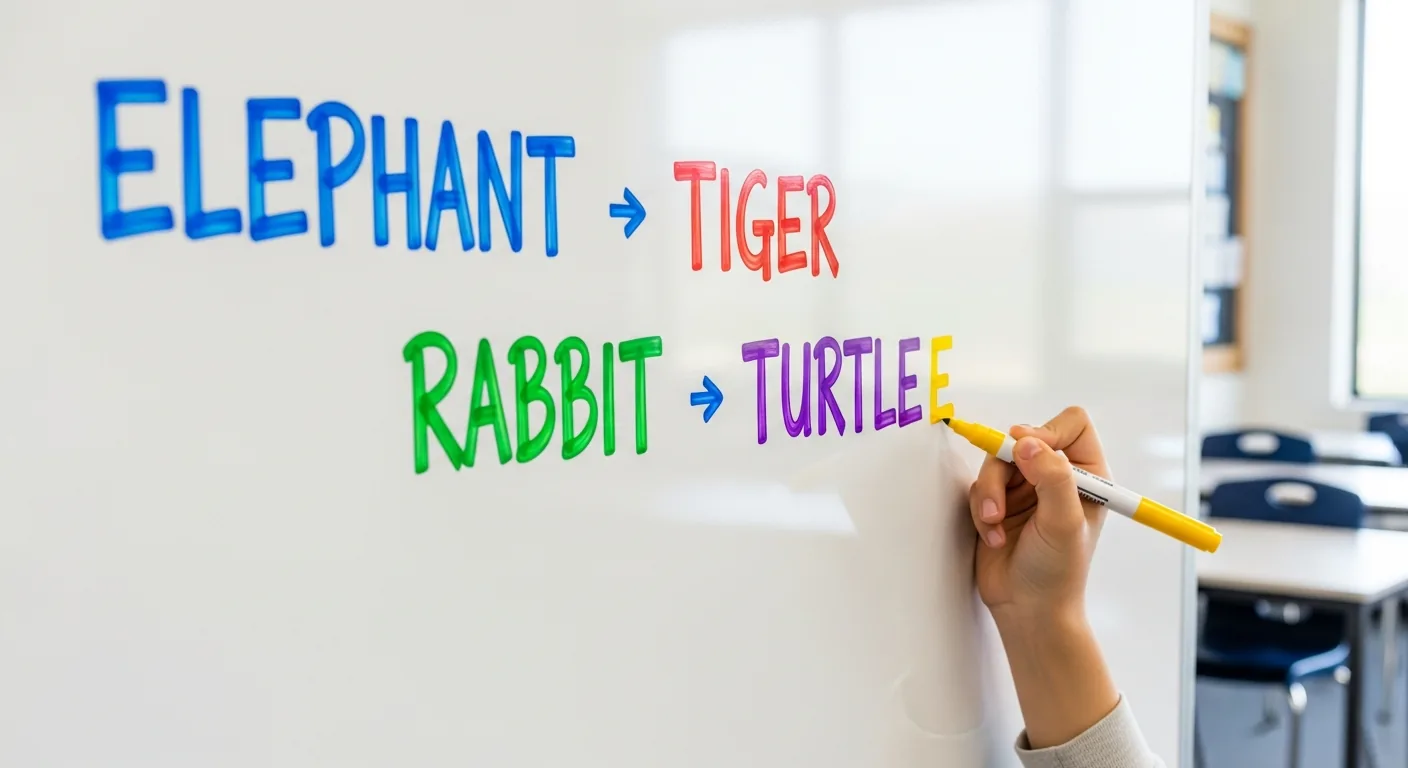
Word Chain is one of those games to play in class when you have four minutes before the bell and nothing planned. Someone says a word. The next person says a word that starts with the last letter of the previous word. “Elephant” becomes “tiger” becomes “rabbit” becomes “turtle.” Simple. But when you limit it to a specific topic — say, science vocabulary or geography terms — it becomes a genuine review tool. I’ve watched students dig through their memory for obscure words just to keep the chain alive, which is exactly the kind of recall practice you can’t force with a worksheet.
How to play:
- Choose a category: animals, countries, vocabulary from the current unit, or any topic.
- The first student says a word that fits the category.
- The next student must say a new word that starts with the last letter of the previous word. No repeats.
- If a student can’t think of a word within 5 seconds, they’re out (or lose a point).
- Keep going around the room. The last student standing wins.
- For teams, keep score by counting how many words each team chains before someone gets stuck.
20. Matching Game
Best for: Grades K-6 | Category: Team-building
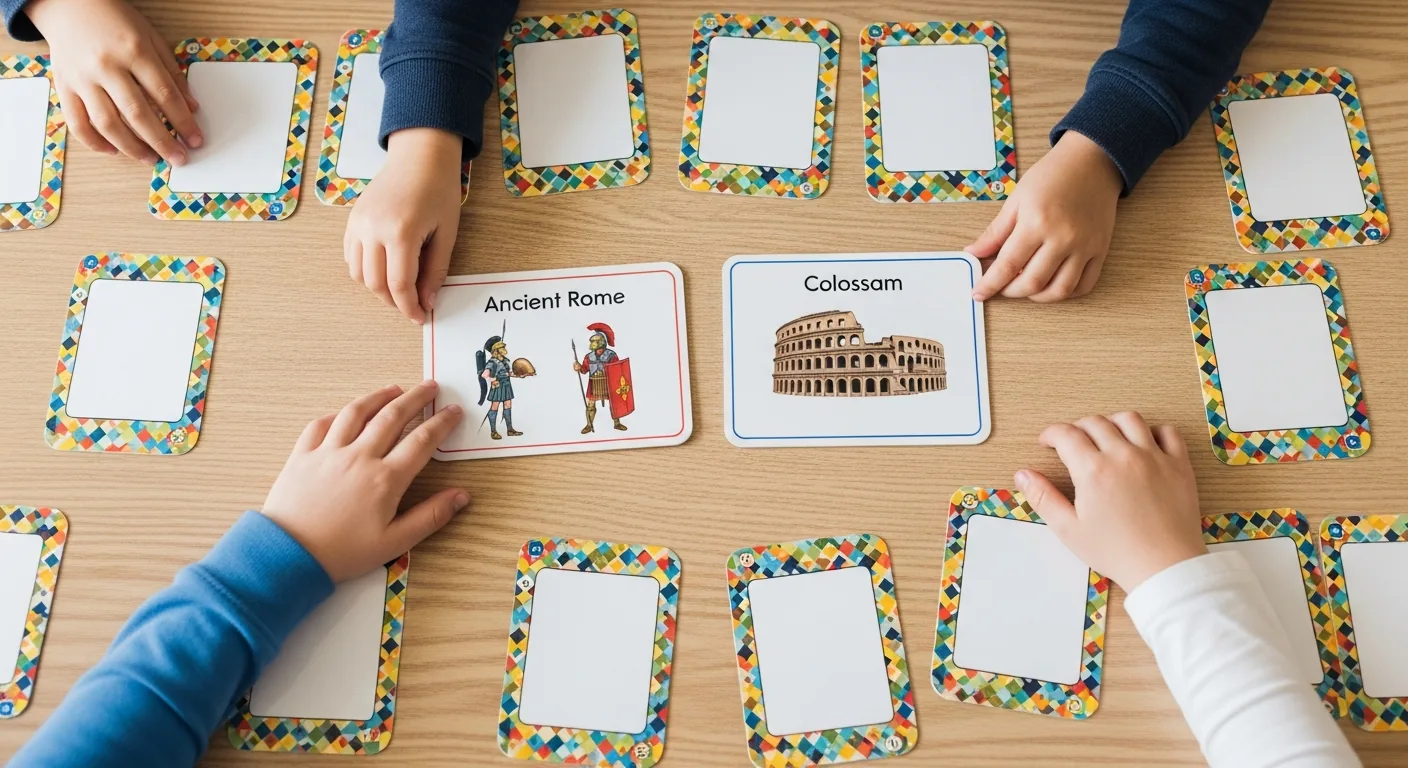
Matching Game is the classroom version of the card game you played as a kid, and it works for every subject. Make pairs of cards: vocabulary word and definition, historical event and date, math problem and answer, country and capital. Lay them face-down on a table. Students flip two at a time trying to find matches. It’s collaborative when done in pairs and competitive when done in teams. I use it during a unit on ancient Rome with pairs like “Colosseum / gladiator arena” and “Julius Caesar / assassinated leader.” The kids remember those connections months later because they physically handled the cards and made the match themselves.
How to play:
- Create pairs of cards related to your lesson (vocabulary/definition, question/answer, image/word). You need 10-20 pairs.
- Shuffle and lay all cards face-down on a table or the floor in a grid.
- Students take turns flipping over two cards at a time, trying to find a matching pair.
- If the two cards match, the student keeps them and goes again. If they don’t match, flip them back over.
- The student or team with the most matched pairs at the end wins.
- For younger students, start with 8-10 pairs. For older students, use more pairs with harder content.
21. Charades
Best for: Grades 2-12 | Category: Team-building
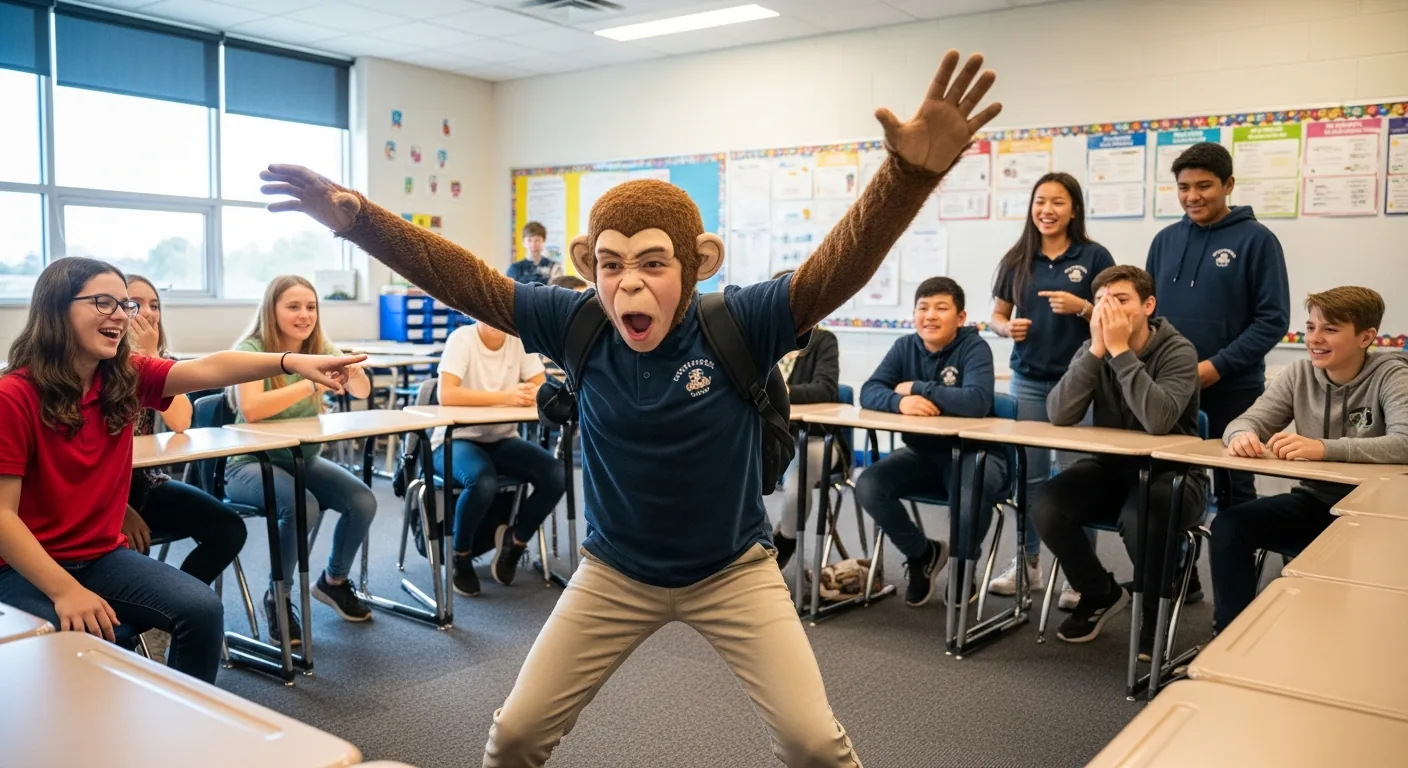
Charades works at every level because you control the difficulty through the word list. I use a three-round format that keeps the game from getting stale. Round one: describe the word using multiple words (but not the word itself). Round two: same words, but you can only use a single word as a clue. Round three: no words at all — body language and acting only. By the third round, students are basically doing interpretive dance of vocabulary terms, which sounds ridiculous until you see how much they remember afterward.
For a biology class studying bees, my word list included hive, nectar, pollen, swarm, and sting. Watching a seventh grader silently act out “pollination” is something I’ll never forget.
How to play:
- Write subject-related words on slips of paper and put them in a bowl. Make sure there are enough for three rounds.
- Split the class into two teams. Set a timer for 60 seconds per turn.
- Round 1: One player draws a slip and describes the word using multiple words (no saying the actual word). Team guesses as many as possible in 60 seconds.
- Round 2: Same words go back in the bowl. Now players can only use one word as a clue.
- Round 3: Same words again. This time, no talking at all — only acting and gestures.
- Each correct guess earns a point. Team with the most points after all three rounds wins.
22. Concentration
Best for: Grades K-6 | Category: Team-building
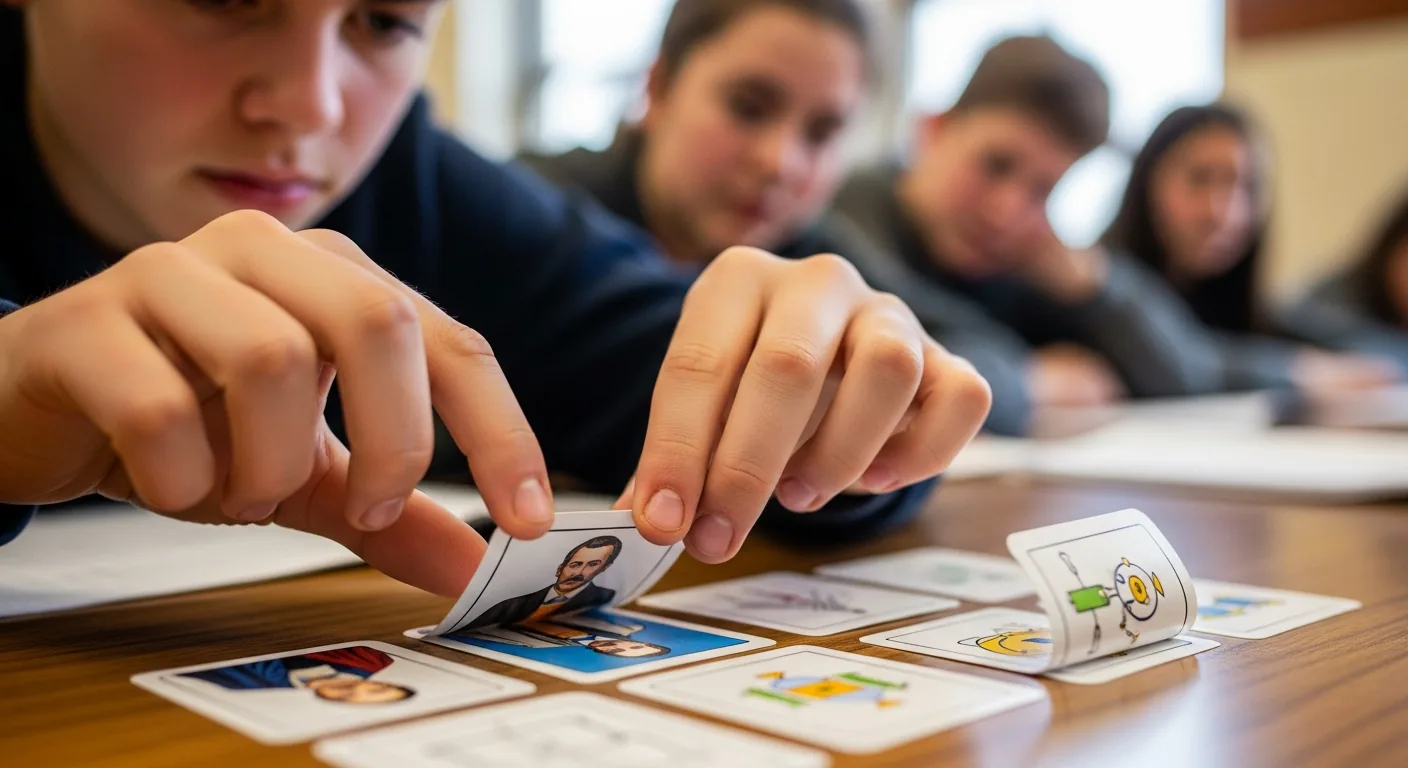
Concentration looks similar to the Matching Game, but the focus here is memory, not matching. Cards go face-down. You flip two. If they match, you keep them. If not, you flip them back and try to remember where they were. The memory component makes this a different kind of brain exercise. Students aren’t just recognizing connections — they’re holding locations in their working memory while processing content at the same time. My younger students get genuinely competitive about this one, and the quiet observers often dominate because they’re tracking every flip.
How to play:
- Prepare pairs of cards (vocabulary word + definition, or image + word). Shuffle and lay them all face-down in rows.
- Students take turns flipping exactly two cards.
- If the cards form a correct pair, the student keeps them and gets another turn.
- If no match, flip both cards back to their exact positions. The next player goes.
- The key rule: everyone watches every flip. Remembering where cards are is the whole game.
- Player with the most pairs when all cards are matched wins.
23. The Perfect Square
Best for: Grades 4-12 | Category: Team-building
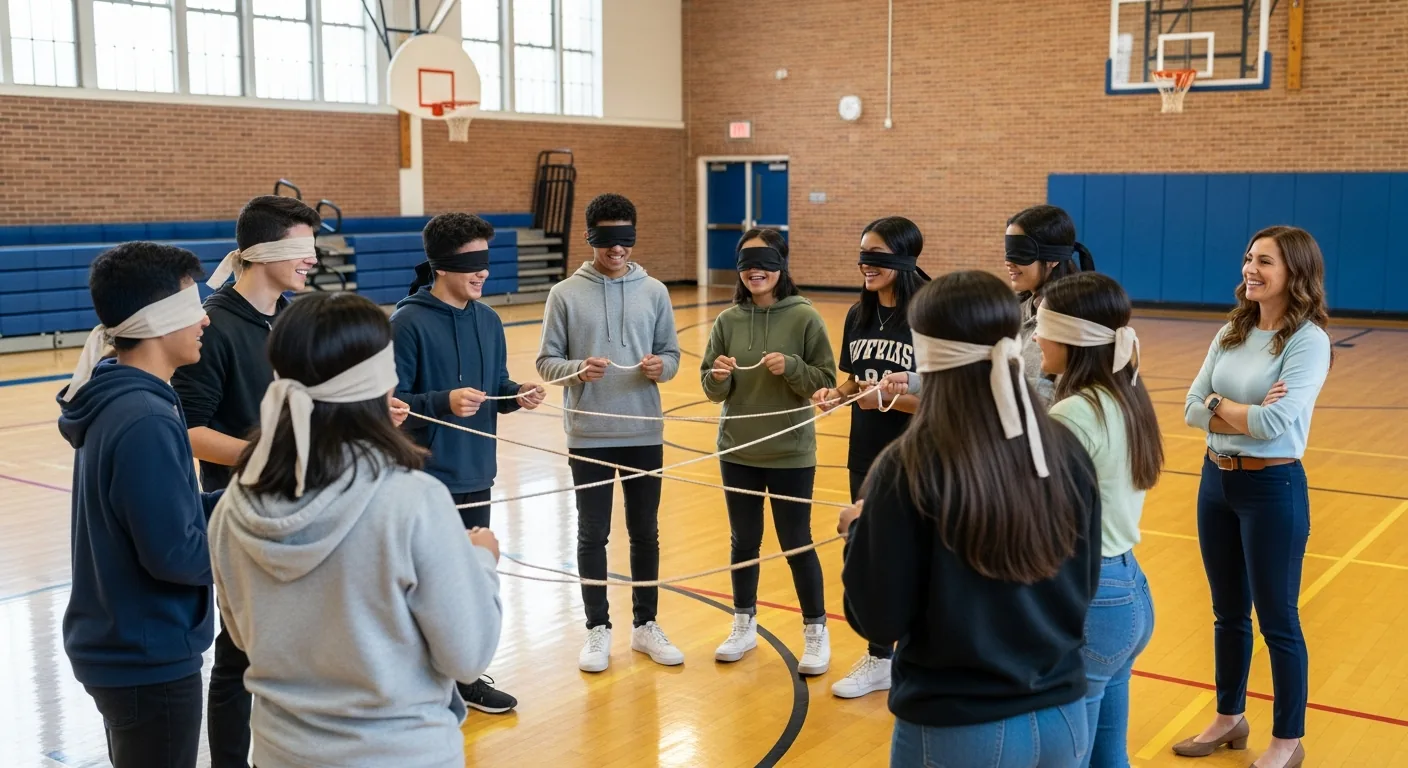
The Perfect Square is one of those classroom activities that looks silly and sounds impossible, which is exactly why students love it. Everyone stands in a circle holding a rope. Then they put on blindfolds. Their job: arrange the rope into a perfect square on the ground. The only tool they have is their voice. No peeking. Students have to communicate directions, listen carefully, and trust that their teammates are doing what they say. It falls apart fast if one person tries to boss everyone around — which leads to some of the best post-game conversations about leadership and collaboration I’ve ever had.
How to play:
- Get a long rope with the ends tied together to form a loop. You also need blindfolds for every student (bandanas work fine).
- Students stand in a circle, each holding the rope in front of them.
- On your signal, everyone puts on their blindfold and lowers the rope to the ground.
- Using only verbal communication, the group must arrange the rope into a perfect square.
- Give them 10-15 minutes. When they think they’re done, everyone removes their blindfold to see the result.
- Debrief: Who emerged as a leader? Did everyone’s voice get heard? What would you do differently? The discussion is the point.
24. Get to Know Your Balloons
Best for: Grades K-8 | Category: Team-building

This is my favorite first-week-of-school game. Before class, stuff small folded papers into balloons before inflating them. Each paper has a discussion prompt: “What’s your favorite thing to do after school?” “If you could visit any country, where?” “What’s one thing you’re good at that might surprise people?” Students pop a balloon (which they love) and use the prompt to start a conversation with their group. It breaks the ice faster than any “stand up and introduce yourself” routine, because popping balloons is fun and the prompts give shy kids something specific to talk about.
How to play:
- Write discussion prompts on small slips of paper. Stuff one into each balloon before inflating.
- Scatter inflated balloons around the classroom.
- Divide students into small groups of 3-4.
- Each group grabs a balloon, pops it, reads the prompt, and discusses their answers with the group.
- After 2-3 minutes, groups grab another balloon and repeat.
- Go through 4-5 balloons per group. End with a whole-class share where each group tells one interesting thing they learned about a teammate.
25. Odd One Out
Best for: Grades 2-8 | Category: Team-building
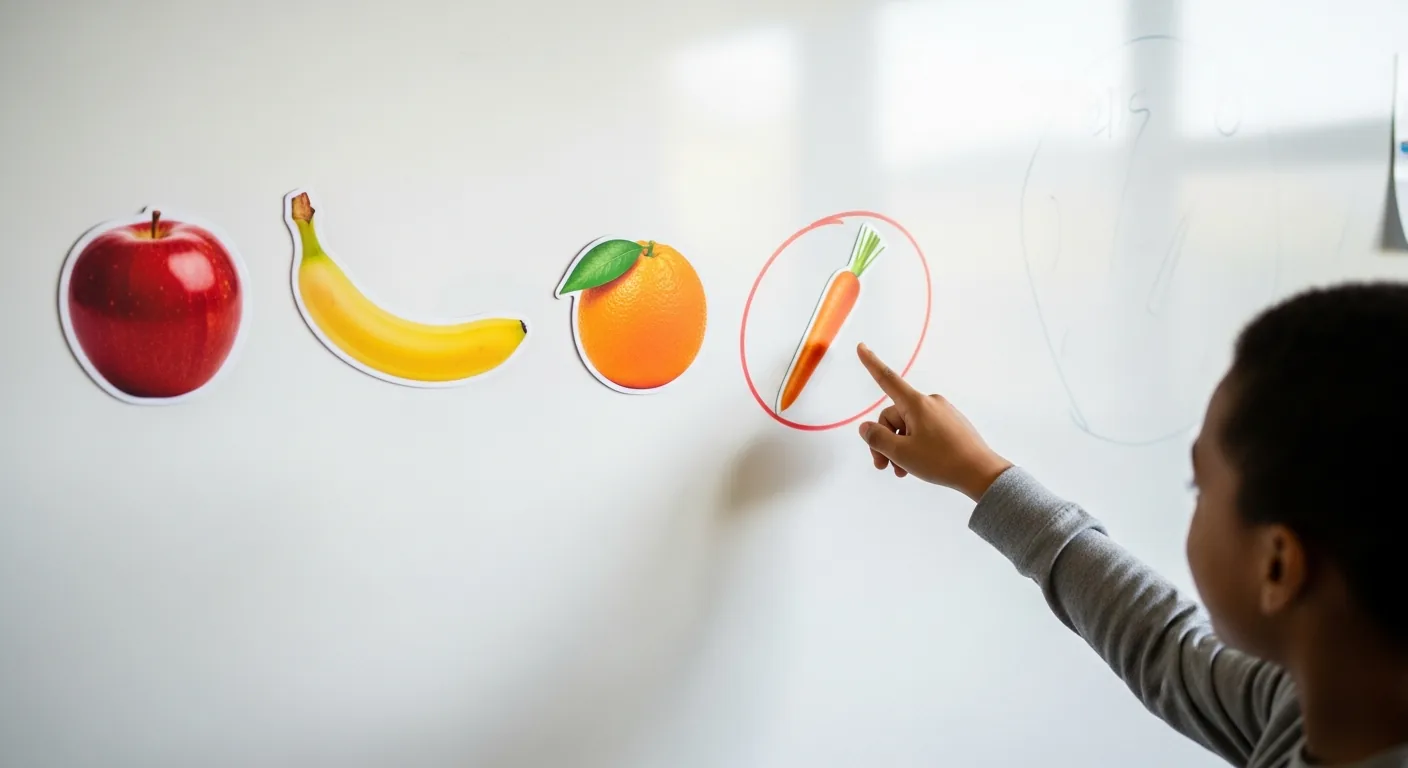
Odd One Out is a quick logic game that’s easy to set up and harder than it looks. Show students a group of four or five words and ask which one doesn’t belong. Here’s the thing I like about it: there’s often more than one “right” answer depending on how you categorize. If I show “apple, banana, carrot, orange,” most students pick carrot because it’s a vegetable. But some pick orange because it’s a color too. Both answers show thinking, and the debate that follows is where the real learning happens. I use this as a warm-up before vocabulary-heavy lessons.
How to play:
- Prepare sets of 4-5 words or images, where one doesn’t fit the pattern of the others.
- Display a set on the board. Give students 30 seconds to decide which is the odd one out.
- Students can work individually or in pairs. Have them write their answer and their reasoning.
- Share answers as a class. Accept any answer with solid reasoning — this isn’t about one correct answer.
- Award points for correct identifications and bonus points for unique reasoning no one else thought of.
- Play 8-10 rounds. Increase difficulty by making the categories less obvious.
26. Marshmallow & Toothpick Challenge
Best for: Grades 3-8 | Category: Team-building
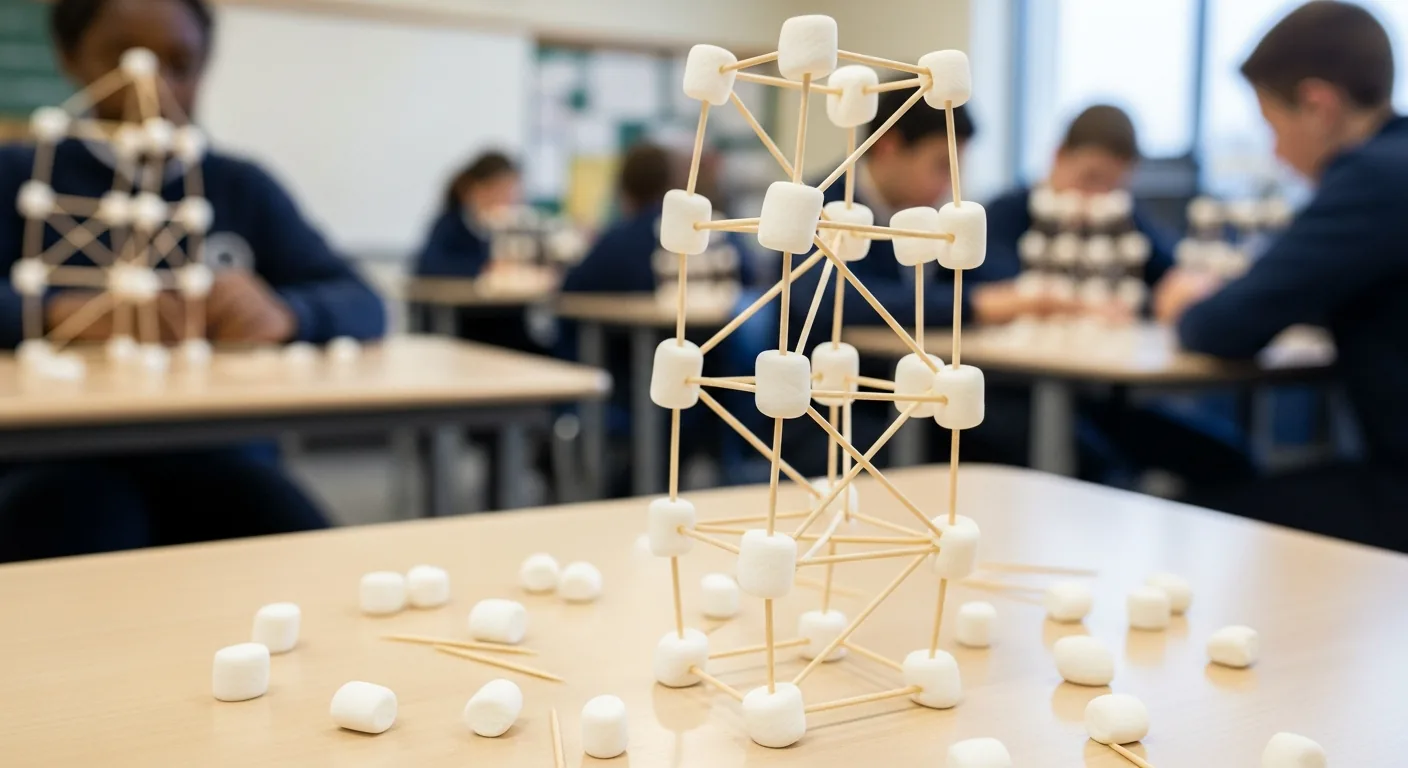
This is a STEM game disguised as fun. Give each team a pile of mini marshmallows and toothpicks. Their mission: build the tallest free-standing structure they can in a set amount of time. That’s it. But what actually happens is students learn about structural engineering, weight distribution, and the value of planning before building — because the team that starts jamming toothpicks into marshmallows randomly always loses to the team that spends two minutes sketching a plan first. I run this during STEM weeks or as a Friday reward, and the structures students build surprise me every time.
How to play:
- Give each team an equal supply of mini marshmallows and toothpicks (about 30 of each works well).
- Set a timer for 15-20 minutes. Teams build the tallest free-standing structure they can.
- The structure must stand on its own for at least 10 seconds when time is called. No leaning it against something.
- Measure each structure. Tallest one that’s still standing wins.
- Optional bonus categories: most creative design, strongest structure (test by placing a book on top), best teamwork.
- Debrief: What worked? What collapsed? What would you change? This connects naturally to science content about forces and structures.
27. Error Correction Relay Race
Best for: Grades 4-12 | Category: Team-building
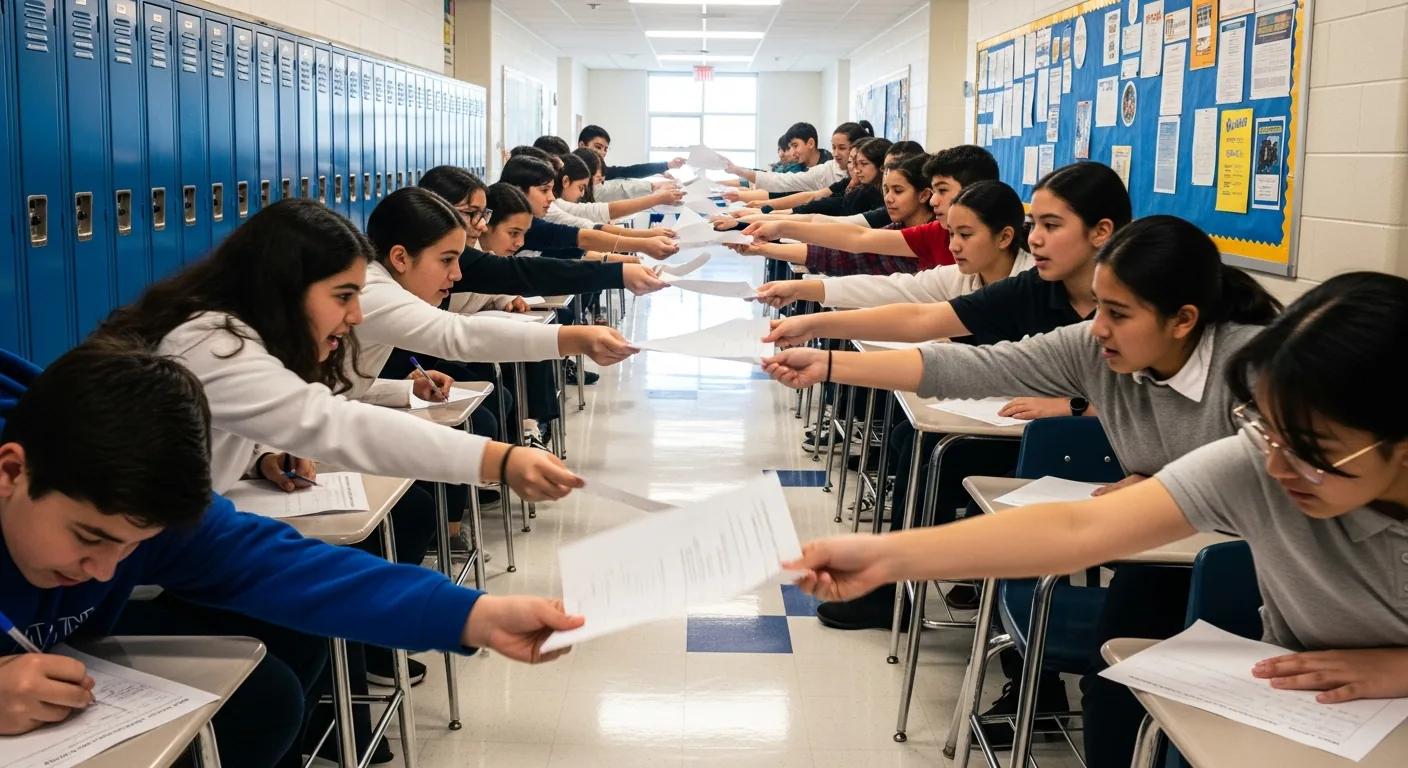
Error correction is boring. Relay races are not. Put them together and suddenly students are sprinting to fix grammar mistakes, which is a sentence I never thought I’d write. This works especially well for ESL classes and ELA review. You prepare worksheets with intentional errors — misspelled words, wrong verb tenses, missing punctuation. Line up teams. The first student grabs the sheet, corrects one error, and runs it to the next teammate who finds the next error. The physical movement between corrections keeps the energy up, and the relay format adds pressure that makes students concentrate harder than they would sitting at a desk.
How to play:
- Create worksheets with 6-10 sentences containing intentional errors (spelling, grammar, punctuation).
- Divide the class into teams of 4-6. Line teams up at one end of the room (or hallway).
- Place each team’s worksheet on a desk at the other end of the room.
- On your signal, the first student from each team runs to their worksheet, corrects one error, and runs back to tag the next teammate.
- Each student corrects one error per trip. The relay continues until all errors are fixed.
- First team to finish with all corrections accurate wins. Check their work — speed without accuracy doesn’t count.
28. Who Am I? What Am I?
Best for: Grades 2-12 | Category: Team-building

This classic party game adapts to the classroom with almost no effort. Stick a name or concept on each student’s forehead (sticky notes work perfectly). They walk around asking classmates yes-or-no questions to figure out who or what they are. “Am I alive?” “Am I from this century?” “Am I a scientist?” I’ve used this for historical figures, vocabulary words, book characters, and science concepts. The walking-around format means students interact with many classmates, not just their table group. And because they can only ask yes-or-no questions, they practice narrowing down categories — the same deductive thinking that 20 Questions builds.
How to play:
- Write names of historical figures, vocabulary words, book characters, or concepts on sticky notes — one per student.
- Stick one note on each student’s forehead (or back) without letting them see it.
- Students mingle around the room, asking classmates yes-or-no questions to figure out their identity.
- Each student can only ask one question per classmate before moving on to someone else.
- When a student thinks they know their identity, they come to you and guess. If correct, they get a new sticky note and keep playing.
- The student who correctly guesses the most identities in the time limit wins.
29. Scavenger Hunt
Best for: Grades K-12 | Category: Team-building
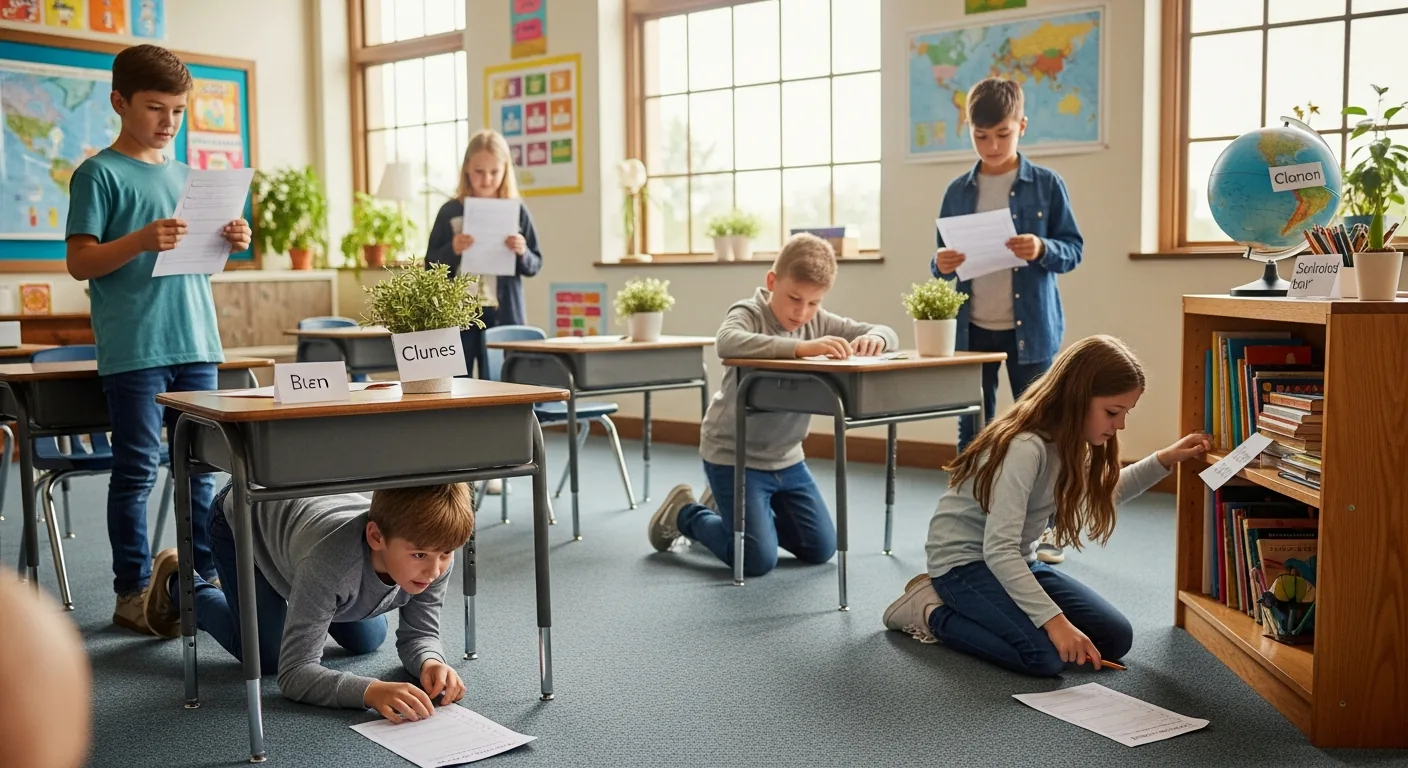
A classroom scavenger hunt turns your entire room into a game board. Hide clue cards around the space — taped under desks, behind books, inside supply bins. Each clue involves a question or puzzle related to your lesson. Answer it correctly, and you get directions to the next clue. It takes more setup than most games on this list (plan for 20 minutes of prep the night before), but the payoff is worth it. Students are moving, reading, solving problems, and working together without any prodding from you. I save this for special occasions: end of a tough unit, day before a break, or when I need a guaranteed win with a tough group.
How to play:
- Write 8-12 clue cards, each with a review question and directions to the next clue’s location.
- Hide clue cards around the classroom before students arrive. Create different starting points for each team so they don’t cluster.
- Divide the class into teams of 3-4. Give each team their first clue.
- Teams must answer the question on each clue correctly before they can follow the directions to the next one.
- The final clue leads to a “treasure” (stickers, candy, homework pass — whatever motivates your class).
- First team to complete all clues and find the treasure wins.
30. Would You Rather
Best for: Grades 3-12 | Category: Team-building
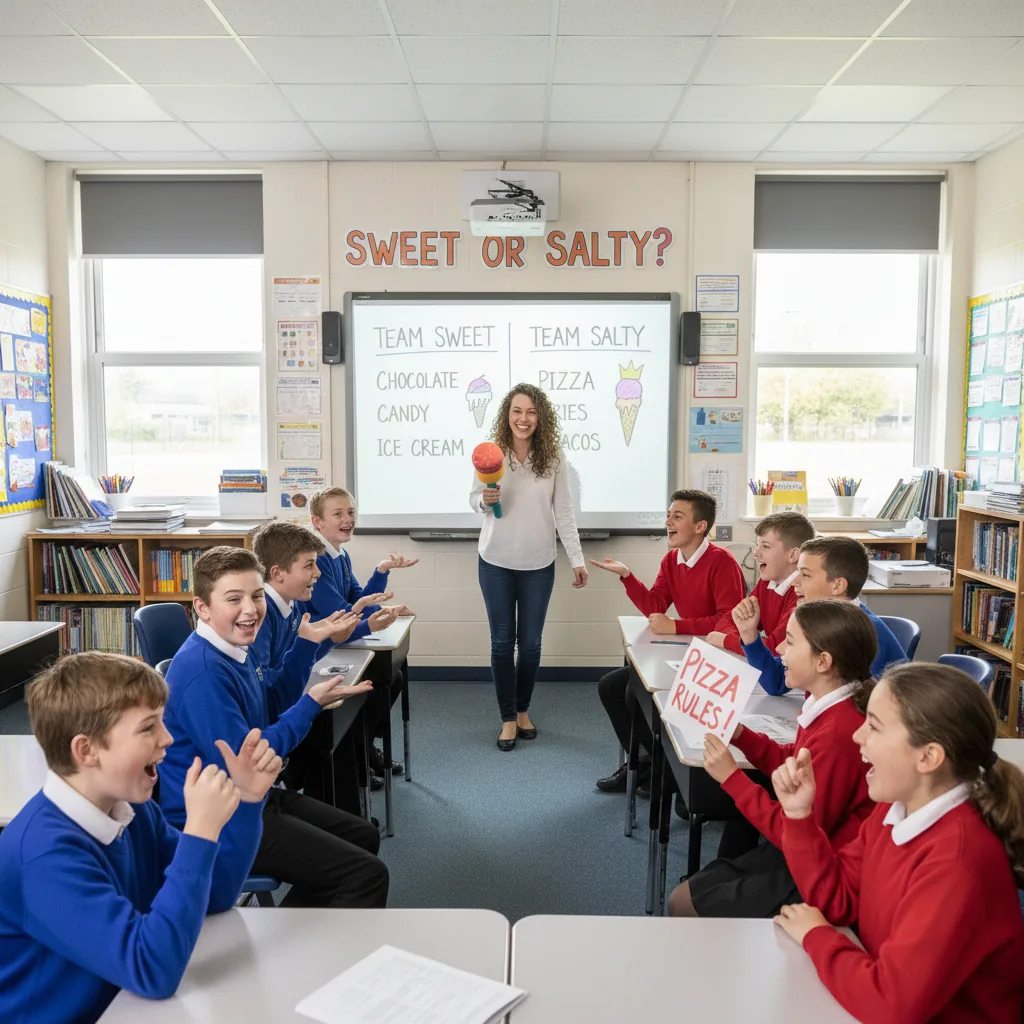
Would You Rather is the easiest game on this entire list to set up, and one of the best for sparking real conversation. Pose a question with two options. Students pick a side and defend their choice. That’s it. But when you tie the questions to your subject — “Would you rather live in ancient Rome or ancient Egypt?” “Would you rather be able to photosynthesize or echolocate?” — it becomes a genuine learning discussion disguised as a silly debate. My students get so invested in defending their choice that they accidentally make well-structured arguments, which is basically a persuasive essay without the essay.
How to play:
- Prepare 8-10 “Would You Rather” questions connected to your current topic.
- Read a question aloud. Students move to the left side of the room for Option A or the right side for Option B.
- Once sides are chosen, give each side 60 seconds to discuss their reasoning with their group.
- Pick one or two students from each side to share their argument. Allow brief rebuttals.
- After hearing both sides, allow students to switch if they changed their mind. Count how many switched — that’s your engagement metric.
- Move to the next question. No scoring needed — the discussion is the point.
Bonus: Thumbs Up, Seven Up
Best for: Grades K-5 | Category: Team-building

Every teacher needs a calm-down game in their back pocket, and Thumbs Up, Seven Up has been that game for decades. Seven students stand at the front. Everyone else puts their head down on their desk with one thumb sticking up. The seven students walk around and each gently presses one person’s thumb down. Then everyone raises their heads, and the students whose thumbs were pressed try to guess who pressed theirs. It’s quiet, it’s gentle, and it brings the room temperature down in a way that feels like a treat instead of a punishment. I use it after recess, after assemblies, or anytime the class needs to decompress without me raising my voice.
How to play:
- Choose seven students to stand at the front of the room.
- Everyone else puts their head down on their desk, eyes closed, with one thumb sticking up.
- The seven standing students quietly walk around and each press one person’s thumb down, then return to the front.
- Say “Heads up, seven up.” Students whose thumbs were pressed stand up.
- Each standing student gets one guess at who pressed their thumb. If they guess correctly, they swap places with that person.
- Play 3-4 rounds. The game runs itself once students know the rules.
Frequently Asked Questions
What are the best classroom games for shy students?
Games where students work in pairs or small groups before sharing with the class work best. Matching Game, Concentration, and Word Chain let shy students participate without standing in front of everyone. Bingo is another good option because students play individually — no one has to perform. Avoid putting shy students in the Hot Seat or asking them to act out Charades until they’ve had time to build confidence in lower-pressure games first.
What games can I play in class with no materials?
20 Questions, Simon Says, Four Corners, Would You Rather, Word Chain, and Thumbs Up Seven Up all require zero materials. The A-to-Z Game only needs paper and a pen, which students already have. These are the games I reach for on substitute days or when a lesson ends early and I have ten minutes to fill. No prep, no cleanup, no excuses.
How do I choose the right classroom game for my lesson?
Match the game to the goal. If you need to review vocabulary, go with Pictionary, Hot Seat, or Bingo. If students need to burn energy, pick Freeze Dance, Musical Chairs, or Trashketball. If you’re building class culture, try a printable escape room or The Perfect Square. The table of contents at the top of this article groups games by purpose so you can find what fits.
What are good review games for test prep?
Jeopardy and Kahoot are the gold standard for test review because students cover a lot of content quickly. Trashketball adds physical engagement that helps with memory. Four Corners forces students to commit to answers publicly, which exposes gaps you can address before the test. I usually run Jeopardy two days before a test and Kahoot the day before, then use the data reports from Kahoot to plan a quick reteach on whatever the class missed most.
How often should I use games in the classroom?
Two to three times a week works well in my experience. More than that and games lose their novelty. Less than once a week and students don’t associate your class with being engaging. I use a quick 5-minute game (Hangman, Word Chain, A-to-Z) as a warm-up two or three days a week, and save the longer games (Jeopardy, escape rooms, scavenger hunts) for Fridays or end-of-unit reviews. The key is variety. Don’t play the same game twice in one week.
What classroom games work for all grade levels?
Bingo, 20 Questions, Charades, Who Am I, and Scavenger Hunt all work from elementary through high school — you just adjust the content difficulty. A kindergartner plays Bingo with sight words. A tenth grader plays Bingo with chemistry terms. Same game, same rules, completely different academic level. Four Corners and Would You Rather also scale well because the difficulty lives in the questions, not the format.
The right classroom game depends on the moment. Sometimes you need your students physically moving. Sometimes you need silence. Sometimes you need them laughing together to remember they’re on the same team. These 30 games cover all of it. Start with the ones that match what your class needs this week, and add more as you get comfortable. The only real mistake is never trying any of them at all.
Related Reading
Our Ready-to-Play Game Kits
Pick a game, print, and play — it’s that simple!
-
Professor Swen’s Lab
Original price was: $24.90.$19.90Current price is: $19.90.Age: 9-1345-60 Min2-5 kids -







Leave a Reply to Mirian Cancel reply