







Les enfants n'ont pas besoin de fiches et d'exercices pour développer leur cerveau. Ils ont besoin de jeux qui les incitent à réfléchir sans même s'en rendre compte. Les meilleurs jeux de réflexion combinent résolution de problèmes, mémoire, logique et créativité dans une expérience ludique et amusante.
En tant que concepteur énigmes des escape games Pour gagner ma vie, j'ai passé des années à étudier ce qui rend un défi stimulant plutôt que frustrant. Les mêmes principes s'appliquent aux jeux de réflexion pour enfants : la difficulté doit être juste ce qu'il faut — assez ardue pour être gratifiante, assez facile pour inciter à persévérer.
Voici 15 jeux cérébraux pour enfants qui développent véritablement les capacités mentales, classés selon le type de pensée qu'ils renforcent.
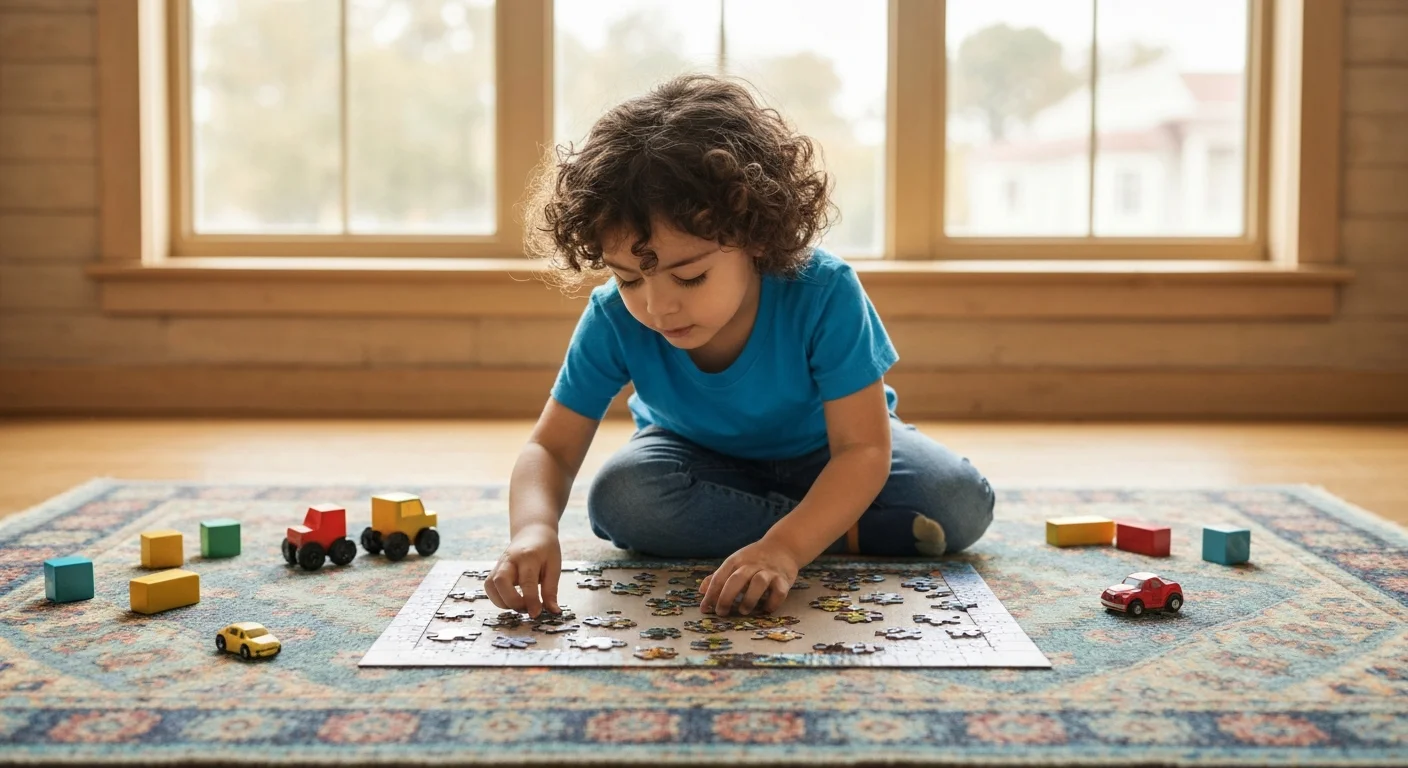
Jeux de logique et de résolution de problèmes
Ces jeux développent le type de réflexion qui aide les enfants à surmonter les difficultés étape par étape, qu'il s'agisse d'un problème de mathématiques, d'une situation sociale ou de comprendre comment les choses fonctionnent.
1. Énigmes des Escape Rooms
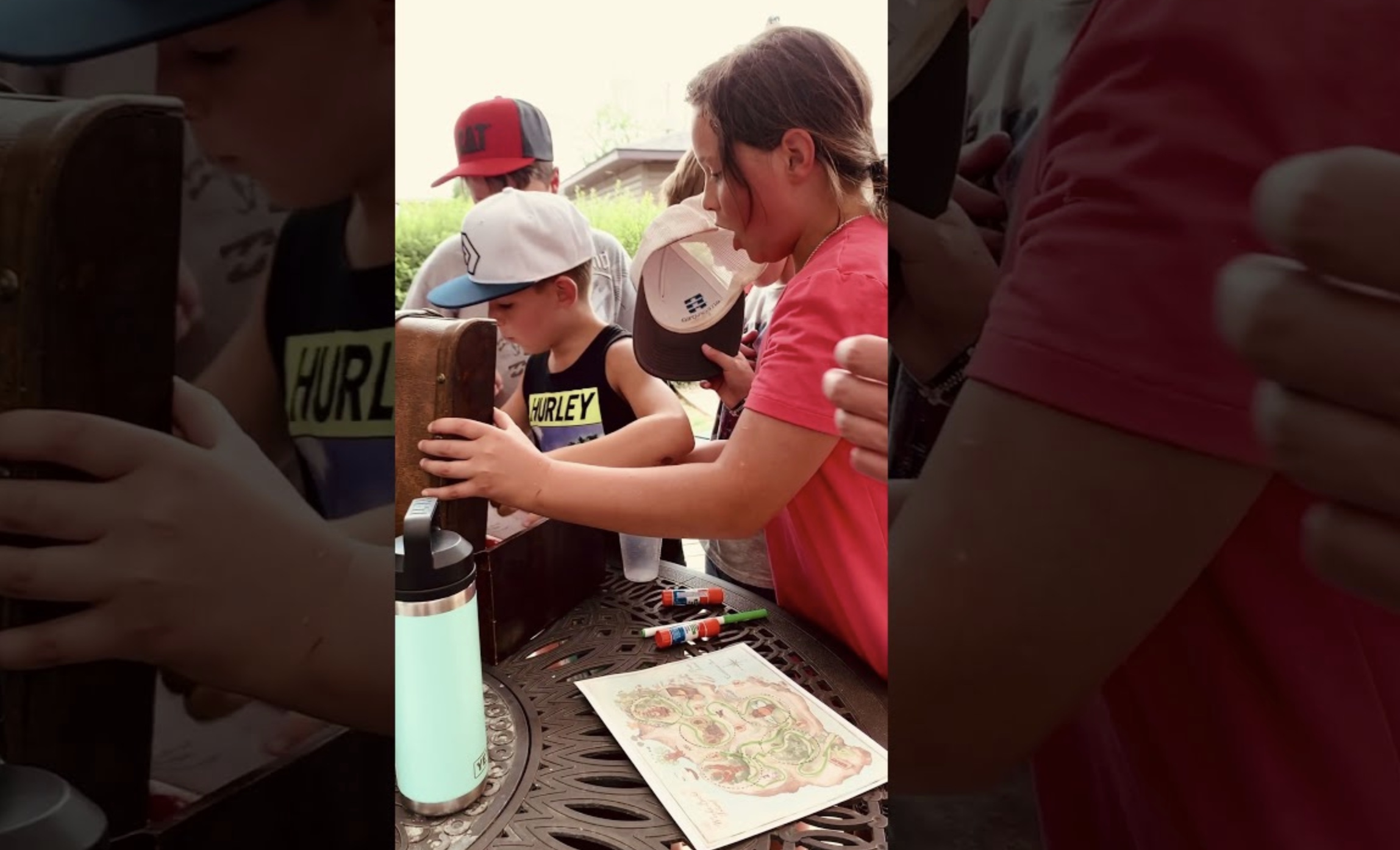
A kit d'escape game imprimable Il s'agit essentiellement d'une sélection de jeux de réflexion intégrés à une histoire. Les enfants déchiffrent des codes, décodent des messages, relient des indices et résolvent des énigmes complexes, le tout contre la montre. Ce jeu sollicite simultanément la logique, la reconnaissance de formes, le raisonnement spatial et le travail d'équipe.
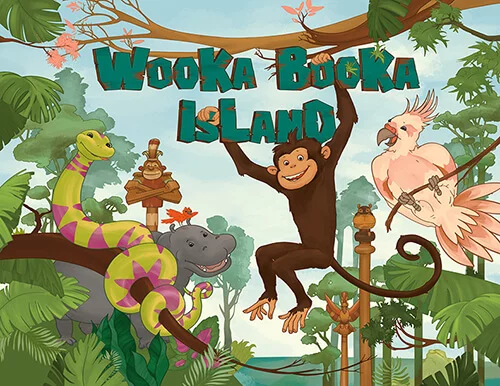
Nous avons conçu des jeux pour tous les âges : L’ÎLE WOOKA BOOKA (5-8 ans) utilise des coloriages et des puzzles d'association, La Chambre secrète de Houdini (9-13 ans) présente les illusions d'optique et la déduction en plusieurs étapes, et Détectives du grand écran (16+) est une véritable enquête policière qui mettra même les adultes au défi. Si vous souhaitez essayer de créer la vôtre, notre Tutoriel de salle d'évasion à faire soi-même vous guide pas à pas.
2. Éléments constitutifs et construction
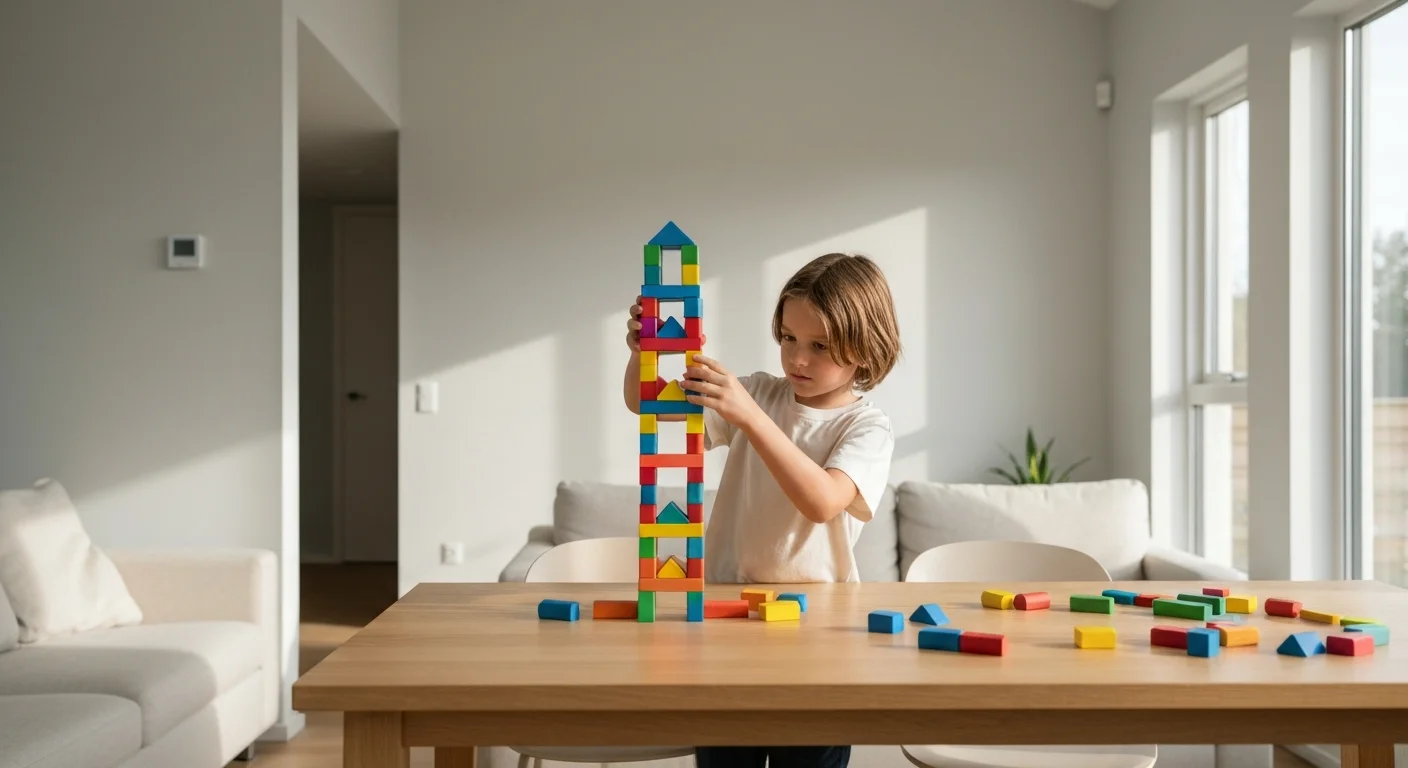
LEGO, blocs de bois, tuiles magnétiques — tout jeu de construction permettant aux enfants de construire, de déconstruire et de reconstruire. Proposez-leur des défis précis : “ Construis un pont qui puisse supporter ce livre. ” “ Construis la tour la plus haute possible. ” “ Construis une maison avec exactement 20 blocs. ” La contrainte les oblige à résoudre des problèmes, et le retour d’information concret (ça tombe = on recommence) favorise naturellement l’apprentissage par essais et erreurs.
Pour les plus jeunes (2-4 ans), empiler et emboîter les tasses fonctionne selon le même principe à un niveau plus simple : déterminer quelle tasse s'emboîte dans laquelle est un véritable exercice de raisonnement spatial.
3. Défis du parcours d'obstacles
Créez un parcours avec des coussins, des chaises et du ruban adhésif. Mais voici une variante stimulante : donnez aux enfants un plan du parcours et demandez-leur d’établir leur itinéraire avant de commencer. Ou bien, fixez des règles – “ à cet endroit, vous ne pouvez poser qu’un seul pied au sol ” – qui les obligent à anticiper. La planification et la stratégie transforment ainsi une activité physique en une activité cognitive.
4. Pas trois du même type
Disposez des groupes de quatre objets. Trois d'entre eux ont une caractéristique commune, le quatrième est l'intrus. “ Pomme, banane, carotte, raisin ” — la carotte est l'intrus (c'est un légume). Commencez par des exemples simples pour les plus jeunes et complexifiez progressivement : “ piano, guitare, batterie, violon ” — tous des instruments, mais la batterie est un instrument à percussion tandis que les autres sont des instruments à cordes ou à clavier. Cet exercice développe la capacité de classification et la pensée analytique.
Jeux de mémoire et d'observation
La mémoire ne se résume pas à mémoriser ; elle implique aussi de faire attention, de remarquer les détails et de retenir les informations sous pression. Ces jeux permettent de développer ces trois aspects.
5. Jeu de mémoire des visages
Montrez la photo d'un visage pendant 30 secondes. Retirez-la. Posez des questions : De quelle couleur étaient ses yeux ? Portait-il des lunettes ? Avait-il des boucles d'oreilles ? Souritait-il ? Commencez par les traits les plus évidents et progressez vers les plus subtils. Vous pouvez utiliser des photos de famille, des images de magazines ou des photos de visages trouvées sur Internet. Les enfants se montrent souvent étonnamment compétitifs pour savoir qui se souvient du plus de détails.
6. Je vois
“ Je vois quelque chose de plus petit que ma main et qui a trois couleurs. ” Cet exercice classique développe l'observation, c'est-à-dire la capacité à scruter un environnement et à remarquer des détails qui échappent aux autres. Pour favoriser le développement cérébral, il est important d'aller au-delà des simples couleurs : décrivez les objets par leur fonction, leur matière ou leur relation avec d'autres objets. “ Je vois quelque chose qui n'existerait pas sans électricité. ”
7. Trouvez cette chose
Disposez 10 à 15 petits objets sur un plateau. Donnez aux enfants 30 secondes pour les observer. Couvrez le plateau. Retirez un objet. Découvrez-le : qu'est-ce qui manque ? C'est un excellent exercice de mémoire de travail, et il s'adapte parfaitement à tous les niveaux : ajoutez plus d'objets pour les plus grands, retirez-en deux au lieu d'un, ou réorganisez les objets restants pour semer la confusion.
8. Chasse au trésor
Les chasses au trésor font appel à la mémoire (se souvenir de la liste), à l'observation (repérer les objets) et à la stratégie (décider où chercher). Créez une liste de 10 à 15 objets à trouver dans la maison ou le jardin. Pour un défi stimulant, donnez des indices plutôt que des noms directs : “ Trouve quelque chose qui garde les aliments au frais ” au lieu de “ Trouve le réfrigérateur ”. Cette étape de traduction augmente la charge cognitive.
Jeux de langage et de mots
Les jeux linguistiques développent le vocabulaire, l'aisance verbale et la capacité à penser rapidement avec les mots — des compétences qui se traduisent directement par de meilleures performances en lecture, en écriture et en communication.
9. Thésaurus humain
Dites un mot. Les enfants doivent trouver le plus de synonymes possible en 30 secondes. “ Heureux ” → content, joyeux, gai, ravi, satisfait… Ce jeu enrichit le vocabulaire plus rapidement que n’importe quelle fiche, car les enfants puisent activement dans leur lexique mental au lieu de lire passivement.
Pour une version plus avancée, passez aux antonymes, ou jouez à des “ chaînes d'association de mots ” où chaque mot doit être relié au précédent.
10. Chasse aux mots
Écrivez un long mot sur une feuille de papier — “ EXTRAORDINAIRE ” — et mettez les enfants au défi d'y trouver le plus grand nombre possible de petits mots cachés. Extra, ordinaire, pluie, train, bruit, route, crapaud… Programmez un minuteur sur 3 minutes et comptez les résultats. Cet exercice permet de développer simultanément la reconnaissance des formes et le vocabulaire. Certains mots en cachent un nombre surprenant : “ ACTION DE GRÂCES ” en contient plus de 200.
11. Une histoire en un seul mot
On fait le tour du cercle, chacun ajoutant un seul mot pour construire une histoire. “ Le — chien — a — mangé — mon — énorme — chapeau — violet. ” Cela oblige les enfants à écouter, à anticiper et à s'adapter en temps réel. Les histoires prennent toujours une tournure absurde, et c'est bien le but. Cela développe l'improvisation verbale et la capacité à construire des phrases ensemble.
Jeux de stratégie et de mathématiques
Les jeux qui font appel aux chiffres, à la stratégie et à la planification — des compétences qui développent la pensée mathématique et la prise de décision.
12. Die Wars
Chaque joueur lance deux dés et effectue une opération sur les nombres obtenus : une addition pour les plus jeunes, une multiplication pour les plus âgés. Le joueur avec le meilleur score remporte la manche. Le premier à atteindre 10 gagne. C'est rapide, compétitif et cela transforme l'apprentissage des mathématiques en un jeu. Pour les joueurs confirmés : lancez trois dés et utilisez deux opérations (addition, soustraction, multiplication) pour obtenir le meilleur résultat possible.
13. 20 questions
Une personne imagine un objet. Les autres reçoivent 20 questions auxquelles on ne peut répondre que par oui ou par non pour l'identifier. Le principe stratégique : chaque question doit éliminer un maximum de possibilités. “ Est-ce vivant ? ” élimine instantanément la moitié des possibilités. Poser la question “ Est-ce un pingouin ? ” à la deuxième question est inutile. Les enfants qui jouent régulièrement à ce jeu développent leur capacité à structurer leur raisonnement et à tester des hypothèses.
14. Stratégie de jeu de cartes
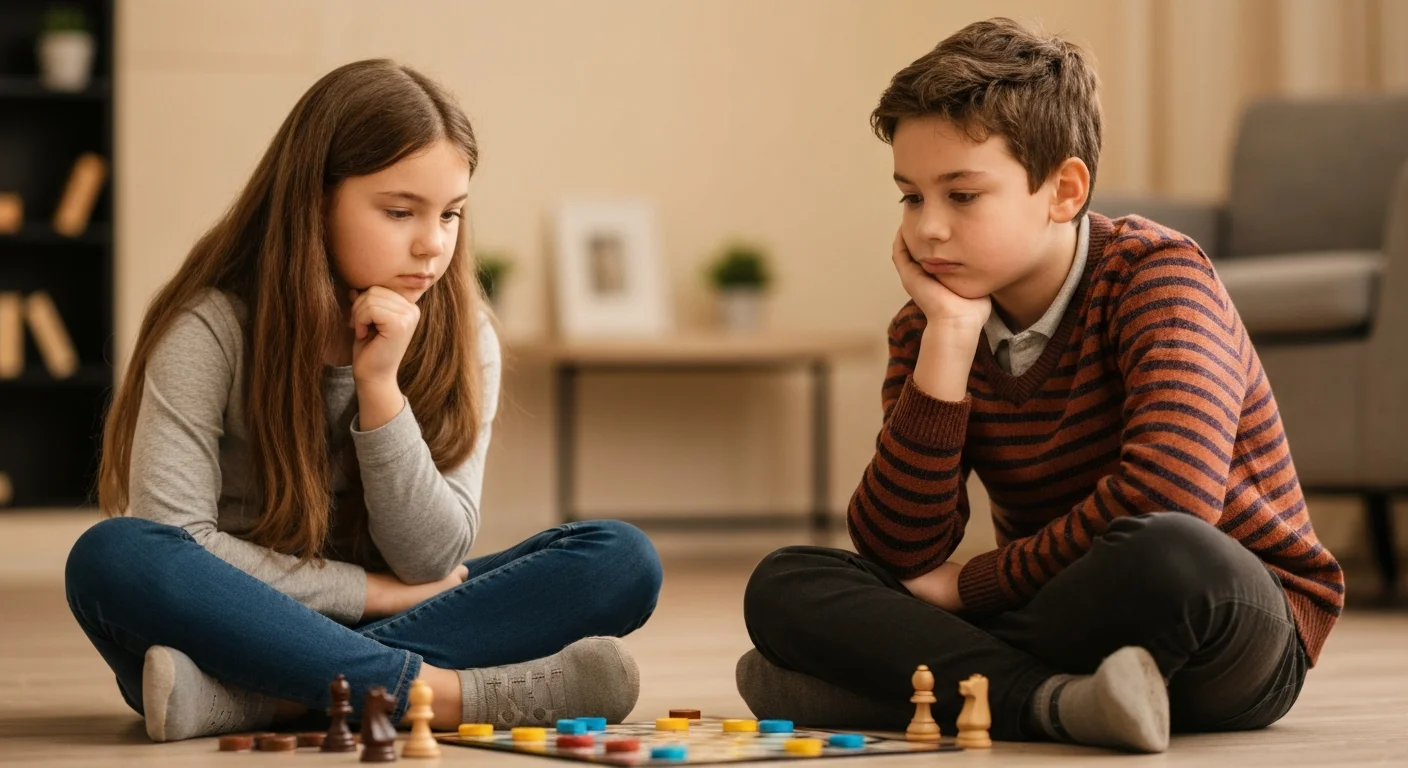
Les jeux de cartes comme Uno, Set et Skip-Bo enseignent la reconnaissance des formes, la planification stratégique et les probabilités sans aucun enseignement formel. Set, en particulier, est un excellent jeu de réflexion : les joueurs doivent identifier des groupes de trois cartes où chaque caractéristique (couleur, forme, nombre, nuance) est soit identique pour toutes les cartes, soit différente pour toutes. D'une difficulté trompeuse, il entraîne le traitement visuel des formes.
15. Scénarios de jeu de rôle
Ne sous-estimez pas le jeu symbolique comme un exercice stimulant pour le cerveau. Lorsqu'un enfant gère un restaurant imaginaire, il prend les commandes (mémoire), rend la monnaie (calcul mental), résout les problèmes des clients (raisonnement social) et improvise des dialogues (langage). Aménagez un magasin, un hôpital ou une école imaginaires et observez l'émergence naturelle de compétences cognitives complexes, surtout lorsque plusieurs enfants négocient ensemble les rôles et les règles.
Lectures complémentaires
Nos kits de jeu prêts à jouer
Choisissez un jeu, imprimez-le et jouez — c'est aussi simple que ça !
-
Le labo du Professeur Soen
Le prix initial était : $24.90.$19.90Le prix actuel est : $19.90.Âge: 9-1345-60 min2-5 enfants -


Pourquoi les jeux cérébraux sont plus importants que vous ne le pensez
Chaque jeu de cette liste sollicite une compétence cognitive qui se traduit par des performances concrètes dans la vie de tous les jours : à l’école, dans les interactions sociales et, plus tard, au travail. Mais si les jeux de réflexion sont plus efficaces que les exercices écrits ou les applications éducatives, ce n’est pas tant leur contenu que leur contexte.
Quand les enfants jouent, leur cerveau est dans un état de concentration détendue : curieux, motivé et réceptif aux défis. C’est l’état optimal pour apprendre. Les exercices écrits génèrent du stress. Les écrans engendrent la passivité. Les jeux créent un état de concentration intense. Et c’est dans cet état de concentration intense que se produit le véritable développement cognitif.
Commencez par un ou deux jeux de cette liste. Jouez-y régulièrement. Observez les progrès de votre enfant. Puis, proposez-lui le défi suivant. Cette progression, de “ Je n'y arrive pas ” à “ J'ai réussi ”, est ce qui forge des esprits confiants et compétents.


Laisser un commentaire