







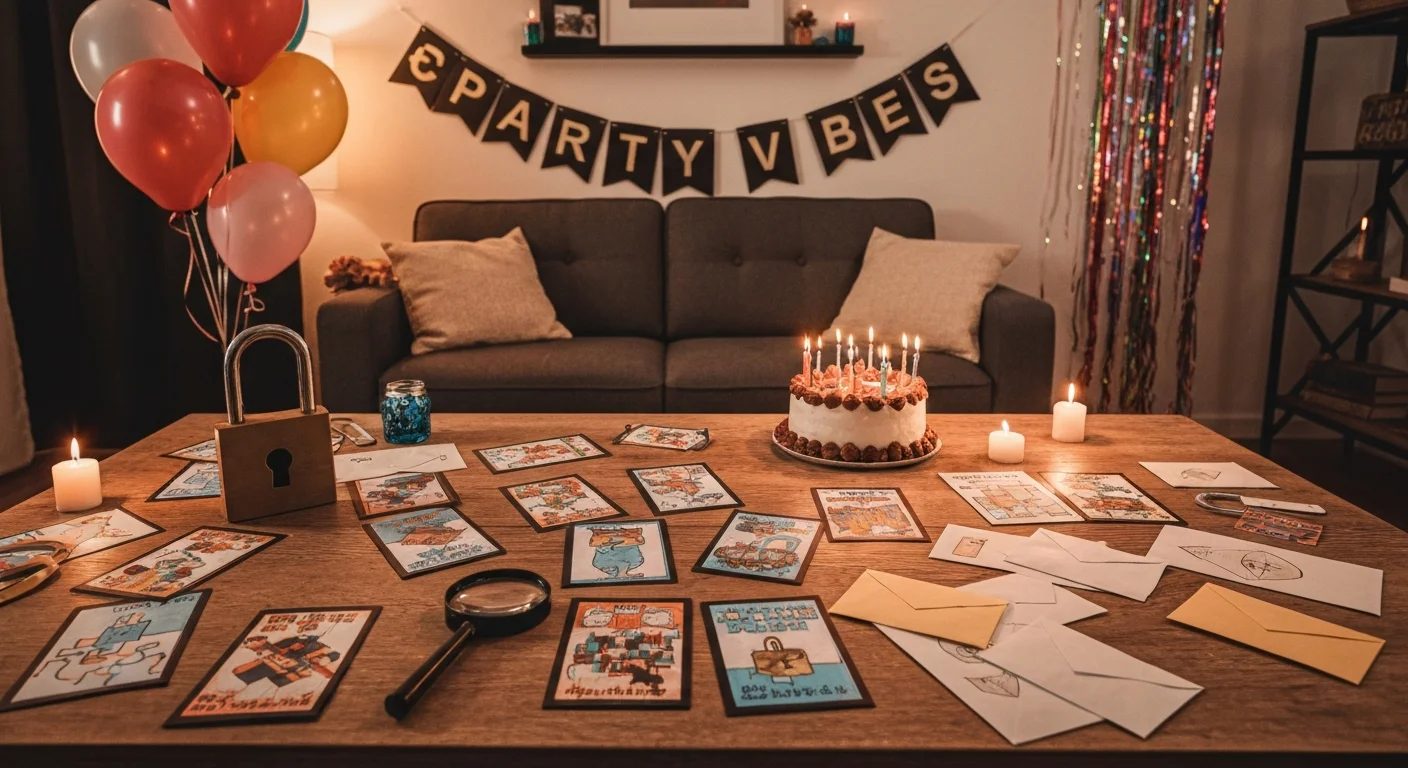
Toen ik klein was, was het verjaardagsfeestje hét evenement van het jaar. Niet Kerstmis, niet de zomervakantie – maar het verjaardagsfeestje. Je was een dag lang de hoofdpersoon, omringd door je beste vrienden, en je deed iets wat speciaal en alleen voor jou was. Nu ik professioneel escape room-spellen ontwerp, help ik ouders om precies zo'n ervaring voor hun kinderen te creëren – en ik kan je vertellen, niets is mooier dan de blik op het gezicht van een kind wanneer ze een code kraken en hun hele team in juichen uitbarst.
Een escape room-verjaardagsfeestje combineert alles wat leuk is aan een gewoon feestje – taart, vrienden, spanning – met een extra laagje avontuur dat kinderen zich nog jaren zullen herinneren. Onze spellen zijn wereldwijd al op meer dan 21.000 verjaardagsfeestjes, familiebijeenkomsten en schoolactiviteiten gespeeld. Hier lees je stap voor stap hoe je er zelf een thuis kunt organiseren.
Waarom een escape room-verjaardagsfeestje?
Voordat we ingaan op het hoe, laten we het eerst hebben over het waarom. Traditionele verjaardagsfeestjes volgen een vrij standaard patroon: aankomen, een paar spelletjes spelen, taart eten, cadeautjes uitpakken en naar huis gaan. Daar is niets mis mee, maar een escape room-feestje voegt iets toe wat de meeste feestjes missen: een gezamenlijke missie.
In plaats van dat de kinderen zich opsplitsen in groepjes (sommigen spelen, sommigen zitten wat rond, sommigen zitten aan een scherm gekluisterd), werkt iedereen samen aan een gemeenschappelijk doel. Ze ontcijferen aanwijzingen, zoeken naar verborgen voorwerpen, discussiëren over of het antwoord 7 of 9 is en geven elkaar een high-five als ze het raadsel hebben opgelost. Het is teamwork, kritisch denken en puur plezier, allemaal verpakt in een uur non-stop vermaak.
Nog een voordeel: jij als ouder hoeft je kind niet constant te vermaken. Zodra het spel op gang is, doen de puzzels het meeste werk. Jij speelt de rol van spelleider: je geeft hints als iemand vastloopt, je houdt de energie erin en je ziet je kind de tijd van zijn of haar leven hebben.
Stap 1: Kies een thema dat bij je kind past.
Het thema is allesbepalend. Het maakt van een simpele puzzelactiviteit een fantastisch feest. En de beste thema's sluiten aan bij de passie van de jarige – geen standaard escape room-thema, maar een thema dat zijn of haar wereld tot leven brengt.
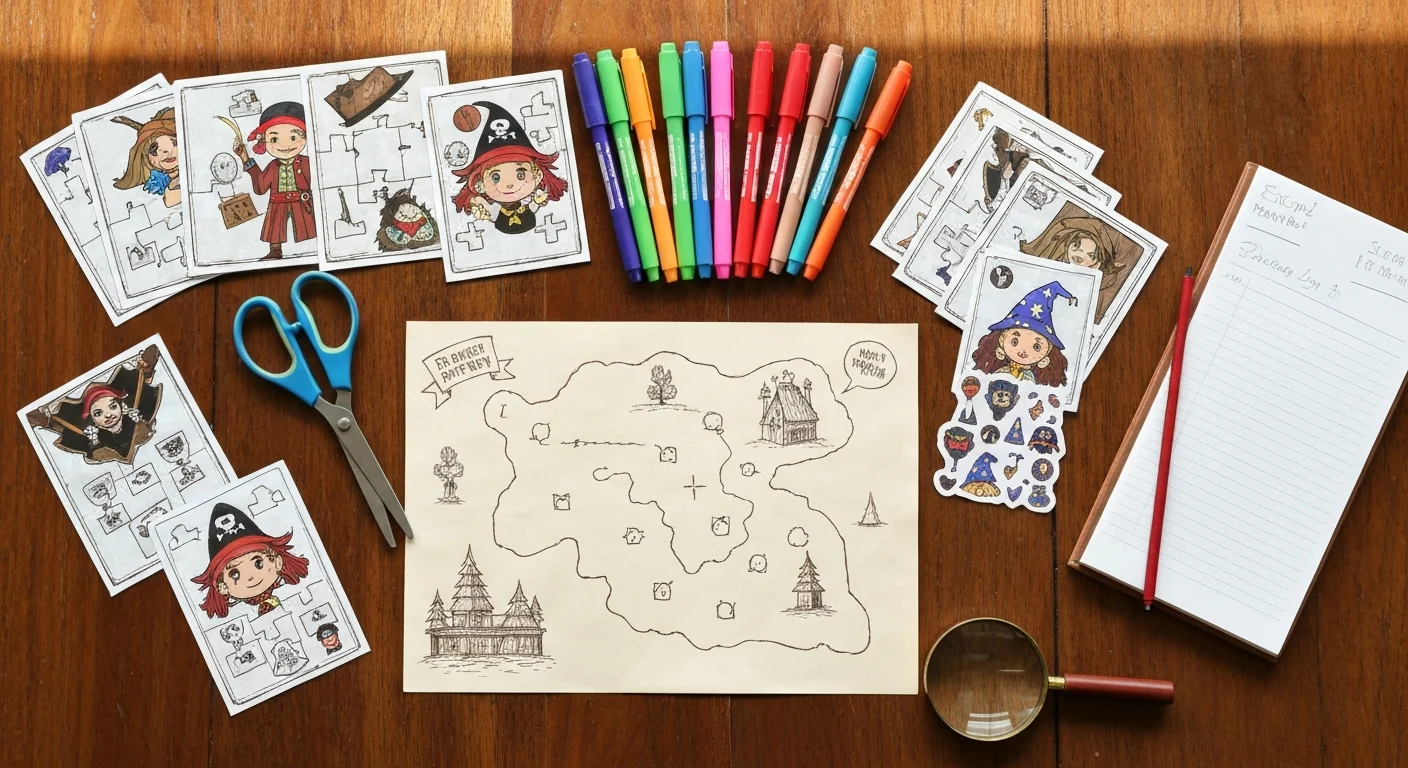
Hieronder leggen we uit hoe onze spelpakketten aansluiten op verschillende interesses:
- Fans van tovenaars/magie: Ontsnap uit de werkplaats van de tovenaar (5-8 jaar) — kinderen verkennen de verboden werkplaats van professor Wumblemore en komen in contact met een pratende kat genaamd Marshmallow.
- Avonturiers/schatzoekers: Wooka Booka Eiland (5-8 jaar) — Een mysterieuze deur leidt naar een tropisch eiland met vier dierenrijken om te ontdekken.
- Dinosaurussenliefhebbers: Project Dino (5-8 jaar) — Help een archeoloog een dinosaurus tot leven te wekken met behulp van een tijdmachine.
- Liefhebbers van magie/illusies: Houdini's geheime kamer (9-13 jaar) — Ontsnap uit Houdini's geheime museumkamer voordat de muren zich om je heen sluiten
- Wetenschapsliefhebbers: Professor Zwon’s Lab (9-13 jaar) — Breek in het laboratorium van een gestoorde wetenschapper en red de winter van de ondergang.
- Fans van mysteries en detectives: Circus Medrano (10-13 jaar) — Onderzoek een griezelig circus waar twee kinderen vermist zijn geraakt.
- Fans van fantasy-RPG's: Aria en het geheim van licht (9-13 jaar) — Ga op avontuur door het koninkrijk Eldoria om de Prins der Schaduwen te verslaan.
- Horror-/sciencefictionfans: Project Frankenstein (12-16 jaar) — onderzoek een kasteel en breng een vriendelijk monster tot leven.
Als je liever zelf een escape room bouwt, bekijk dan onze stapsgewijze doe-het-zelf-handleiding en 30 puzzelideeën. Het vergt meer werk, maar geeft je volledige creatieve vrijheid: je kunt persoonlijke details, inside jokes en eigen uitdagingen toevoegen die het spel helemaal uniek maken voor de jarige.
Stap 2: Richt je ruimte in
Je hebt geen enorme ruimte nodig. Sterker nog, de beste doe-het-zelf escape rooms die ik heb gezien, waren opgezet in een enkele woonkamer of slaapkamer. Dit is wat telt:
- Kies één hoofdkamer waar de belangrijkste puzzels zich zullen afspelen. Een woonkamer, studeerkamer of grote slaapkamer is perfect.
- Ruim de rommel op. zodat kinderen zich vrij kunnen bewegen en zoeken zonder te struikelen. Verwijder breekbare voorwerpen.
- Definieer grenzen — Vertel de kinderen welke kamers bij het spel horen en welke verboden terrein zijn. Plakband of bordjes werken goed.
- Gebruik meerdere gebieden Als je puzzels draaien om het verplaatsen tussen verschillende locaties (gang, keuken, achtertuin), dan zijn onze GPS-achtige puzzels van de puzzelgids Werkt hier uitstekend voor.
Een tip die ik ouders altijd geef: de ruimte moet een beetje anders aanvoelen dan normaal. Dim de lichten wat, doe de gordijnen dicht, verplaats een paar meubels. Zelfs kleine veranderingen geven kinderen het signaal dat "hier iets anders is" en hun hersenen schakelen over naar de avontuurmodus.
Stap 3: Decoratie en sfeer
Decoraties hoeven niet duur te zijn – ze moeten de beleving compleet maken. Het doel is om kinderen het gevoel te geven dat ze in een andere wereld zijn beland, zelfs als die wereld gewoon je woonkamer is met een paar creatieve accenten.
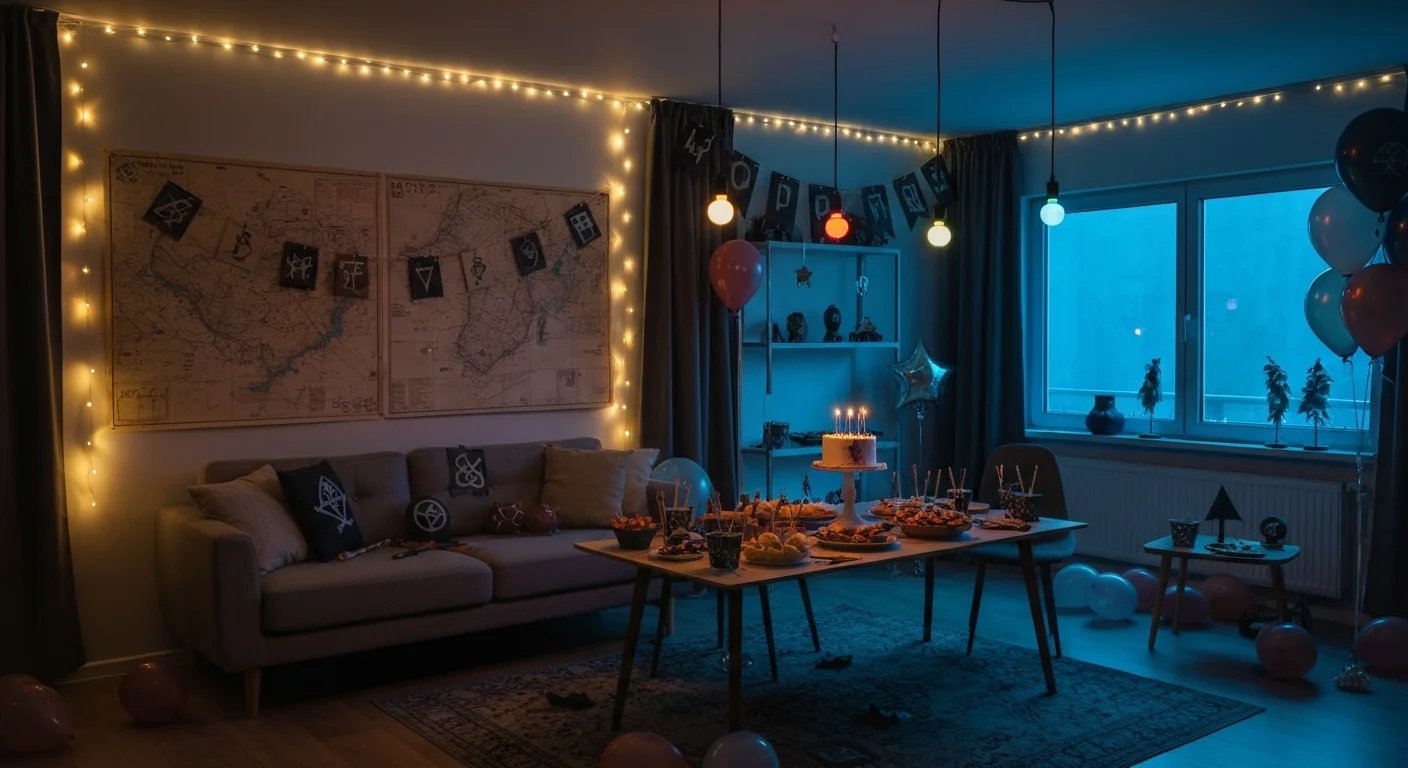
Verlichting
Dit is dé manier om de sfeer te veranderen en het kost bijna niets. Slingerlampjes, gekleurde lampjes, ledkaarsen of zelfs een zaklampje van je telefoon in een gekleurd kopje kunnen een kamer transformeren. Voor een griezelig thema kies je voor gedempt paars en groen. Warme lichtslingers werken perfect voor een magisch thema. En voor een detective-thema creëert een enkele bureaulamp die verhoorkamer-sfeer.
Muziek
Achtergrondmuziek maakt een enorm verschil. Al onze spelpakketten worden geleverd met thematische afspeellijsten, maar je kunt ook gemakkelijk sfeermuziek voor escape rooms vinden op YouTube of Spotify. Stem de muziek af op het thema: mysterieuze pianomuziek voor detectivespellen, junglegeluiden voor avonturenspellen, dramatische orkestmuziek voor fantasie-avonturen. Houd het volume laag genoeg zodat kinderen nog steeds kunnen praten en puzzels oplossen.
Rekwisieten en details
Verspreid thema-gerelateerde spullen door de kamer. Dinosaurussenfeestje? Speelgoeddinosaurussen en afdrukken van fossielen. Tovenaarsfeestje? Toverstokken, flesjes met gekleurde toverdrank (gekleurd water in glazen potjes) en een 'spreukenboek' (een oud gebonden boek met een mysterieuze kaft). Piratenfeestje? Een schatkaart, een kartonnen zwaard en een doos met chocolademunten als prijs.
De rekwisieten hoeven geen onderdeel van de puzzels te zijn; ze hoeven alleen maar in de ruimte aanwezig te zijn. Ze vertellen de hersenen "dit is echt" en verhogen de immersie van "leuke activiteit" naar "onvergetelijk avontuur".“
Stap 4: Thema-eten en -taart
Eten is onderdeel van de beleving. En daarvoor heb je geen professionele bakker nodig – alleen een beetje creativiteit.
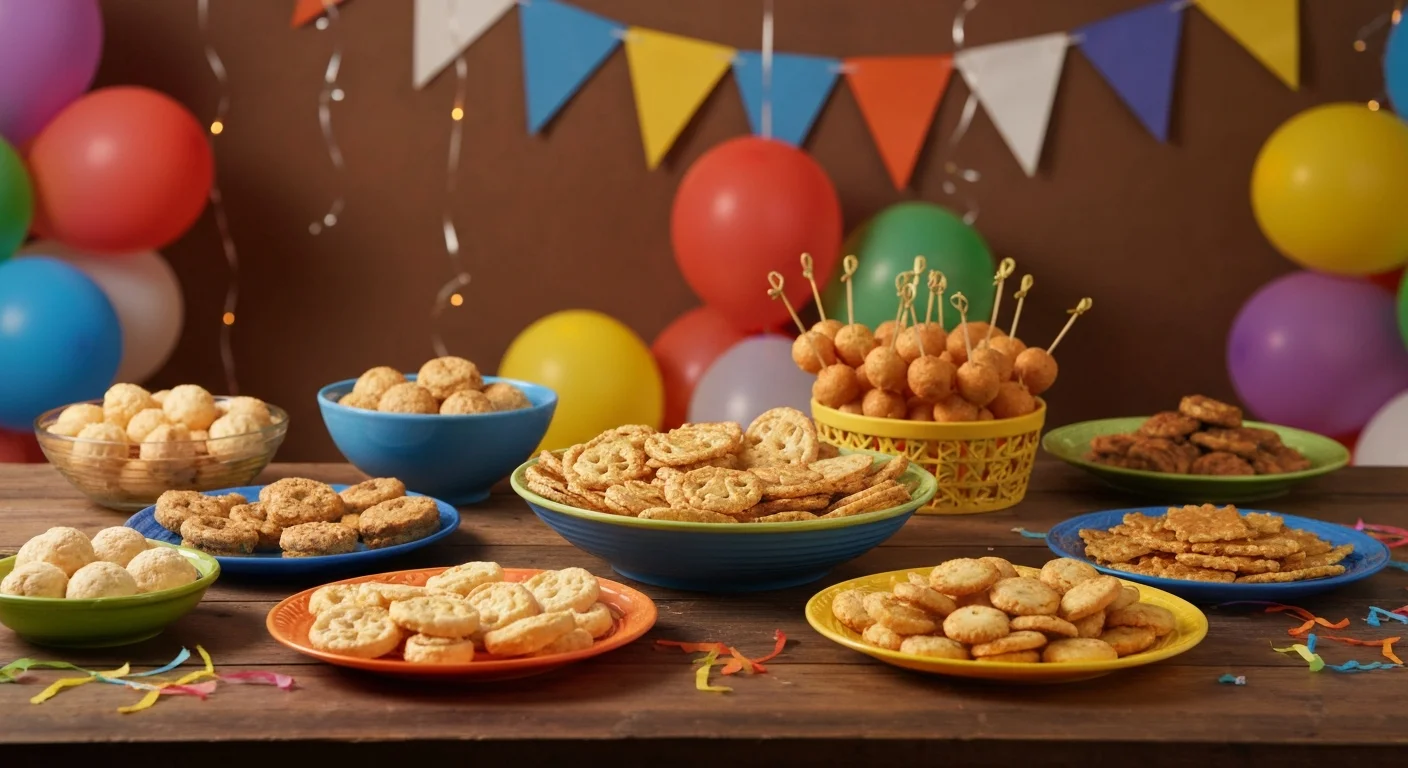
- Mysterieuze toverdranken: Gekleurd sap of limonade in flessen met handgeschreven etiketten — “Krachtdrankje”, “Onzichtbaarheidsserum”, “Hersenbooster”
- Sleutelvormige koekjes: Gebruik een sleutelvormig koekjesvormpje of vorm ze met de hand.
- Clue cupcakes: Schrijf op elke cupcake een enkel cijfer dat samen een code vormt.
- Themataart: Vergrootglas, hangslot, schatkist — wat dan ook bij het thema past. Of schrijf gewoon "Gefeliciteerd, Agent [Naam van de jarige]" op een gewone taart.
- Borden en bekers met een bepaald thema: Deze zijn goedkoop te koop op Amazon en ze maken het geheel van de tafel compleet.
Plan het eten voor ná de escape room, niet tijdens. Je wilt dat de kinderen zich volledig concentreren op de puzzels, niet op het eten. Gebruik de taart als het feestelijke moment direct nadat ze "ontsnapt" zijn. De triomf van het oplossen van het spel, gecombineerd met de verjaardagstaart, is het meest emotionele moment van het hele feest.
Stap 5: Verstuur uitnodigingen die de hype aanwakkeren.
De uitnodiging is het eerste signaal. Goed gedaan, zet die de toon nog voordat het feest begint en zorgt ervoor dat kinderen echt enthousiast worden om te komen.
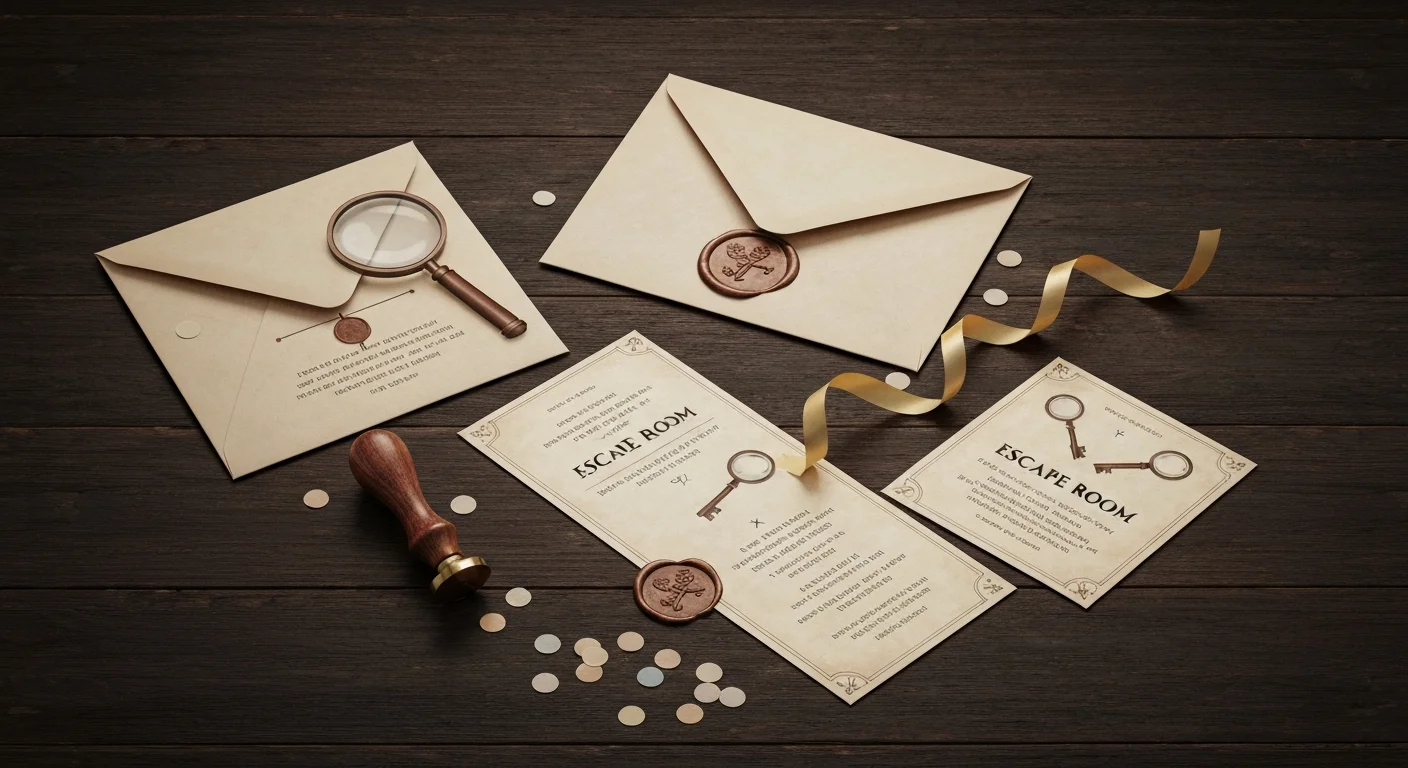
Al onze spelpakketten bevatten printbare uitnodigingen met een bepaald thema, maar je kunt natuurlijk ook gemakkelijk je eigen uitnodigingen maken. Hier zijn een paar ideeën:
- Gecodeerde uitnodigingen: Schrijf de feestdetails op in een eenvoudige code die de kinderen moeten ontcijferen om de datum en tijd te achterhalen. Voeg een decodeerstrook toe.
- “Geheim” dossier: Print de uitnodiging af op papier met een verouderde uitstraling, stempel er "TOP SECRET" op en schuif hem in een manila-envelop.
- Video-uitnodiging: Neem een kort filmpje op in de rol van [Naam van het kind] — "Agent [Naam van het kind], je missie wacht op je…" — en stuur het via WhatsApp of e-mail.
- Envelop met waszegel: Een lakzegel op een gewone envelop geeft deze direct een gevoel van belangrijkheid en mysterie.
Vermeld het thema van het feest in de uitnodiging, zodat gasten zich kunnen verkleden als ze dat willen. Een zaal vol kinderen met tovenaarsmutsen of detectivejassen zorgt voor een extra dosis sfeer.
Stap 6: Het tijdschema voor de feestdag
Hier is een beproefd tijdschema voor een escape room-verjaardagsfeestje van 2 uur dat ervoor zorgt dat alles soepel verloopt:
0:00 – 0:15 | Aankomst en warming-up
Laat de kinderen aankomen, zich installeren en enthousiast worden. Zorg voor een eenvoudige activiteit, zoals kleurplaten, een woordzoeker of een knutselwerkje voor een 'detectivebadge' die ze tijdens het spel kunnen dragen. Dit geeft ook wat extra tijd voor laatkomers.
0:15 – 0:25 | Briefing
Verzamel iedereen en leg het spel uit. Lees de inleiding van het verhaal voor (deze zit bij onze kits). Stel de regels vast: blijf in het spelgebied, forceer geen sloten en vraag de spelleider om hints. Bouw de spanning op: dim de lichten, zet de muziek aan en begin officieel.
0:25 – 1:15 | Het escape room-spel
Dit is het hoogtepunt. 45-60 minuten puzzelen. Jouw taak als spelleider is om te observeren, hints te geven wanneer teams langer dan 3-4 minuten vastzitten en de sfeer positief te houden. Voor grotere groepen (8 of meer kinderen) kun je de teams opsplitsen in tweeën die naast elkaar strijden.
13:15 – 13:30 | Feest en taart
Of ze nu ontsnapt zijn of niet, vier het! Onthul de oplossing, praat over de mooiste momenten en ga over op taart en gezang. De euforie na de wedstrijd is het perfecte moment voor een verjaardagsfeest.
13:30 – 14:00 | Vrij spelen en vertrek
Pak cadeautjes uit als je dat leuk vindt, deel feestartikelen uit en laat de kinderen even tot rust komen. Sommigen zullen hun favoriete puzzels nog eens willen spelen.

Feesttips per leeftijdsgroep
Niet alle kinderen zijn hetzelfde, en een feestje voor zesjarigen ziet er heel anders uit dan een feestje voor twaalfjarigen. Dit is wat ik heb geleerd door duizenden groepen onze spelletjes te zien spelen:
Leeftijd 5-7 jaar
- Zorg voor visuele en praktische puzzels: kleuren, knippen, matchen, objecten zoeken.
- Eén volwassene moet actief de rol van spelleider op zich nemen (en niet alleen toekijken).
- Maximaal 45 minuten voor de wedstrijd - de aandachtsspanne is korter.
- Spellen: Wooka Booka Eiland, Tovenaars werkplaats, Project Dino
Leeftijd 8-10
- Kan meerstapspuzzels en eenvoudige cijfers oplossen.
- Hou je van competitieve elementen? Verdeel je dan in teams met een timer.
- 60 minuten is de ideale duur.
- Spellen: Houdini's geheime kamer, Ontsnap van Puzzeleiland
Leeftijd 11-13 jaar
- Wil je een echte uitdaging? Maak het dan niet te makkelijk, anders raken ze verveeld.
- Op deze leeftijd is het verhaal belangrijker — ze willen een verhaal, geen puzzels.
- 60-90 minuten werkt prima.
- Spellen: Circus Medrano, Aria en het geheim van licht, Project Frankenstein
Waargebeurd verhaal: Hoe een oma haar achtertuin omtoverde tot een episch escape room-feest
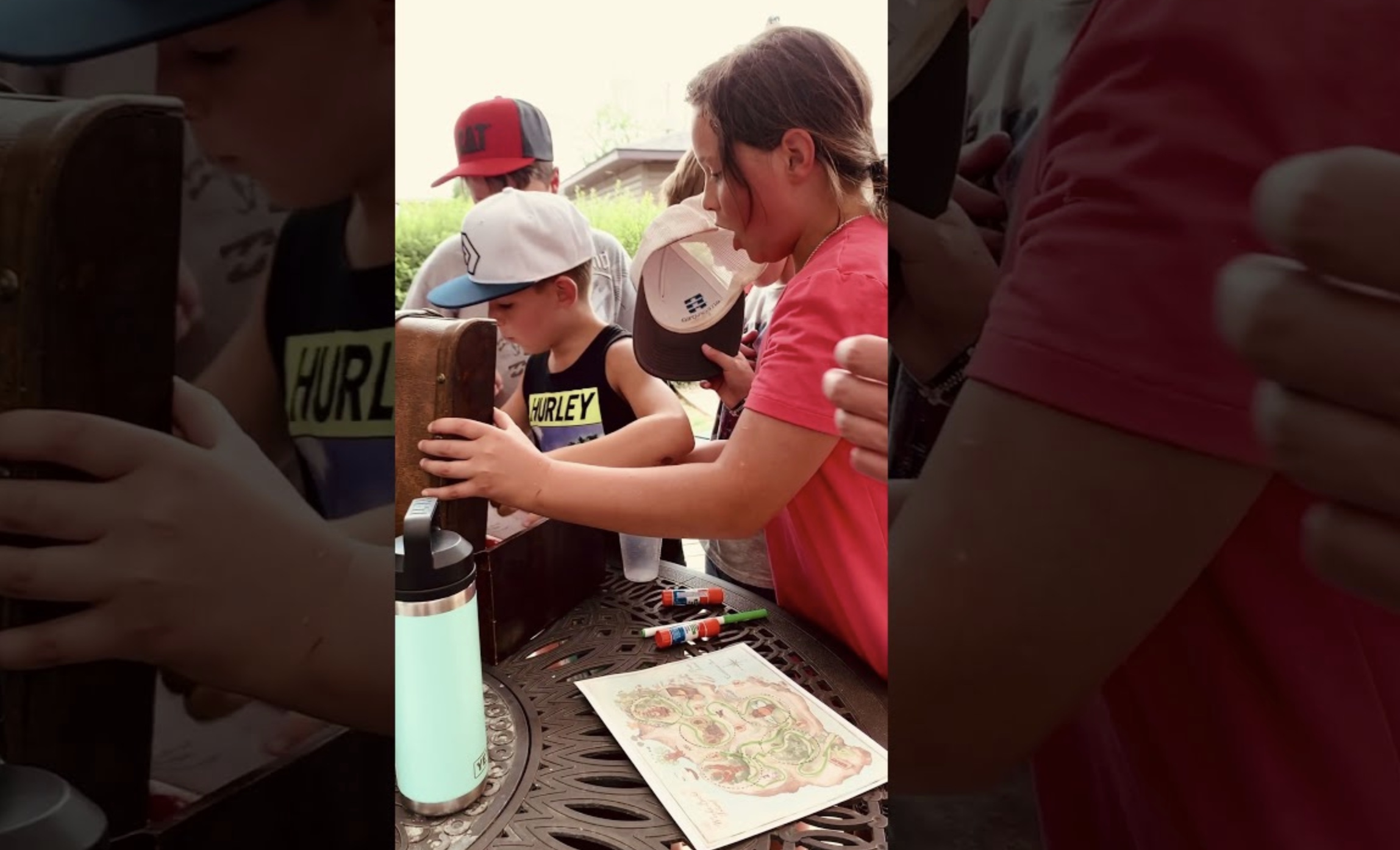
Als je bewijs nodig hebt dat iedereen dit kan, maak dan kennis met Marcie. In de zomer van 2020 toverde ze haar achtertuin om tot een tropisch eiland met behulp van onze producten. Wooka Booka Eiland een pakket voor haar kleinzonen en hun vrienden.
Zes kinderen van 7 tot 12 jaar werden verdeeld in twee teams. Marcie speelde de rol van Lau Kamau – de vriendelijke reuzenbeschermer uit het spel – in een compleet kostuum. Ze voegde tropische planten, kartonnen figuren en zelfgemaakte versieringen toe om de achtertuin in iets onherkenbaars te veranderen. De kinderen losten puzzels op met minimale hulp, werkten samen ondanks hun leeftijd en praatten er wekenlang over.
Haar advies voor iedereen die dit wil proberen: kruip helemaal in de huid van het personage, wees niet bang om flink uit te pakken met de versieringen (zelfs goedkope versieringen maken een verschil) en laat de kinderen je verrassen met hoe goed ze het kunnen.
Lees hier het volledige interview met Marcie.
Spelmastertips voor verjaardagsfeestjes
Na duizenden groepen onze spellen te hebben zien spelen, kunnen we je vertellen wat een goede escape room-party onderscheidt van een geweldige:
- Voer een testrun uit. Zet het spel 24 uur van tevoren klaar en speel het zelf door. Zo ontdek je eventuele problemen (een aanwijzing die te goed verstopt is, een slotcombinatie die te voor de hand ligt, een volgorde die niet logisch is) voordat de kinderen erbij betrokken raken.
- Zorg dat je een hintsysteem klaar hebt staan. Onze kits bevatten hints, maar als je zelf aan de slag gaat, bereid dan 2-3 hints per puzzel voor. Geef hints na 3-4 minuten vastlopen; als het te lang duurt, bederft de frustratie het plezier.
- Laat niet één kind de overhand krijgen. In elke groep is er wel een puzzelwonder die als eerste een oplossing vindt. Stuur diegene dan voorzichtig bij: "Goed idee! Kun je [het stille kind] laten zien hoe je dat hebt opgelost?" Zo blijft iedereen betrokken.
- Vier de mislukkingen. Fout antwoord? "Interessante theorie! Wat als je het vanuit een ander perspectief bekijkt?" Blijf hoe dan ook positief.
- Maak foto's. Je zult zo opgaan in het leiden van het spel dat je vergeet het vast te leggen. Wijs een andere volwassene aan om foto's en video's te maken. De spontane beelden van kinderen die puzzels oplossen zijn goud waard.
- Iedereen wint. Ook als ze niet op tijd "ontsnappen", onthul dan de oplossing en vier hoe ver ze gekomen zijn. Niemand zou een verjaardagsfeest met het gevoel moeten verlaten dat hij of zij gefaald heeft.
Snelle checklist: Wat je nodig hebt
Hier vind je alles wat je nodig hebt om een escape room-verjaardagsfeestje te organiseren:
- A printbare escape room kit (of doe-het-zelf puzzels)
- Printer, schaar en lijmstift
- 1-2 cijfersloten (optioneel, maar zorgt voor een dramatisch effect)
- Decoraties die bij het thema passen
- Achtergrondmuziek (afspeellijst of YouTube-sfeer)
- Een timer (de telefoon werkt prima)
- Themahapjes en een verjaardagstaart
- Feestcadeautjes (detectivebadges, vergrootglazen of kleine puzzelspeeltjes)
- Uitnodigingen met een thema
- Een enthousiaste spelleider (dat ben jij)
Totale voorbereidingstijd: 30-45 minuten met een printbaar pakket, 2-3 uur als je alles zelf maakt. Totale kosten: $20-50 inclusief pakket, decoraties en eten. Vergelijk dat met een commerciële escape room ($30-40 per kind) en de waarde is duidelijk — vooral omdat de thuisversie op manieren gepersonaliseerd kan worden die geen enkele commerciële escape room kan evenaren.
Het volgende verjaardagsfeestje van je kind hoeft niet 'goed genoeg' te zijn. Het kan hét feestje worden waar de vriendjes en vriendinnetjes volgend jaar nog over praten. Print de puzzels uit, dim de lichten, zet de muziek aan – en laat het avontuur beginnen!.
Onze kant-en-klare spelpakketten
Kies een spel, print het uit en speel het - zo eenvoudig is het!
-
Professor Zwon’s Lab
Oorspronkelijke prijs was: $24.90.$19.90Huidige prijs is: $19.90.Leeftijd: 5-845-60 min2-5 kinderen -





Geef een reactie