







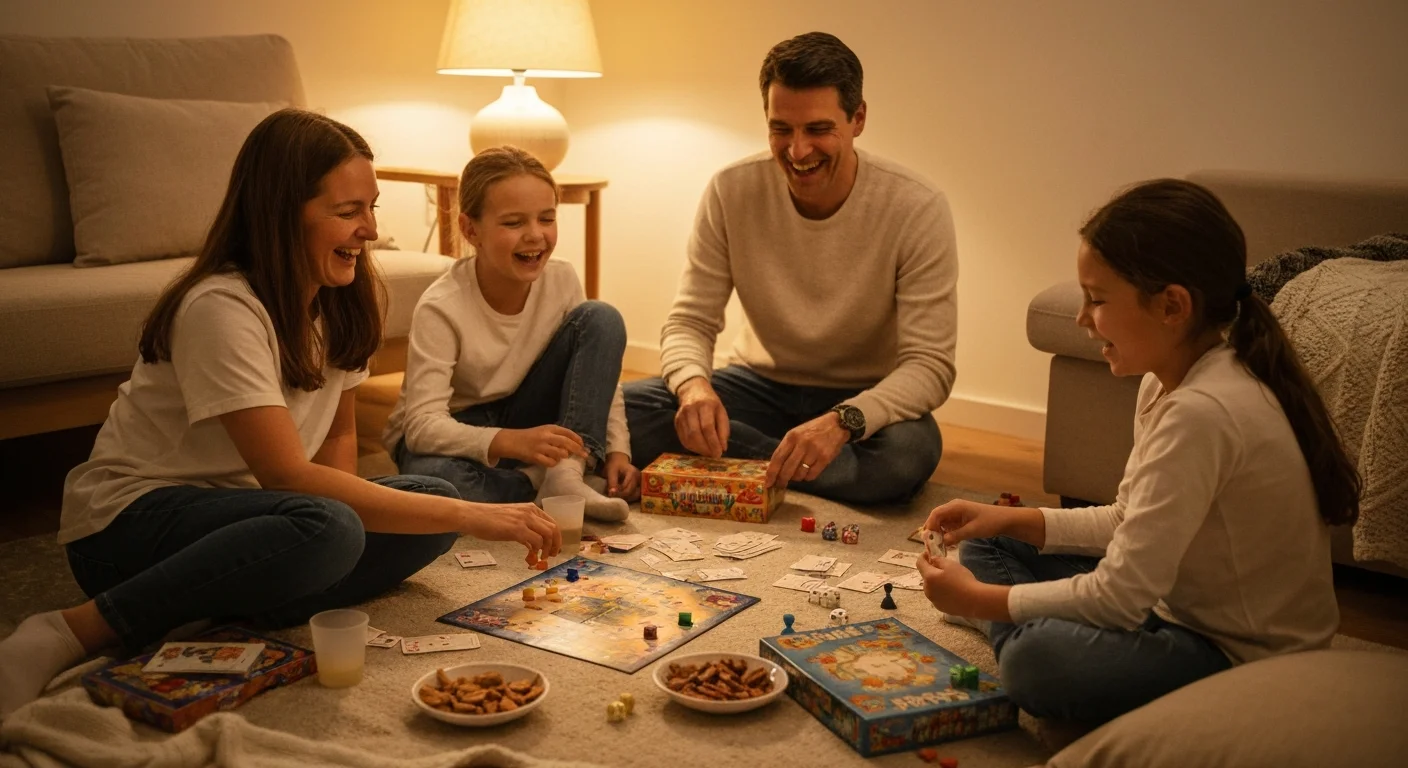
Some of my best childhood memories are from family game nights. No screens, no distractions — just my parents, my brother, and whatever ridiculous game we could come up with using stuff we found around the house. Now that I design games for a living, I realize those evenings taught me more about puzzle design than any book ever could.
Whether you’re looking to start a weekly family game night tradition or just need something fun for a rainy afternoon, these 25 ideas work for kids of all ages — and honestly, most of them are just as fun for the adults. I’ve organized them by type so you can pick what fits your family’s mood.
Storytelling and Imagination Games
These are the games that get the whole family talking, laughing, and building something together from nothing. Zero equipment needed — just your imagination.

1. Imaginary Traveler
Everyone takes turns working through the alphabet. Each person picks a destination and an item that starts with the next letter: “I’m going to Brazil and I’m bringing my banjo.” The next person takes C, and so on.
It sounds simple, but by the time you get to Q and X, things get beautifully absurd. My nephew once announced he was going to “Xanadu and bringing his xylophone-playing xenomorph.” He was seven. The game rewards creativity, and the sillier the answers, the better.
2. Story Chain
One person starts a story with a single sentence. The next person adds a sentence. You keep building, one sentence at a time, and the story goes wherever the group takes it.
What makes this work as a family game is the collision of perspectives. A five-year-old will steer the story toward dragons and ice cream. A parent will try to add plot structure. A teenager will add a plot twist that destroys everything. The result is always chaotic and always memorable. Try it with alternating words instead of sentences for an even wilder ride.
3. Fortunately, Unfortunately
Inspired by the book Fortunately by Remy Charlip. One player starts with a “Fortunately” sentence: “Fortunately, the dog woke up on time this morning.” The next player counters with “Unfortunately”: “Unfortunately, he woke up on Mars.” Then back to “Fortunately,” and so on.
The fun is in the escalation. The stories get increasingly ridiculous as everyone tries to one-up each other. It also subtly teaches kids about narrative structure and problem-solving — every “unfortunately” is a problem, every “fortunately” is a solution.
4. Two Truths and a Lie
Each person shares three statements about themselves — two true, one false. Everyone else has to guess which one is the lie. This is one of those games where you suddenly discover things about your own family you never knew.
My mom once revealed she’d been in a TV commercial in the 80s. We all guessed it was the lie. It wasn’t. The best part is watching younger kids try to construct a convincing lie — they’re terrible at it, and that’s what makes it hilarious.
Brain Games and Puzzles
These are the games that make you think — perfect for families who love a mental challenge. They work equally well at the dinner table or on a long car ride.
5. Name Five
Pick a category — animals, countries, foods, movie titles, whatever. Go through the alphabet, and each player has to name five things in that category starting with the current letter.
It starts easy enough with A and B, but try naming five animals that start with Q when you’re under pressure. The alphabet constraint forces creative thinking, and the competitive element keeps everyone locked in. We play this on road trips and it makes hours disappear.
6. 20 Questions
One person thinks of an object. Everyone else gets 20 yes-or-no questions to figure out what it is. The catch: you have to ask smart questions that eliminate possibilities, not random guesses.
“Is it alive?” narrows the field by half instantly. “Is it a banana?” on question two is a waste. Kids learn deductive reasoning without realizing they’re learning, which is the best kind of learning.
7. I Spy
“I spy with my little eye something… red.” Simple, timeless, and endlessly adaptable. You can play by color, shape, first letter, material, or function. Younger kids learn observation skills. Older kids can be challenged with trickier descriptions like “I spy something that was invented in Japan.”
What I love about this game is that it works anywhere — the living room, a restaurant, the car, a waiting room. No setup, no equipment, infinite replay value.
8. Hangman
All you need is a pencil and paper. One person picks a word, draws dashes for each letter, and sketches a little gallows. The guesser calls out letters — correct ones fill in the blanks, wrong ones add body parts to the hangman. Get the word before the stick figure is complete, or lose.
For younger kids, use shorter words and give extra guesses. For older kids and adults, try phrases or titles. My family plays a variant where the word-picker has to use the word in a sentence as a hint after five wrong guesses — it adds a layer of strategy for both sides.
9. Printable Escape Room
If your family loves puzzles, a printable escape room is the ultimate game night upgrade. You download a PDF, print it out, set up a few clues around your home, and suddenly your living room is a mysterious wizard’s workshop or a detective’s crime scene.
I may be biased here (I design these for a living), but there’s a reason our kits have been played over 21,000 times worldwide. Kids work together to solve puzzles, crack codes, and piece together a story — it’s teamwork, critical thinking, and creativity all wrapped in one hour of pure fun. We have games for kids as young as 5 all the way up to adult-level challenges.
10. Scavenger Hunt
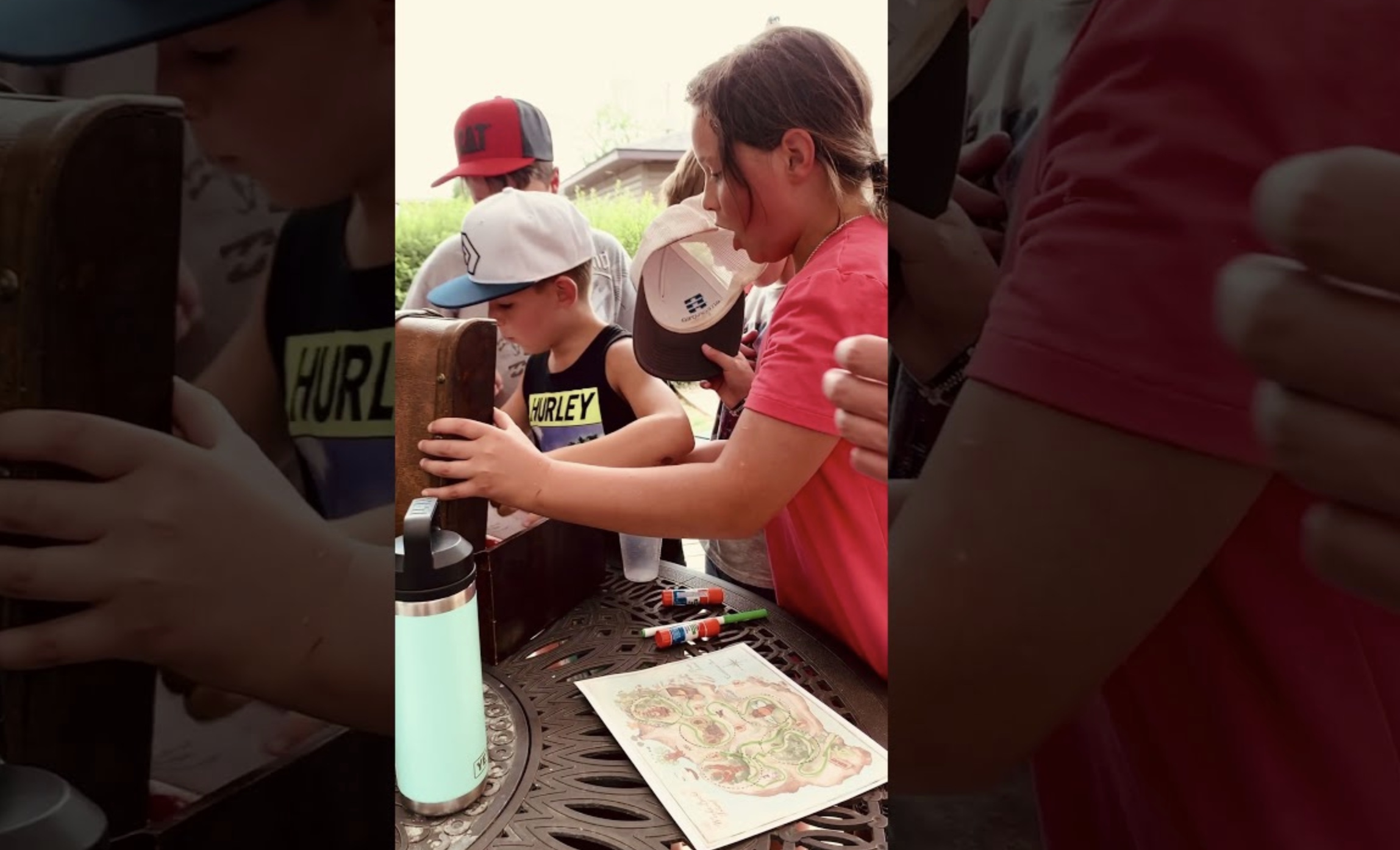
Write a list of items or clues and send the kids loose in the house (or yard) to find everything. You can keep it simple — “find something soft, something blue, something that makes noise” — or create a story-driven treasure hunt where each clue leads to the next location.
For a themed version, tie it to a holiday or event: an Easter egg hunt, a pirate treasure map on a birthday, or a Halloween monster hunt. The more narrative you add, the more invested kids get. Check our DIY escape room tutorial for ideas on chaining clues together.
Active Indoor Games
For those evenings when kids have energy to burn and it’s too dark (or too cold) to go outside. Fair warning: move the breakable stuff first.

11. Keep the Balloon Up
Blow up a few balloons and the rule is simple: don’t let them touch the floor. Hands, heads, elbows, knees — everything is fair game. It’s instant chaos in the best way.
Add variations to keep it interesting: play with only one hand, use only your head, or add more balloons until the room is pure pandemonium. My family’s record for keeping a single balloon airborne is 4 minutes and 12 seconds. We take this seriously.
12. Tape Maze
Clear a section of floor and lay down a maze using painter’s tape (it peels off without leaving marks). Kids have to navigate the maze without stepping on the tape. For older children, add dead ends, branching paths, or rules like “hop on one foot in this section.”
You can also turn it into a number maze for younger kids learning to count — mark numbers along the path so they follow the sequence. It’s physical, it’s educational, and it buys you at least 30 minutes of focused play.
13. Musical Chairs
Set up chairs in a circle — one fewer than the number of players. Play music, everyone dances around the chairs, music stops, everyone scrambles for a seat. The person left standing is out. Remove a chair, repeat.
No spare chairs? Use colored paper squares taped to the floor, cushions, or even towels. The elimination format keeps the stakes high, and the final two-player showdown is always intense. Works best with a parent controlling the music and strategically timing the stops.
14. Simon Says
One person is Simon and gives commands: “Simon says touch your toes.” If Simon says it, everyone must follow. If the command comes without “Simon says,” anyone who moves is out.
The trick for the person playing Simon is to speed up the commands and slip in fakes when everyone’s in a rhythm. Kids love this because they get to be the authority figure when it’s their turn to play Simon — and they take that power very seriously.
15. Land, Sea, and Air
Divide the room with tape: one side is “land,” the other is “sea.” A leader calls out directions, and players jump to the right zone. When the leader shouts “air,” everyone jumps as high as they can.
The leader can mix up the pace, give rapid-fire commands, and try to trick players by pointing one way while saying another. Great for burning energy and improving listening skills at the same time.
16. Sock Basketball
Roll up a few pairs of socks into balls. Grab a laundry basket. You’ve got a basketball court. Take turns shooting from a set distance — score means you stay, miss means you step back.
We play “HORSE” with sock balls — each person has to replicate the previous player’s shot. Behind the back, eyes closed, sitting down. It’s genuinely competitive and no furniture gets destroyed.
Classic Party Games
These games have been around forever for a reason — they work for every age, every group size, and every energy level.

17. Charades
Act out a word or phrase without speaking. Everyone else guesses. The beauty of charades is that it’s infinitely scalable — little kids can act out animals, older kids can tackle movie titles, and adults can attempt abstract concepts like “existential dread” (which my sister somehow pulled off at Christmas).
Split into teams for a competitive edge, or play free-for-all. Either way, you’ll discover that your quiet child is actually a born performer.
18. Hot Potato
Pass a soft ball (or a rolled-up sock) around the circle as fast as possible while music plays. When the music stops, whoever’s holding the “potato” is out. Last person standing wins.
The magic is in the music — the person controlling the playlist has all the power. Dramatic pauses, fake stops, and perfectly timed cutoffs make this game way more exciting than it has any right to be.
19. Hide and Seek
You’re never too old for hide and seek. Seriously. Watching a grown adult fold themselves into a kitchen cabinet while a six-year-old methodically searches the house is peak family entertainment.
For a twist, try “Sardines” — one person hides, everyone else seeks. When you find the hider, you squeeze into their hiding spot quietly. Last person still searching is the next hider. It gets increasingly ridiculous as more people pack into a closet.
20. Freeze Dance
Play music and everyone dances. When the music stops, freeze. Anyone caught still moving is out (or gets a silly penalty like doing a funny pose for the next round). This is basically musical chairs without the chairs, and younger kids who struggle with competition do better with it because there’s no physical scramble.
Creative and Hands-On Games
For families who like to make things, solve things, and get a little messy together.

21. Touch and Feel Boxes
Cut a hand-sized hole in a shoebox. Put an object inside — a pinecone, a sponge, cooked spaghetti, a rubber duck. The player reaches in and has to identify the object by touch alone. No peeking.
The reactions are priceless, especially with unexpected textures. Cold cooked spaghetti in a dark box will get screams from adults and kids alike. It’s sensory play disguised as a game, and it genuinely helps younger children develop their sense of touch.
22. Pictionary
One person draws, everyone else guesses. You can use a whiteboard, a big pad of paper, or even draw with your finger on someone’s back (for a tactile version). Set a timer for 60 seconds to keep the pressure on.
The best part about playing Pictionary with kids is their absolute lack of self-consciousness. They’ll draw a circle with two dots and declare it’s “the solar system” with total confidence. Meanwhile, the adults are still trying to figure out how to draw “commitment.”
23. Build a Fort
Grab every blanket, cushion, and pillow in the house. Build the most epic fort your living room can handle. This isn’t technically a “game” in the competitive sense, but the collaborative building process is the game — negotiating architecture, solving structural problems, and the pure pride of crawling inside your creation.
Once the fort is built, play the rest of your game night from inside it. Board games by flashlight in a blanket fort hits different.
24. Paper Airplane Contest
Everyone designs and folds their own paper airplane. Then you compete in categories: longest distance, longest hang time, most accurate (hit a target), and best looking. YouTube has hundreds of folding tutorials if you need inspiration.
The design phase is half the fun. Kids who never sit still for crafts will spend 20 minutes perfecting their folds when there’s a competition at the end. Add a “test flight” phase where they can modify their designs between rounds.
25. Minute-to-Win-It Challenges
Set up a series of 60-second challenges using household items. Stack 10 cookies on your forehead and eat them without using your hands. Move cotton balls from one bowl to another using only a spoon held in your mouth. Build the tallest tower from playing cards in 60 seconds.
These are perfect for mixed-age groups because the challenges are skill-based rather than knowledge-based — a six-year-old has the same shot as an adult. Run 5-8 challenges in a row and crown an overall champion at the end.
Making Family Game Night a Tradition
The games themselves matter less than the habit. Pick a consistent night — in our family it was Fridays — and protect it. Phones go away. Screens go off. The only agenda is being together.
A few things I’ve learned from both hosting game nights and designing games professionally:
- Let kids pick the games. Ownership makes them more invested. Even if you end up playing the same game for the fifth week in a row, the enthusiasm is worth it.
- Rotate game types. Alternate between brain games, active games, and creative games so everyone gets a night where they shine.
- Don’t let adults dominate. Handicap yourself when playing with younger kids. The goal is connection, not victory.
- Add snacks. This is non-negotiable. Game night without snacks is just a meeting.
- Try something new every month. Keep one night per month for a game nobody’s played before. A printable escape room, a new card game, a homemade challenge — novelty keeps the tradition alive.
The best family game nights aren’t the ones with the fanciest equipment or the most elaborate setup. They’re the ones where everyone’s laughing so hard someone snorts milk out of their nose. Start simple, stay consistent, and let the games do their thing.
Related Reading
- 20 Birthday Party Games for Kids
- 25 Indoor Games for Kids
- 15 Brain Games for Kids
- 20 Camping Games for Kids
Our Ready-to-Play Game Kits
Pick a game, print, and play — it’s that simple!
-
Professor Swen’s Lab
Original price was: $24.90.$19.90Current price is: $19.90.Age: 9-1345-60 Min2-5 kids -






Leave a Reply