







I’ve designed escape room games played by over 21,000 people across six continents. And here’s what still surprises me — some of the best feedback I get isn’t from birthday parties or team nights. It’s from teachers.
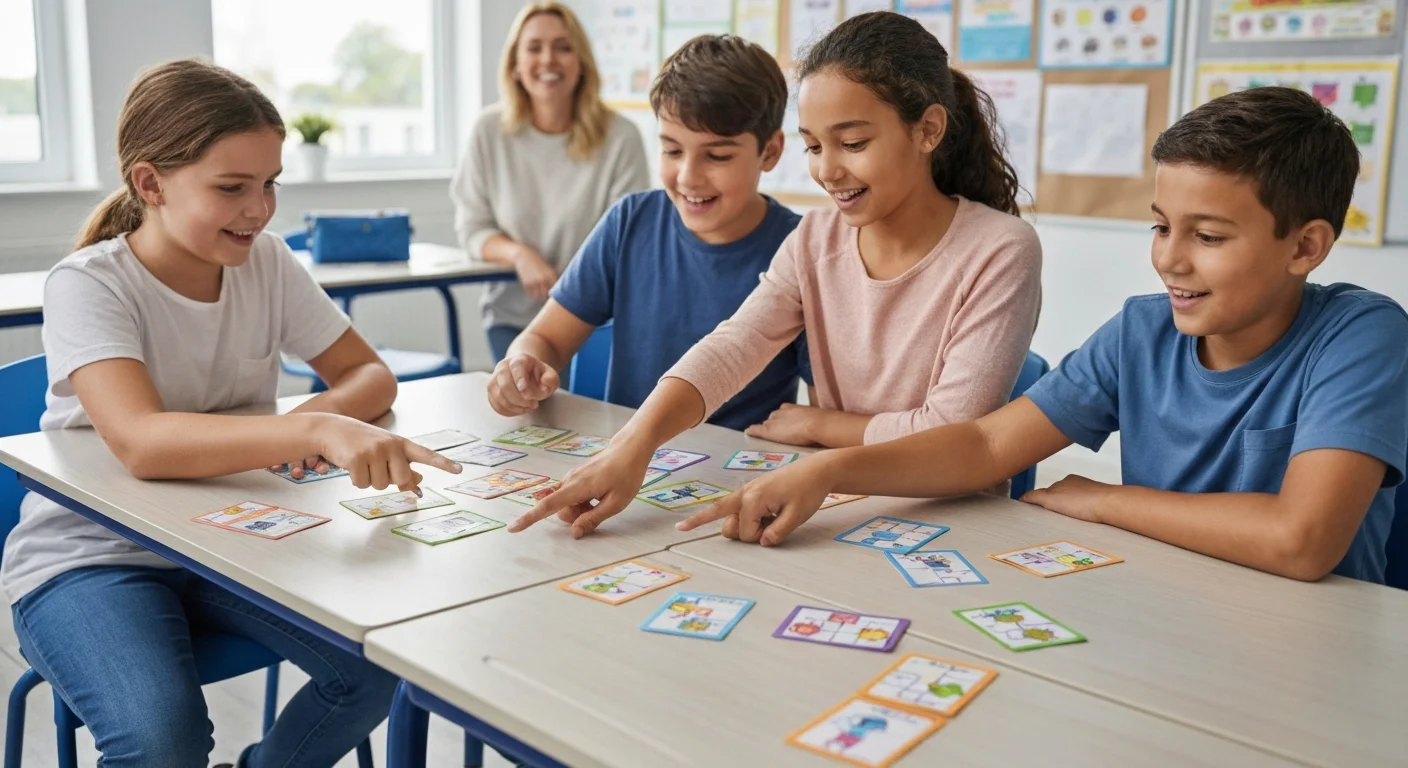
Teachers running a school escape room in their classroom, watching the quiet kid suddenly become the team leader because she spotted the hidden message nobody else saw. That’s not something you can plan in a lesson book. But you can set it up in about 15 minutes.
This guide covers everything you need to run printable escape room games in your school — from picking the right game for your grade level to debriefing students after the final puzzle. I’ve included the exact approach that hundreds of teachers already use with our kits, plus tips I’ve picked up from their feedback over the past four years.

Looking for a school-wide escape room solution?
Our Legacy Bundle includes 13 games covering every grade level (ages 5–16+), unlimited printing rights, and every future game free. Schools use it for STEM days, end-of-year activities, and after-school programs.
Why a school escape room actually works
Here’s the thing about classroom activities — most of them have a participation problem. A few kids carry the group. The rest check out. You’ve seen it. I’ve seen it. It’s not a teaching failure, it’s a format problem.
Escape rooms fix this because the puzzles require different skill sets working together. The strong reader catches the hidden clue in a letter. The math kid cracks the number cipher. The creative one makes the lateral leap that connects puzzle A to puzzle B. Nobody can solve everything alone. That’s the design — and it works.
Teachers who’ve run our kits in their classrooms report the same thing over and over:
“Kids who normally don’t participate were leading the group.”
That’s not a fluke. When I design these games, every puzzle intentionally demands a different kind of thinking. So the kid who never raises her hand? She’s suddenly the one cracking the code while everyone watches.
The educational benefits (backed by what teachers tell us)
- Critical thinking: Students must evaluate clues, eliminate red herrings, and reason through multi-step puzzles
- Teamwork & communication: No solo play. Teams of 3–5 must share findings and coordinate
- Reading comprehension: Half the puzzle is understanding the story, instructions, and hidden messages
- Time management: A countdown timer forces prioritization — which clue do we tackle first?
- Cross-curricular learning: Math ciphers, science themes, historical storylines, literary analysis — all built into the puzzles
- Social-emotional skills: Frustration management, active listening, celebrating others’ contributions
Carla Jean used The Gilded Carcanet with her history students: “We divided into teams of 4 and used all the resources provided.” Katie ran our games for her K-4 after-school program: “None of them had experienced an escape room before, but they quickly caught on.”
How to run an escape room in your classroom
Start with a printable escape room kit rather than building from scratch. Trust me — I’ve done both, and the kits save you hours of prep while giving you puzzles that are already tested on thousands of players. Here’s the process:
1. Choose a game kit for your grade level
Match the game to your students’ age and ability:
| Grade Level | Ages | Recommended Games | Puzzle Style |
|---|---|---|---|
| Elementary (K–3) | 5–8 | Wooka Booka Island, Wizard’s Workshop, Project Dino, Jigsaw Island | Visual puzzles, hands-on crafting, teacher-guided |
| Middle School (4–7) | 9–13 | Houdini’s Secret Room, Professor Swen’s Lab, Circus Medrano, Aria & the Secret of Light | Cipher puzzles, logic chains, independent team play |
| High School (8+) | 16+ | Project Frankenstein, The Gilded Carcanet Trilogy, Silver Screen Sleuths | Complex deduction, multi-stage, blueprint reconstruction |
Not sure which one fits? Our 30-second quiz matches you with a game based on age and group size.
2. Print and prepare (15–30 minutes total)
Print one complete copy of the kit per team. If you’ve got 25 students in groups of 5, that’s 5 copies. Cut any pieces marked for cutting — most kits mark these clearly with dotted lines.
Total prep: 15–20 minutes for printing and cutting, plus 5–10 minutes for placing clues around the room. Do this before students arrive or during a break. That’s it. No elaborate setup, no extra supplies beyond paper, scissors, and a printer.
3. Divide students into teams
The sweet spot is 3–5 students per team. Fewer than 3 and there aren’t enough perspectives. More than 5 and someone checks out.
Team composition matters. Mix skill levels and social groups deliberately. Put the strong reader with the strong math student. Separate best friends so they form new collaborations. The escape room becomes a natural social mixer that breaks down classroom cliques. I hear this from teachers all the time.
4. Set the scene
You don’t need to transform the room into a dungeon — but small changes signal “this is different.” Dim the lights slightly. Play the themed background music (our kits include Spotify playlists). Print the game posters and pin them up. Even just rearranging desks into team clusters changes the feel.
For younger students (K–3), play the Game Master character from the kit’s script. In Wooka Booka Island, you’re Lau Kamau — a friendly giant guardian. In Wizard’s Workshop, you’re Marshmallow the talking cat. Kids under 8 engage way more deeply when an adult is in character. Trust me on this one.
5. Brief the students (5 minutes max)
Keep it tight:
- Read the story introduction — this sets the narrative context
- Explain the rules: stay in your area, don’t force anything, ask for hints when stuck
- Set the timer: “You have 45 minutes. Go!”
Project the countdown on the smartboard if you have one. The visual timer adds urgency and drama. Kids respond to it immediately.
6. Facilitate — don’t solve
Your job during gameplay: circulate, observe, drop hints when teams are stuck for 3–4 minutes. Every kit includes hint cards designed for exactly this.
The key is redirecting without giving answers: “Have you looked at the back of that card?” works. “The answer is 7” kills the moment. You want the “Ahaaaaa!” — that’s where the learning happens.
Also watch for team dynamics. If one student is steamrolling, gently redirect: “Sofia had an interesting idea earlier — Sofia, what were you thinking?” This keeps participation distributed.
7. Debrief and reward (10 minutes)
This is where a school escape room goes from “fun activity” to “actual learning.” Whether they escaped or not, take 10 minutes after:
- “Which puzzle was hardest? What finally cracked it?”
- “Did everyone’s ideas get heard? Was there a moment someone had the answer but couldn’t get attention?”
- “What would your team do differently next time?”
Reward participation, not just completion. Stickers, extra recess, homework passes — every team gets something, with a special shout-out for fastest finish or best teamwork.
Connecting your school escape room to curriculum
Here’s where it gets interesting for me as a game designer. Escape rooms can reinforce what you’re actually teaching.
Mathematics: Create puzzles where solving equations reveals lock codes. Our periodic table cipher works brilliantly for chemistry classes too.
History: Theme the escape room around a historical period. Professor Swen’s Lab teaches about real historical innovators — kids don’t even realize they’re learning history because they’re too busy cracking Swen’s puzzles.
Science: Project Dino covers paleontology. Project Frankenstein includes organ identification and scientific method. Use color-mixing puzzles for chemistry.
Language Arts: Steganography puzzles for reading comprehension, crossword ciphers for vocabulary, and book ciphers for literary analysis.
Social-Emotional Learning: Every escape room is a crash course in teamwork, communication, frustration management, and celebrating others’ strengths. It aligns with SEL standards, and the best part is kids don’t feel like they’re in a “lesson.”
Practical tips from teachers who’ve done this
After four years of hearing feedback from teachers running our games, these are the tips that come up again and again:
Do a test run yourself. Play through the game before class. You’ll understand the difficulty level, catch potential confusion points, and be a much better facilitator. Takes about 45 minutes — worth every second.
Print extras. Print one or two extra copies of clue cards. Something always gets torn, lost, or “accidentally” thrown away. You’ll thank me later.
Time it right. 45 minutes for the game + 10 for debrief = one class period. Don’t split an escape room across two periods — the momentum dies completely. If you’ve only got 30-minute blocks, choose our younger-age kits which run 30–45 minutes.
Strategic scheduling. End-of-unit review, pre-break celebration, STEM day, or earned class reward. School escape rooms work best when they feel special, not routine. Once a quarter is the sweet spot.
Take photos. Escape room activities photograph beautifully. Parents love seeing engaged learning, and principals love having great content for the school newsletter.
Laminate for reuse. If you’re running the same game for multiple classes, laminate the clue cards after cutting. One laminated set can last years — just use dry-erase markers where students need to write on puzzles.
School escape room ideas by grade level
Here’s what works best at each level, based on what teachers tell us and what I’ve seen in my own game testing:
Elementary school (ages 5–8)
At this age, the teacher needs to be actively involved as the Game Master. Our K–3 games come with a script for you, so you’re playing a character in the story. The puzzles are heavily visual (matching patterns, finding hidden objects, simple codes) and the story drives everything.
Best picks: Wooka Booka Island (adventure theme, island exploration) and Wizard’s Workshop (fantasy, potion-making puzzles). Both include everything from music playlists to character costumes.
Middle school (ages 9–13)
This is the sweet spot for school escape rooms. Kids are old enough to work independently in teams but young enough to be thrilled by the experience. Puzzles can be more complex — ciphers, multi-step logic, hidden connections between clues.
Best picks: Houdini’s Secret Room (mystery theme, cipher-heavy) and Professor Swen’s Lab (science/history, invention theme). Both run 45–60 minutes — perfect for a single class period.
High school (ages 16+)
Older students need games that actually challenge them. Nothing kills engagement faster than puzzles that feel “too easy” for a 16-year-old. Our teen/adult games use multi-stage puzzles, blueprint reconstruction, and deduction that requires genuine reasoning.
Best picks: Project Frankenstein (science-themed, complex) and The Gilded Carcanet Trilogy (three connected games — perfect for a semester project or three separate sessions).
When to use an escape room in school
Teachers use our games for way more than I originally expected. Here’s what’s working:
- End-of-year activities — the #1 use case. Engaging, memorable, no new curriculum content needed
- STEM days — escape rooms are pure STEM in disguise
- After-school programs — fills a full session with zero prep anxiety
- Team building — first week of school, new class formations, group bonding
- Library programs — librarians love these for reading incentive events
- Holiday celebrations — Halloween, end-of-semester, spirit weeks
- Gifted & enrichment — challenges advanced learners without extra grading
- ESL & special education — visual puzzles and teamwork bridge language/ability gaps
Need games for your entire school?
The Legacy Bundle covers ages 5–16+ with 13 games, unlimited printing, and every new game added free. Use code LEGACY20 for 20% off.
Ready-to-play escape room kits for schools
Every kit includes the puzzle sheets, hint cards, Game Master instructions, background music playlists, and printable decorations. Download, print, play. That’s it.

Ages 9–13 · 45–60 min · $24.90

Ages 9–13 · 45–60 min · $19.90

Ages 5–8 · 45–60 min · $24.90

Ages 5–8 · 30–45 min · $24.90
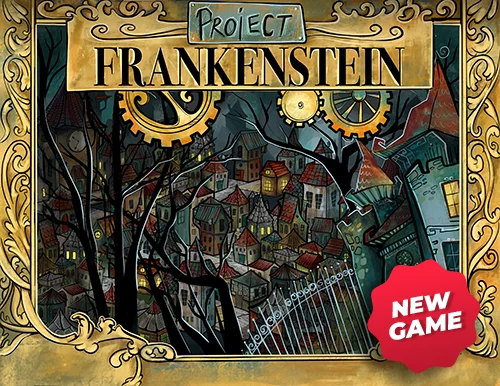
Ages 16+ · 60–90 min · $24.90
School escape room FAQ
How much prep time does a school escape room need?
15–30 minutes total. Print the kit (5–10 min), cut the marked pieces (5–10 min), place clues around the room (5–10 min). Most teachers do it during a free period before class.
Can I use the same game for multiple classes?
Yes. Print a fresh set for each class (puzzles are single-use since students write on them), or laminate one set with dry-erase markers for unlimited reuse. Our digital download has no print limits.
What materials do I need besides the printed kit?
A printer, paper, scissors, and pens/pencils. That’s it. Some games optionally use envelopes to hide clues, but it’s not required. No locks, no boxes, no special equipment.
How long does a school escape room take?
30–45 minutes for ages 5–8, 45–60 minutes for ages 9–13, and 60–90 minutes for ages 16+. Add 10 minutes for debriefing. Most games fit within a single class period.
Can I run this as a school-wide event?
Absolutely. With the Legacy Bundle, different teachers run different games for different grade levels on the same day. Elementary plays Wooka Booka Island, middle school plays Houdini, high school plays Frankenstein. One purchase covers everything.
Are the games reusable across school years?
Yes. You own the digital files forever. Print them again next year for a new class. The puzzles don’t expire, and students from the previous year won’t spoil it — the experience is in the solving, not the answers.
Can I adjust the difficulty?
Every kit includes hint cards you can use as needed. For easier play, give teams more hints upfront or extend the timer. For harder play, remove some hint cards and shorten the timer. You can also mix age ranges — a 5–8 game works great for ESL or special education students in older grades.
Do you offer invoicing or purchase orders for schools?
Yes. If your school requires a PO or invoice, email us at hello@escaperoomgeeks.com and we’ll handle it. We also offer a 20% school discount with code LEGACY20.
Try it once
A school escape room won’t replace your lesson plans. But the hour your students spend solving puzzles together will stick with them longer than most worksheets. I’ve had teachers email me months later saying their class still talks about “that escape room day.”
After designing these games for years and hearing from hundreds of teachers, I can tell you: the moment you watch your students crack that final puzzle, high-fiving each other with genuine excitement — you’ll understand. That’s the magic of a well-designed escape room in a school. Pure magic.
See the full school bundle → · Browse individual games → · Take the 30-second quiz →



Leave a Reply