







The theme is what separates a forgettable escape room from one people talk about for months. It’s the difference between “we solved some puzzles” and “we broke into a mad scientist’s lab and saved winter.” When I design games, the theme is always where I start — the puzzles come after, shaped by the world we’re building.
Whether you’re building your own escape room from scratch or looking for inspiration, these 25 themes cover every genre and age group. For each one, I’ve included a sample storyline, decoration ideas, and puzzle suggestions you can steal. Let’s dive in.
Fantasy and Magic Themes
1. Escape from the Alchemy Lab
You and your friends sneak into the alchemy lab after school. The door slams shut behind you, and a mysterious letter on the table offers to help you brew a potion to escape — if only you can figure out the recipe before Professor Wumblemore returns.
Decorate with a periodic table poster, bottles filled with colored water, dried herbs, and candle-lit corners. This theme works brilliantly for teens and Harry Potter fans who already live in that universe. Use periodic table ciphers and color-mixing puzzles to lean into the alchemy angle.
We built an entire game around this concept — Escape From The Wizard’s Workshop (ages 5-8) features a talking cat, potion recipes, and crafting challenges in a magical school setting.

2. Escape from the Ancient Tomb
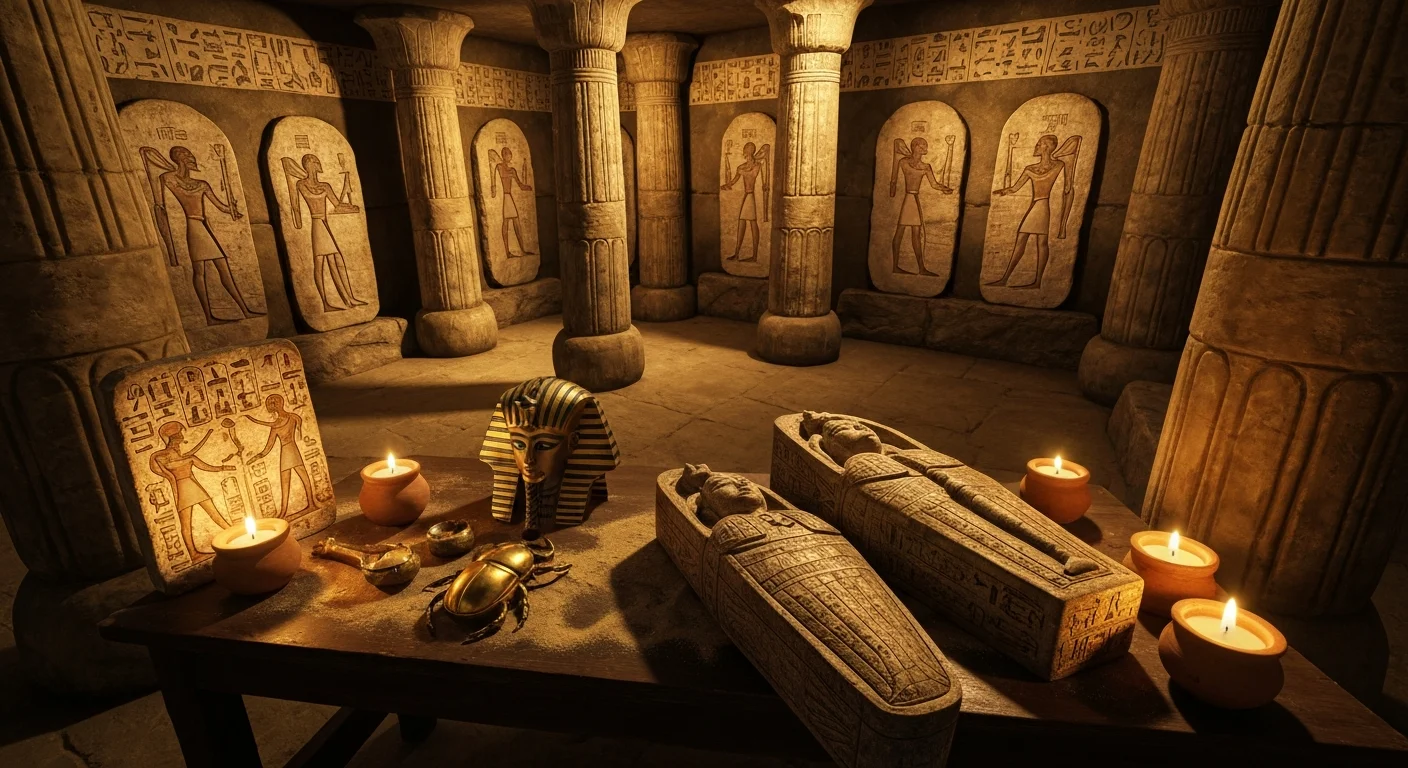
Deep inside the tomb of Tutankhamun, you hear a swish and feel the ground vanish beneath you. Looking up at the shaft you fell through, there’s no way to climb back. Is this the final test of the ancient King?
You don’t need to turn your whole room into a tomb — reduce the play space to a single table and explain in the narrative that players found a stone table with strange objects. Use paper cutouts of stone carvings that players must assemble, hieroglyphic substitution ciphers, and physical manipulation puzzles. Hide clues taped to the underside of surfaces — players won’t think to look there until you hint at it.
3. The Wizard’s Workshop
Welcome to the Magicarium, the international school for young wizards. You’ve snuck into Professor Wumblemore’s forbidden workshop, and the door just slammed shut. Standing in front of you is Marshmallow — a slightly overweight talking cat who needs your help finding the secret potion recipe.
Magic wands, spellbooks (old hardcovers with mysterious covers), potion bottles, crystal balls, and a dark tablecloth transform any room. The key with wizard themes is leaning into the sense of wonder — hide clues inside “spellbook” pages, use invisible ink that reveals under UV light, and craft paper hats as part of the game. Our Wizard’s Workshop kit includes everything — even a full script for the Game Master playing Marshmallow.
4. Lift the Ancient Curse
In the kingdom of Eldoria, shadows are swallowing the light. The wicked Prince of Shadows threatens to erase all joy and brightness from the world. Only the legendary Hammer of Light can stop him — and it’s hidden behind a series of magical trials.
Fantasy RPG themes work especially well for kids aged 9-13 who play video games. Use rune deciphering, maze navigation, token collection, and cipher wheels. Decorate with string lights (for the “light vs. darkness” motif) and handmade rune symbols. Our Aria and the Secret of Light kit uses 8 different puzzle types within this exact theme.
Adventure and Exploration Themes
5. Hunt for the Lost Treasure
As soon as you saw that the letter was from your old friend Edward, you got a lump in your throat. You used to explore together but fell apart when he became obsessed with a treasure off the coast of Turkey. You haven’t heard from him since — until yesterday.
The treasure hunting theme is a classic for a reason — it works for every age group. Use aged maps (burn the edges with a lighter for effect), a notebook from a “previous explorer” containing cryptic clues, a compass, and gold chocolate coins as the final reward. The notebook format is genius for conveying clues naturally — entries that feel like journal notes rather than puzzle instructions. Our Gilded Carcanet Trilogy is an archaeological treasure hunt across the Aegean Sea, playable as a single epic adventure or three separate sessions.
6. Pass Longbeard’s Pirate Test
While sailing the seven seas delivering chocolate for the Great Chocolate Company, your crew gets captured by Captain Longbeard. After tasting your cargo, he agrees to repair your ship — if you can pass his pirate test.
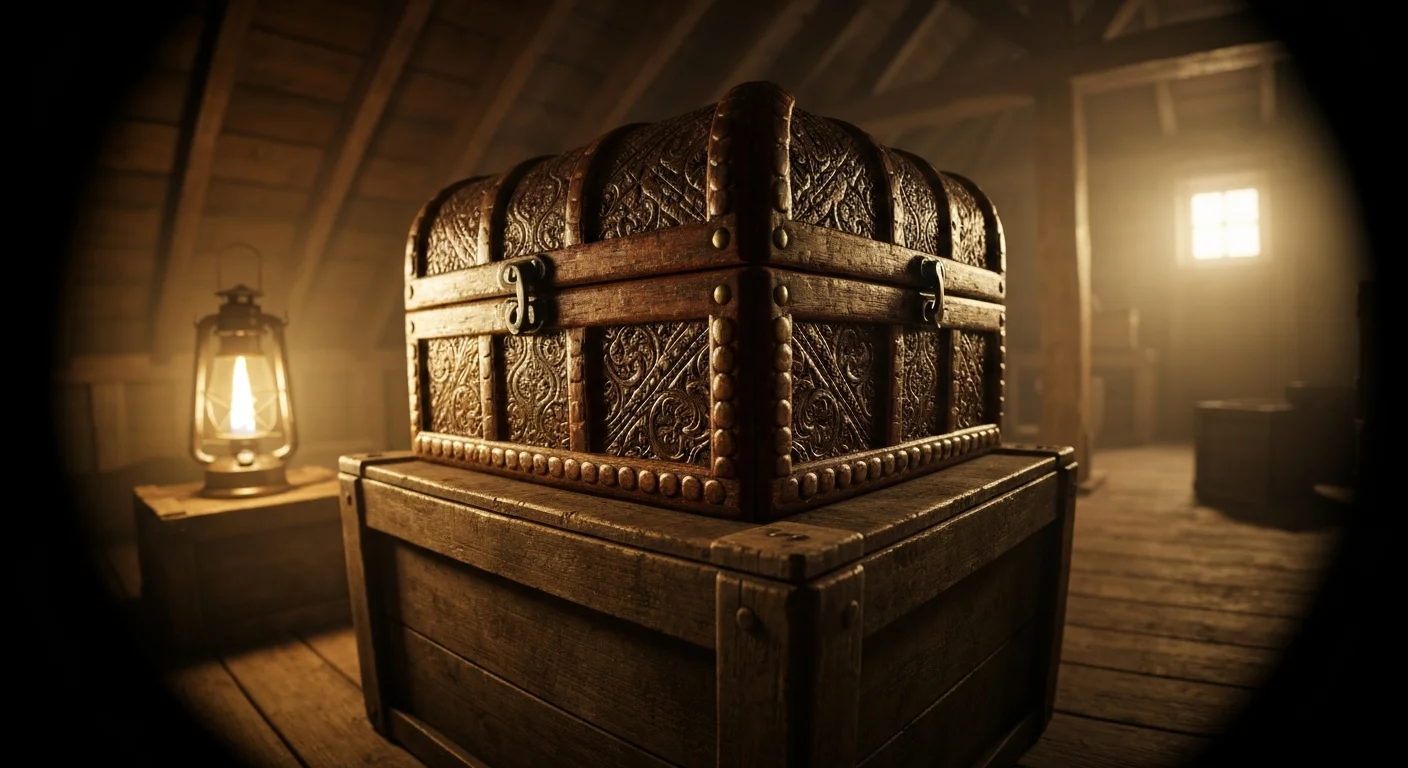
Pirates work for every age and make excellent puzzles involving maps, codes, and physical props. Create a map of the “captain’s quarters” (your room), hide clues using pirate flag symbols, and use a “treasure chest” (locked box) as the final goal. Props: treasure map, compass, telescope, gold coins, a message in a bottle. For map puzzles specifically, see our apartment map puzzle idea.

7. Escape from the Jungle Island
Your helicopter ran out of fuel over a remote island. The pilot is hurt, a volcano rumbles in the distance, and the only way off is to solve the island’s ancient mysteries before it erupts.
Tropical plants (real or fake), animal sounds playing from a hidden speaker, vines (green yarn) strung across the room, and a sand tray for buried clues. The time pressure of a “volcano erupting” creates natural urgency. Our Escape from Jigsaw Island kit uses this exact theme and takes only 5 minutes to set up — the fastest of all our games.
8. Space Station Emergency
An alarm blares. The space station’s oxygen system is failing. You have 60 minutes to repair the life support system, decode the emergency protocols, and signal for rescue before the air runs out.
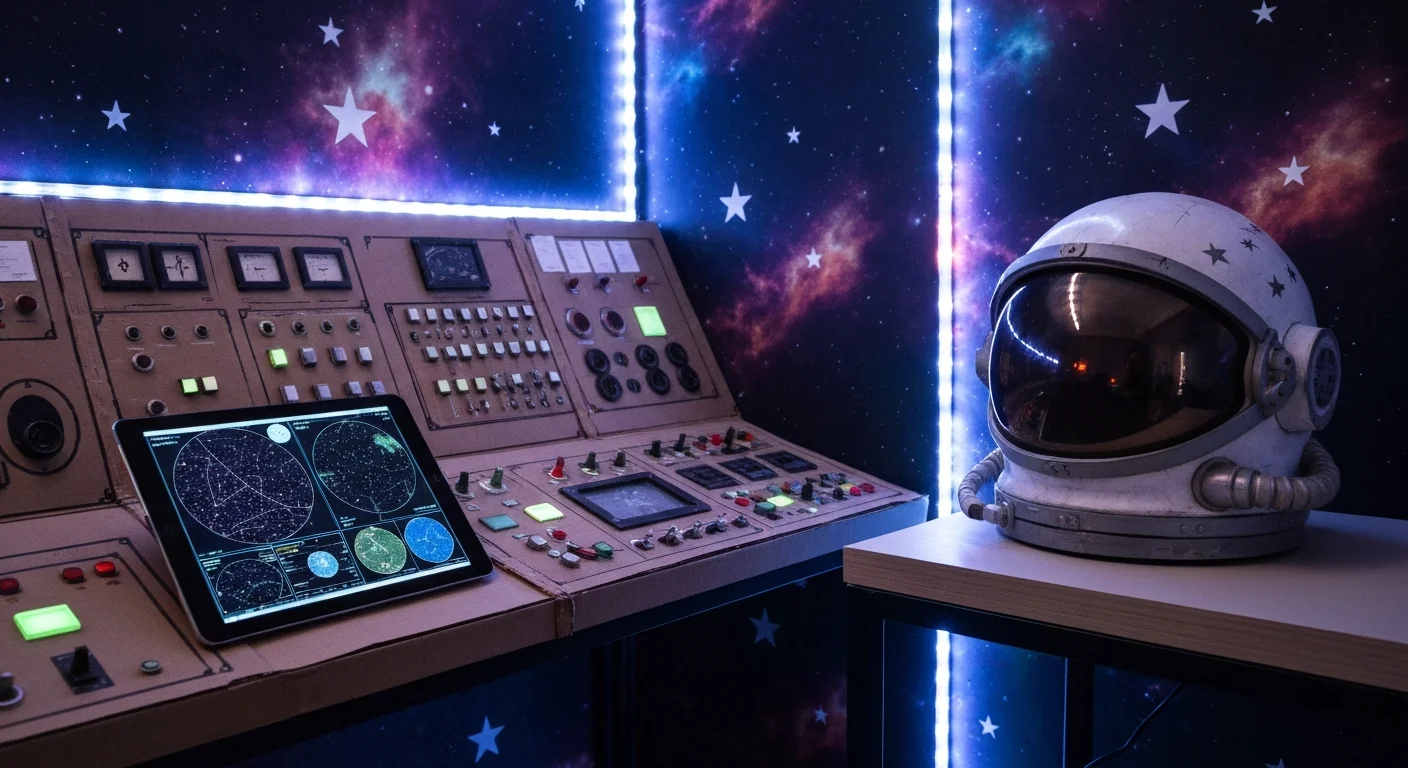
Cover walls with black paper and stick glow-in-the-dark stars to them. Use a tablet or phone as the “station computer” with coded lock screens. Puzzles involving coordinates, star charts, binary code, and numbered sequences fit perfectly. A countdown timer on a big screen adds urgency. This theme works amazingly well for science-loving kids aged 8-13.
Mystery and Detective Themes
9. Track Down the Secret Cold War Tape
An intelligence agent managed to eavesdrop on a secret meeting wearing a tape recorder under his jacket. Hours later, the agent disappeared. In his hotel room, only a strange note was found. Who left the note — and where is the tape?
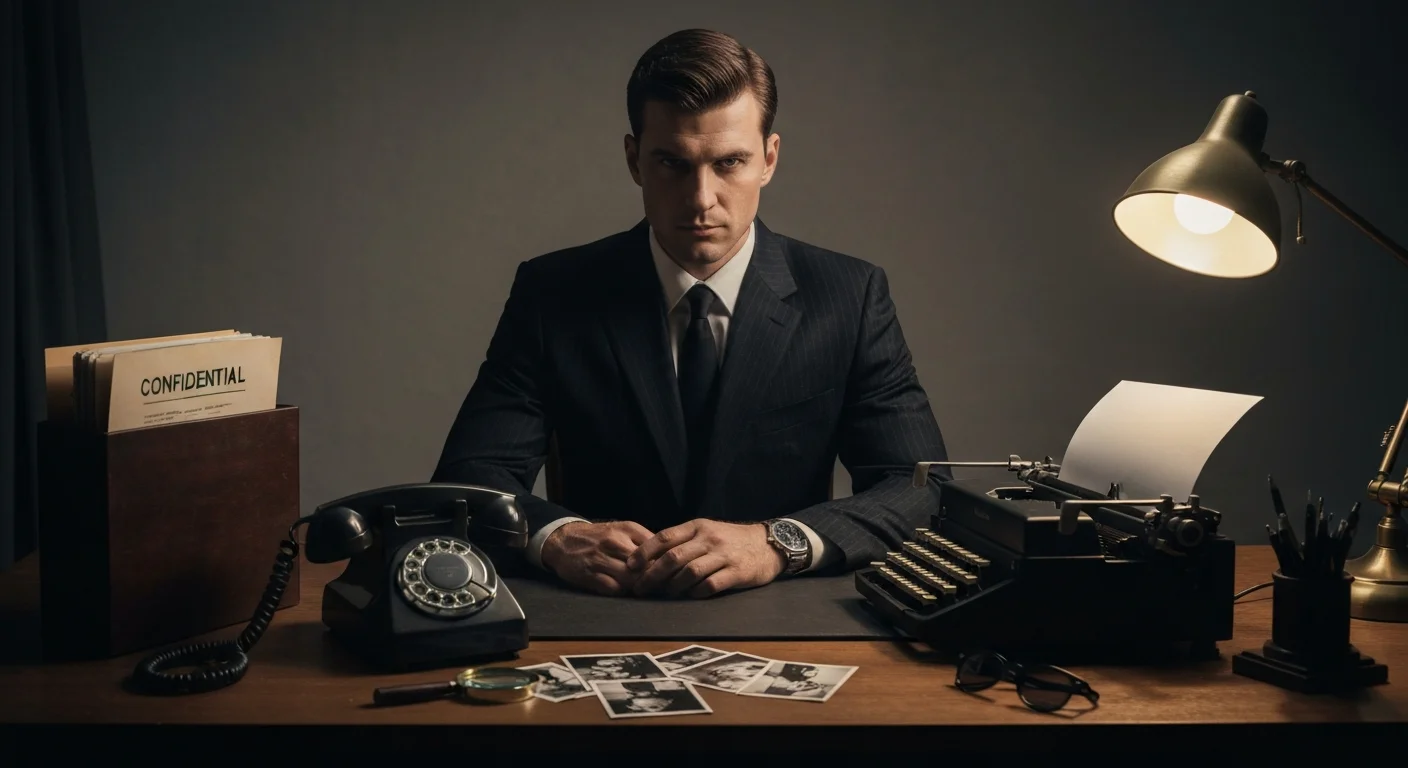
Historical spy themes require period-appropriate technology: tape recorders, typewritten notes, negative film, pagers, and radio frequencies. Avoid modern tech that breaks the era. Props: a fedora, dark sunglasses, manila folders stamped “CLASSIFIED,” black-and-white photographs, and a Morse code puzzle. The tension of Cold War espionage makes every clue feel higher-stakes.
10. Murder on the Orient Express
A scream in the night. The train has stopped. One of the passengers is dead, and everyone is a suspect. The clues are scattered across the dining car — who did it, how, and why?
Murder mystery escape rooms are the most narrative-driven type. Set up a “crime scene” with evidence (photographs, a witness statement, a torn letter), suspect profiles with alibis, and a timeline that doesn’t quite add up. Players compare evidence, eliminate suspects, and piece together what happened. This works especially well for adults and teens — see our Silver Screen Sleuths kit for a 1940s noir detective mystery designed for 16+.
11. The Missing Person Case
A person has vanished from a locked room. The police are stumped. You’ve been hired as private investigators to examine the room and figure out what happened. The clock is ticking — the trail goes cold in one hour.
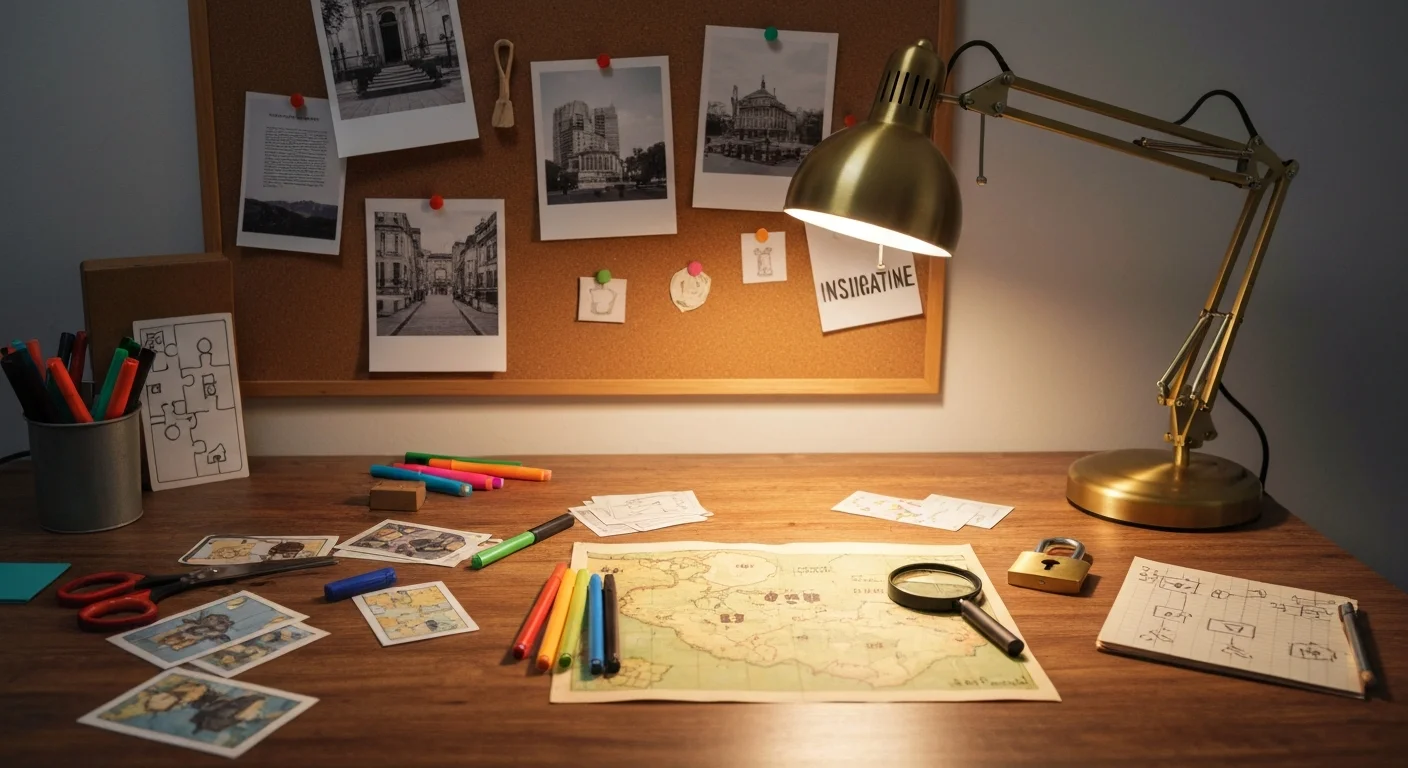
Detective themes let you use research-style puzzles — comparing photos, cross-referencing documents, and matching evidence to suspects. Scatter “case files” around the room, use a corkboard with red string connecting clues (the classic detective wall), and include a magnifying glass as both prop and tool. The beauty of this theme is that every puzzle feels like genuine detective work, not an abstract brain teaser.
12. The Creepy Circus Mystery
Two kids went missing when Circus Medrano pitched its tent in town. As members of the local kids’ detective club, you suspect the circus is involved. But stepping inside the tent reveals it’s creepier than expected — behind the fun acts lie tricky puzzles.
Circus themes let you combine mystery with spectacle — bright colors, dramatic music, and theatrical props. Use decoding puzzles, sound clues, and narrative-driven elimination. Our Circus Medrano kit (ages 10-13) integrates a mandatory mobile app that guides players through the investigation with digital hints and interactive tools.
Science and Technology Themes
13. Escape from the Mad Scientist’s Lab
Looking for the toilet at a dinner party, you accidentally wander into the host’s private lab. The door locks behind you. On the desk: bubbling beakers, a laptop with a locked screen, and a frantic note: “DO NOT TOUCH THE RED BUTTON.” So obviously you touched the red button.
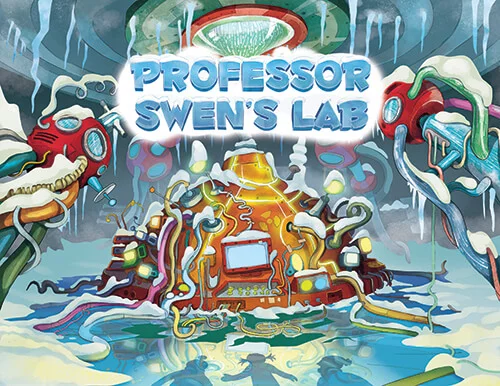
The science theme allows for tech-based puzzles: hide a message in a YouTube video (use the URL as a puzzle solution), create QR codes that lead to clues, and use color-mixing experiments. Props: lab coat, safety goggles, beakers with colored water, a clipboard with formulas. Our Professor Swen’s Lab kit (ages 9-13) is built around this exact concept — stopping an evil scientist’s weather machine.

14. Dinosaur Expedition
A letter arrives from Delphi, an archaeologist at the Wyoming Dinosaur Institute. She’s discovered a time machine — but it only goes forward. Now she wants to bring a dinosaur to the present, and she needs your help to find the right DNA sequence.
Dinosaur themes are pure gold for kids aged 5-8. Use toy dinosaurs, “fossil” prints (press toys into clay), a “dig site” (sand tray with hidden clue pieces), and educational puzzles about dinosaur species. Our Project Dino kit brings this to life with a full script where the Game Master plays archaeologist Delphi.
15. Discover the Zombie Cure
A virus has turned most of the population into zombies. You’ve barricaded yourself in a lab where scientists were working on a cure before they were… interrupted. The formula is here somewhere — you just need to piece it together before the barricade gives way.
Zombie themes add urgency that no other theme can match. Use a physical timer with alarm sounds, “contamination zone” tape on the floor, and a formula that requires combining several puzzle solutions. Periodically knock on the door and make zombie groaning sounds from outside — it keeps the pressure on and gets genuine screams. Best for teens and adults.
16. Bring the Monster to Life
Grave robberies haunt the town. You trace the lead to a reclusive scientist in a dark castle. Inside: bizarre experiments, strange blueprints, and the pieces needed to bring a friendly monster to life.
The Frankenstein theme blends science with horror in a kid-friendly way. Use blueprint reconstruction puzzles, organ identification (educational!), and ingredient-mixing challenges. Our Project Frankenstein kit (ages 12-16) is built around this exact concept and includes hands-on experiments.
Horror and Thriller Themes
17. Escape the Haunted House
Your friends dared each other to enter the deserted house on top of the hill. Rumor says it’s haunted, but none of you are superstitious. Then the door slams shut behind you, and you get the feeling you’re not alone after all.
The haunted house theme has a built-in excuse for every weird puzzle: ghosts are providing the clues but can’t communicate directly. They flicker lights in Morse code patterns, knock on walls in specific sequences, and move objects when nobody’s looking (that’s you, the Game Master, being sneaky). Dim the lights, play creepy ambient sounds, and use UV flashlights to reveal hidden messages. Perfect for Halloween parties.
18. Escape the Prison
Wrongfully imprisoned, you’ve discovered a way out — but only if you can decode the messages left by a previous inmate who almost escaped. His notes are hidden throughout the cell.
Prison themes are all about constraint and resourcefulness. Strip the room down to minimal items — each one matters. Use tiny text clues scratched into surfaces, messages hidden inside everyday objects, and a sequence of locks that each lead to the next. The minimalist setting actually makes puzzle design easier because players know that everything in the room is intentional.
19. Infiltrate the Evil Corporation
MegaCorp has been dumping toxic waste in the river. You’ve broken into their CEO’s office to find the evidence, but security is on its way. You have 60 minutes before the guards make their rounds.
Corporate espionage themes let you use an office environment as-is — filing cabinets, computer screens, whiteboards, and desk drawers all become puzzle locations naturally. Hide “confidential documents” in folders, use a laptop with a password-locked screensaver, and scatter company memos that contain coded messages. This is especially effective for team building events since the setting already feels like work — but the mission makes it thrilling.
Kid-Friendly Themes
20. The Candy King’s Treasure Trove
You’ve entered the Candy King’s yearly competition. Only the cleverest kids will figure out the combination code to unlock the treasure trove filled with the world’s best sweets.
Candy themes work perfectly for young kids because they use vivid colors and shapes — two things that translate directly into puzzles. Create a substitution cipher where each candy image represents a letter. Or a counting puzzle: scatter 4 red jellybeans and 7 yellow ones around the room — counting them gives you the code 47. Just make sure you don’t use the same candy symbol in two different puzzles, or kids will get confused about which puzzle it belongs to.
21. Wooka Booka Island
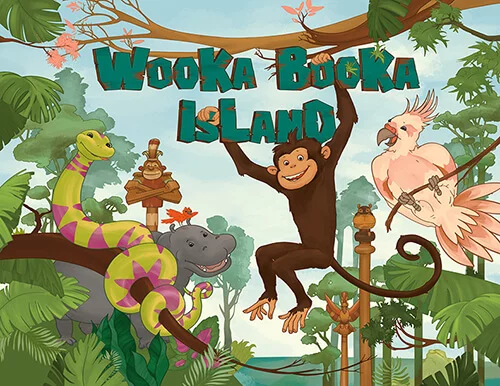
A mysterious door appears in your room. Through it lies the wondrous island of Wooka Booka, home to four animal kingdoms and one legendary treasure chest. Pass the challenge of every kingdom to claim the treasure.
Island themes combine adventure with animal encounters — perfect for ages 5-8. Each “kingdom” is a different area of the room with a different puzzle type (coloring, riddles, searching, crafting). Our Wooka Booka Island kit includes a full script where the Game Master plays Lau Kamau, the island’s friendly giant guardian.
22. Help Santa Escape and Save Christmas
Santa has been locked in his own workshop by a mischievous elf. If he can’t get out in time, Christmas is canceled. The elves need your help to crack the locks and free Santa before midnight.
Christmas themes are obviously seasonal, but they’re the most requested party theme in December. Use ornaments as clues, hide messages inside wrapped “presents,” and use a cipher wheel decorated with snowflakes. The built-in time pressure of “saving Christmas” gives the game emotional stakes that kids genuinely feel.
Unique and Creative Themes
23. Fix the Time Machine
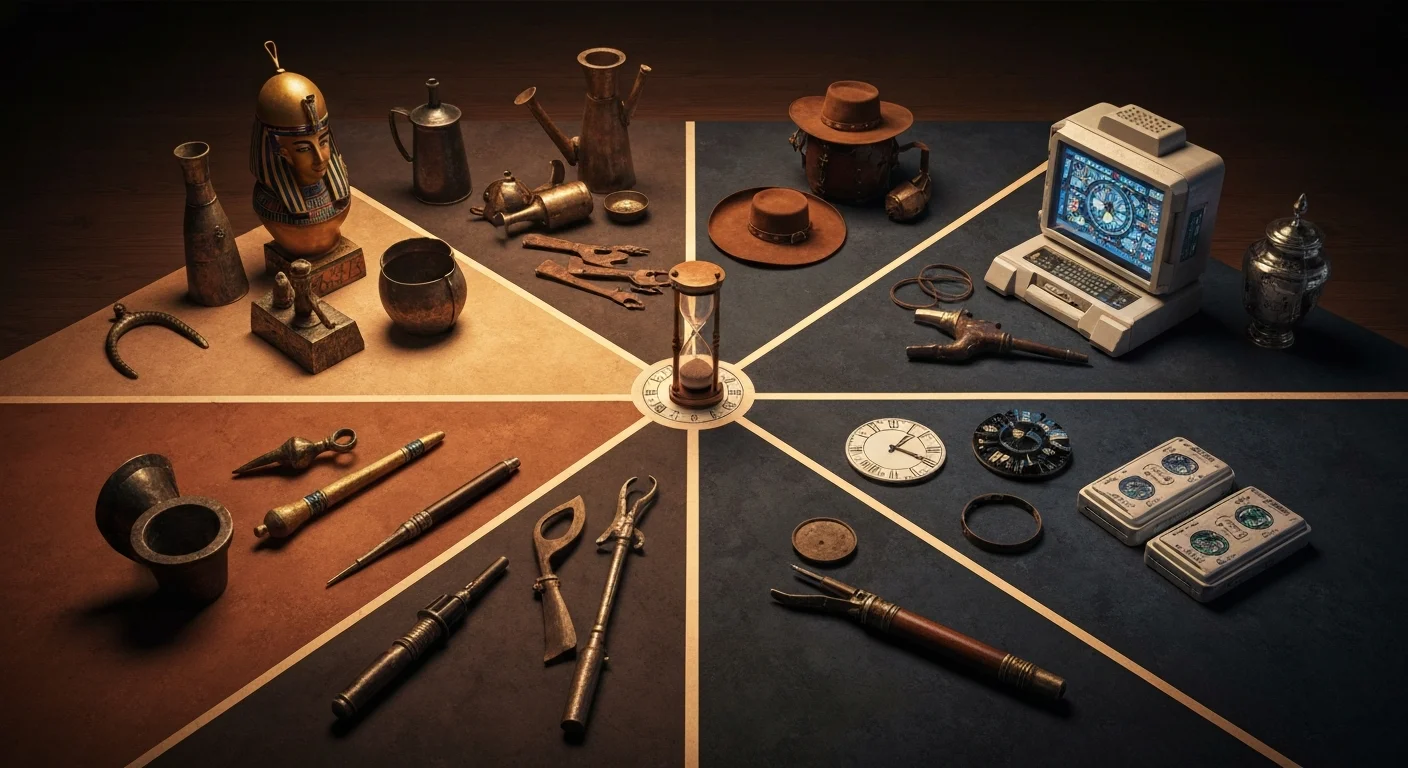
A scientist’s time machine has malfunctioned, scattering clues across different historical periods. You need to collect a piece from each era — ancient Egypt, medieval Europe, the Wild West, and the far future — to repair the machine and get home.
Time travel themes let you mix aesthetics from completely different periods in the same room. Divide your space into four zones, each decorated to a different era with era-appropriate puzzles. A hieroglyphic cipher in the Egypt zone, a medieval coat-of-arms pattern puzzle, a Wild West wanted poster with a hidden code, and a futuristic binary number challenge. The variety keeps players constantly surprised.
24. The Art Heist
A famous painting has been stolen from the museum, and you’ve been hired to recover it. The thief left a trail of clues hidden in the artwork of other paintings throughout the gallery.
Print famous paintings and hang them around the room. Hide clues within the images — a code written in tiny text in the corner of a Van Gogh, a pattern hidden in a Mondrian, coordinates embedded in a map painting. Players examine artwork closely (magnifying glass recommended) and piece together where the stolen painting is hidden. Elegant, sophisticated, and works beautifully for adult groups.
25. The Secret Recipe
Your grandmother was a legendary baker whose secret recipe was lost when she passed. You’ve gained access to her kitchen, where the recipe is hidden among her cookbooks, utensils, and hand-written notes — but it’s been deliberately scrambled to keep it safe from competitors.
Kitchen and cooking themes work because the setting is already familiar. Use measuring cups for number puzzles, ingredient labels as cipher keys, and a recipe card where blanks need to be filled in from solved clues. The “reward” at the end can be actually baking the recipe together — turning the escape room into a cooking activity. Great for family gatherings and birthday parties where you want the game to flow naturally into a shared activity.
Our Ready-to-Play Game Kits
Pick a game, print, and play — it’s that simple!
-
Professor Swen’s Lab
Original price was: $24.90.$19.90Current price is: $19.90.Age: 9-1345-60 Min2-5 kids -

How to Choose the Right Theme
With 25 options, choosing can feel overwhelming. Here’s how I decide when designing games:
- Start with the players. What are they obsessed with? A dinosaur kid needs a dinosaur theme, no matter how much you prefer detective stories. The game is for them.
- Consider the space. A small bedroom works for a prison or scientist’s lab. A big living room works for a treasure hunt or jungle island. A backyard opens up everything.
- Match the age group. Younger kids (5-8) need colorful, simple themes — candy, animals, dinosaurs. Older kids (9-13) want mystery and adventure. Teens and adults want challenge and narrative depth.
- Think about decorations you already have. Halloween decorations? Haunted house theme. Christmas? Santa theme. Travel souvenirs? Treasure hunt or ancient tomb. Working with what you have saves hours of prep.
- Don’t overthink it. A simple theme executed well always beats an ambitious theme executed poorly. A pirate room with a handmade map and some chocolate coins beats an elaborate space station with half-finished props.
If you want to skip the DIY part entirely, our printable escape room kits come with everything — themed puzzles, decorations, posters, invitations, playlists, and step-by-step setup guides. Pick a theme, print it out, and you’re ready in 30 minutes. Check our 30 puzzle ideas if you want to build your own, or our complete DIY tutorial for the full walkthrough.


Leave a Reply